How to Winterize a Koi Pond: A Complete Cold-Weather Survival Guide
Feb 3rd 2026

Feb 3rd 2026
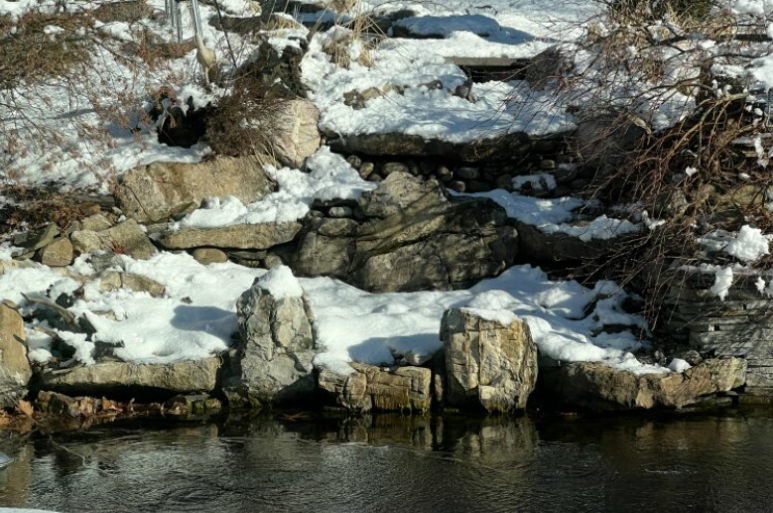
Winter isn’t the season that “kills fish.” Winter is the season that exposes everything that got ignored during the busy months: soft sludge on the bottom, clogged intakes, leaves tucked into corners, and water that looked fine in early fall but turns rough once ice locks the surface.
A winter-ready pond has four goals that keep showing up in every success story: steady water, a clean bottom, an open surface for gas exchange, and protected equipment that won’t crack, seize, or burn out. Hit those goals and your koi can settle in, rest, and glide into spring without the usual panic.
If you’re in a cold-weather region, timing matters more than the calendar. One year, you’ll get a gentle fall that drags on; the next year, cold snaps show up early and stick around. A smart winter plan follows water temperature, not the first frost, not Halloween, not the first time your neighbor says, “Feels like winter.”

Your koi don’t care what the air feels like; they care what the water is doing. Water temperature controls koi metabolism, digestion, and the pace of beneficial bacteria. That’s why a plan built on “it’s cold outside” feels random. A plan built on water temperature feels predictable.
Use this simple rhythm for most backyard koi ponds.
Prep phase before water drops to about 60°F: This is your best window for bigger clean-ups, a well-timed partial water change, filter maintenance, and any last upgrades. The pond can rebound faster from maintenance in this range, and you’re not wrestling stiff hoses and frozen fittings.
Feeding changes around the mid-50s, then stops as temps drop further: Koi can still eat in cool water, but the what and the how much change quickly. Summer feeding in late fall creates uneaten food, extra waste, and a messy bottom right when you need things clean.
Keep it simple with a mini checklist.
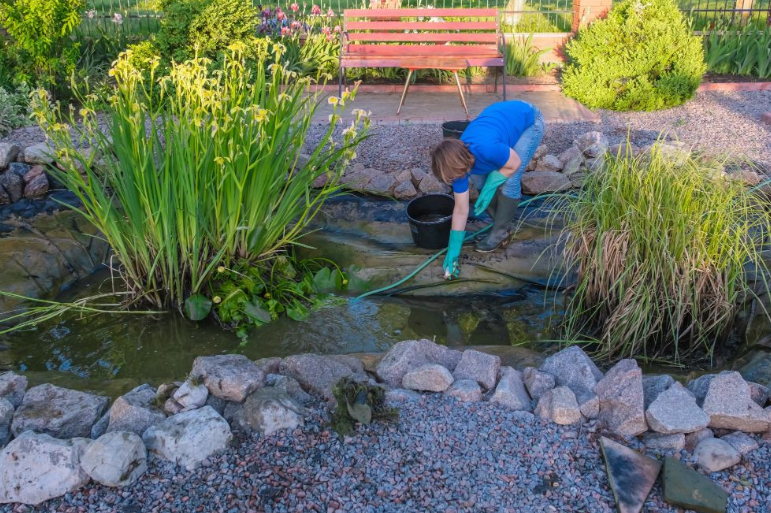
Leaves, fish waste, and dying plant material don’t vanish in winter. They sink, break down, and form a sludge layer that continues to degrade water quality throughout the season. Warm weather ponds can often “keep up” with that load. In cold weather, ponds slow down, and decay becomes a long, slow problem that lingers until spring.
Start with the basics.
If you only do one thing before winter, make it bottom clean-up. A cleaner bottom means less decay, fewer trapped gases, and less stress on koi while they’re already slowed down.
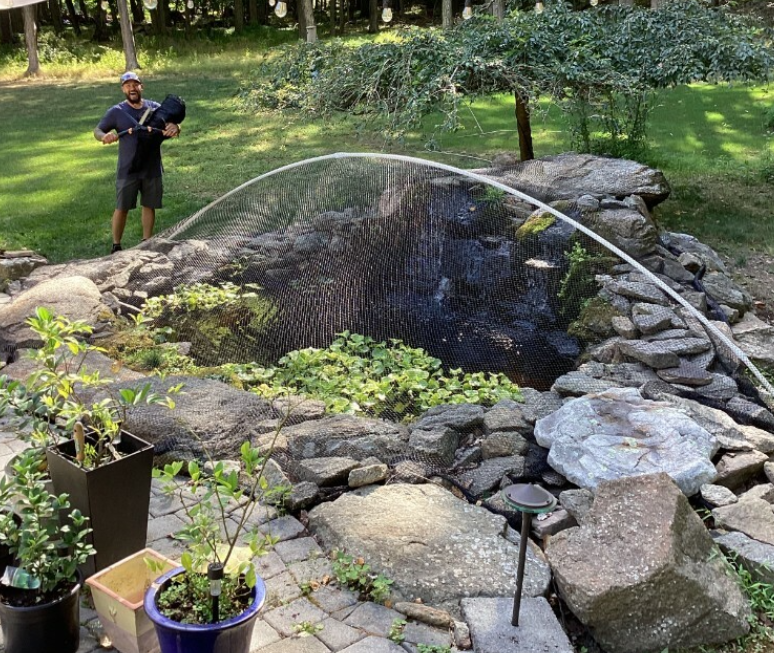
A good net is one of the easiest wins. It stops leaves from sinking, keeps your skimmer from clogging every day, and reduces the sludge layer that forms in winter.
Common mistakes that cause headaches:
Aim for a tight net that sits above the water surface. Use supports to prevent it from dipping. Leave access points so you can still check flow, clear debris, and inspect equipment.
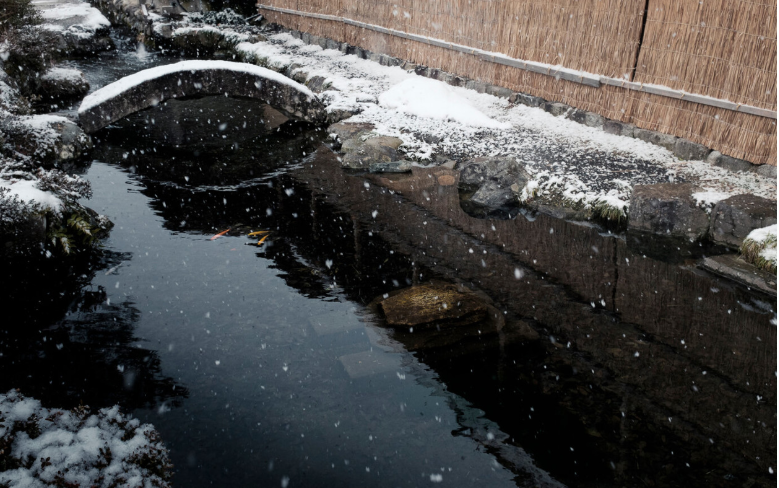
Plants help in summer, but in fall, they can create an extra organic load if dead stems and dying leaves drop straight into the pond. The goal is to prevent rot in place by trimming plants in time for winter.
Focus on marginal plants and anything that’s already browning.
Next, separate what stays outside from what comes inside. Tropicals are the first to deal with. If a plant can’t handle your winter, bring it in or compost it. Leaving tropicals to die in the pond creates a slow-release mess that’s tough to correct once ice shows up.
Helpful storage notes:
Feeding is one of the fastest ways to pollute a pond right before winter. Koi digestion slows as water cools, and the “same food, same schedule” routine backfires.
A temperature-based feeding plan keeps things steady:
Koi can look hungry on a warm afternoon in late fall. That’s normal. A full summer portion, even if they’re active for only a few hours, can create a messy bottom and lingering water issues.
Pitfalls to avoid:
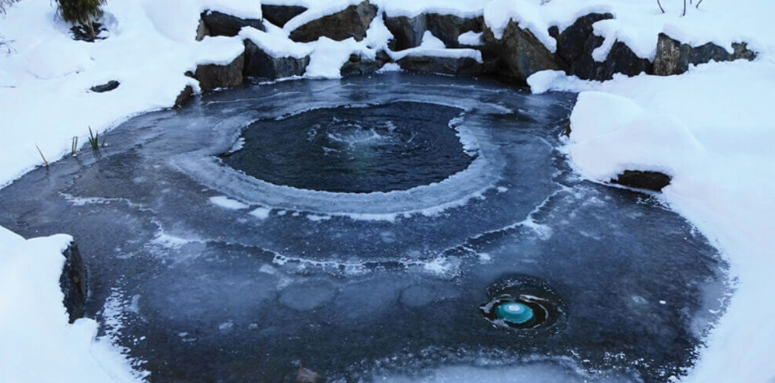
A sealed surface is the winter problem many pond owners don’t see. If ice locks the pond, gases can build up under the surface. Your fish still need oxygen, and the pond still needs a way to “breathe.” A reliable opening in the ice supports that exchange.
For most koi ponds, a simple combo works well:
This isn’t about heating the entire pond. The goal is a stable opening and stable conditions.
A de-icer is usually the practical choice for most backyard ponds. A full heater can make sense in special cases, such as very shallow systems, high-value collections, or setups designed for winter operation. The goal stays the same: steady water and an open surface, whether using standard methods or alternative methods.
Breaking ice to “make a hole” can send shockwaves through the pond. Koi are already stressed, and sudden pressure changes can further stress them. If the opening freezes over, correct it with a de-icer or another gentle method, not impact.
If your pond has multiple pumps, long plumbing runs, an external filter setup, or a history of winter losses, a professional winter visit can significantly reduce risk. Fitz’s Fish Ponds handles seasonal shutdowns, line protection, aeration, and de-icer placement, and full cold-weather prep for koi ponds across NJ, PA, and NY.
A simple next step is to book early, so your pond is handled before the first hard freeze forces rushed decisions. Got questions or want to schedule? Call us at (908) 420-9908 or Talk to an Expert Online.

Winter equipment choices depend on how your pond is built. Most ponds fit one of two approaches.
Approach 1, run through winter, when it’s safe: Some systems can run all winter if plumbing is protected, flow is reliable, and the waterfall won’t create dangerous ice dams. This approach takes planning and the right layout, and it’s not a fit for every yard.
Approach 2, shut down and winterize equipment: This is the go-to for many ponds in NJ, PA, and NY. It reduces the risk of frozen plumbing, cracked fittings, and burned-out pumps.
A clean shutdown path looks like this:
This is also the moment to inspect what you don’t notice in summer: brittle hoses, tired clamps, loose unions, cracked check valves, and fittings that barely held on through the season.
Any line that stays active, or any line that can’t be fully drained, deserves protection. Wind plus cold can freeze equipment faster than people expect, even during “not that bad” weather.
Focus on:
A pond doesn’t need to be perfect before winter. It does need to be stable. The best time for a partial water change is before temperatures drop too low, because the pond can rebound more easily, and beneficial bacteria still have some activity.
A practical flow:
This is the part many people skip because the water looks clear. Clear water can still hold problems, especially if debris is sitting on the bottom.
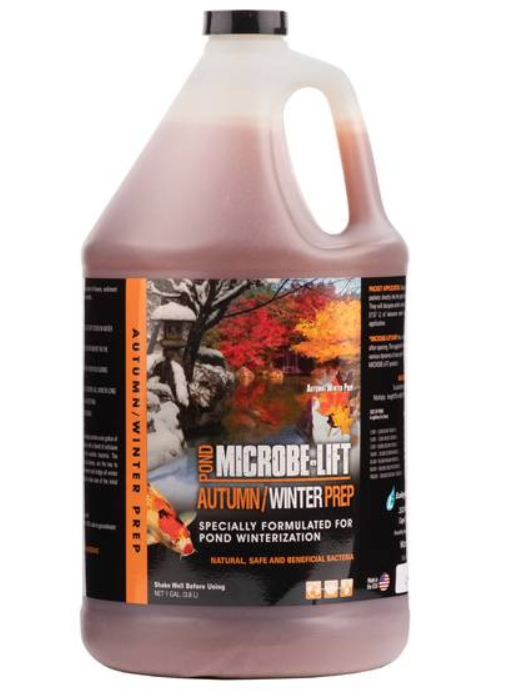
Beneficial bacteria don’t stop working in cold weather; they slow down. Cold-water blends, such as the MICROBE-LIFT Autumn Winter Prep Kit 1 Gallon, can help support the system during the transition. Cleaning still does the heavy lifting, and bacteria support helps keep the pond steady during the slow season.
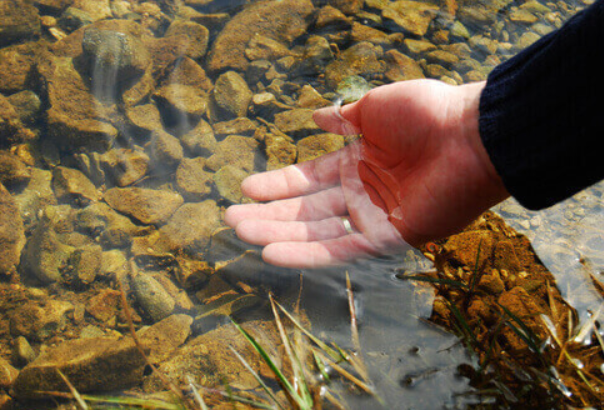
You don’t need a lab, just a simple kit and a routine for testing your pond water.
Here’s your updated version with the timing note about testing worked in clearly and smoothly:
Focus on the basics:
What do these readings mean in winter?
A solid routine is to test pond water before winter prep, then test again about a week later. That second test catches surprises early.
Winter care shouldn’t feel like a daily job. The best routine is short, gentle, and consistent. You’re checking systems, not disturbing fish. Along the way, consider a pond maintenance provider like Fitz’s Fish Ponds for all your pond maintenance needs year-round.
A weekly check:
Signs that deserve attention:
After a big freeze, heavy snow, or a windstorm, add a quick bonus check. Ice can shift netting, loosen cords, or block a de-icer.
Not every pond winters the same. Pond depth, stocking level, and location change what matters most.
Small and shallow ponds
Heavily stocked ponds: More fish means more waste, even in winter. Oxygen demand can also be higher than people expect. A clean bottom and steady gas exchange make the biggest difference.
Regional notes for Bucks County and similar winters: Freeze-thaw cycles can create unexpected problems, including ice dams, shifting water levels, and equipment stress. In addition, steady preparation beats reactive fixes. Clean early, then focus on keeping the pond breathing.
This checklist is built for real pond owners who want a clear plan they can follow without guessing. Work top to bottom, check items off as you go, and use the “When To Do It” column to time everything around water temperature and leaf drop. A clean bottom, protected equipment, and a steady opening in the ice are what carry koi safely through winter.
If you’d rather have a pro handle the details, Fitz’s Fish Ponds offers pond winterization services across NJ, PA, and NY, so your setup is done right before the first hard freeze. Click Here to Learn More.
|
Type |
Task / Item |
When To Do It |
How To Do It (Quick Steps) |
What To Look For |
Why It Matters |
|
Clean-up |
Skim leaves daily during drop |
Daily during peak leaf fall, especially on windy days |
Use a pond net to skim the surface, pull floating clusters, clear corners near rocks, and plant shelves |
Leaves are collecting in corners, around the skimmer mouth, and under the waterfall splash zones |
Leaves sink fast, then decay into sludge that can foul water all winter |
|
Clean-up |
Net the pond before heavy leaf fall |
Before trees hit their peak, drop |
Stretch a net tight over the pond, elevate it with supports so it sits above the water, and anchor the edges with stakes, clips, or rocks |
Sagging net, gaps near edges, net touching water |
A tight net prevents leaves from waterlogging and slipping underneath |
|
Clean-up |
Empty skimmer baskets often |
Every 2 to 3 days during leaf season, weekly after |
Shut off the pump, remove the basket, dump debris, rinse lightly, reinstall, and confirm good suction |
Slow skimmer pull, basket packed tight, water bypassing the basket |
Prevents pump strain and keeps water moving, reduces clogs and overflow |
|
Clean-up |
Empty pump baskets often |
Same schedule as skimmer, more often if debris is heavy |
Shut off power, open pump lid, remove basket, rinse, check gasket, reseal lid firmly |
Air bubbles in returns, reduced flow, and pump noise |
Protects the pump, maintains circulation, and reduces the risk of winter burnout out |
|
Clean-up |
Vacuum sludge and settled organics |
Before temps get too cold, ideally while water is still above about 60°F |
Use pond vac or clean-out method, work in sections, remove the worst bottom buildup first, avoid stirring everything at once |
Thick muck, black pockets, rotten odor, cloudy plume that lingers |
Less decay means fewer trapped gases and more stable winter water |
|
Clean-up |
Remove dead plant material |
As plants brown, continue through fall |
Trim dead stems, pull loose leaves, remove dying floaters, bag, and dispose of |
Brown mush, loose stems drifting, plant debris piling on shelves |
Reduces rot, keeps the bottom cleaner, and helps water quality hold steady |
|
Equipment |
Net and leaf rake |
Have it ready before leaf season |
Choose a pond-safe net, a long handle, and keep it near the pond for quick daily passes |
Torn net, short handle, net too small for pond width |
Makes daily cleanup easy, prevents leaves from becoming sludge |
|
Equipment |
Install early fall |
Place in shaded area of pond, check weekly, log temps in notes |
Big swings, steady downward trend, water holding in mid-50s |
Temperature tells you when to shift feeding and start winter steps |
|
|
Equipment |
Water test kit |
Use before and after winter prep |
Test pH, ammonia, nitrite, record results, retest a week later |
Any ammonia or nitrite reading above zero, unstable pH |
Early warning system, small issues linger longer in cold water |
|
Equipment |
Air pump and diffuser, or winter aeration setup |
Set up before the first hard freeze |
Position diffuser for gentle surface movement, keep airlines protected, and confirm a steady bubble pattern |
Weak bubbles, kinked airline, diffuser clogged |
Supports oxygen, improves gas exchange, and helps keep an opening |
|
Equipment |
De-icer |
Set before freezing nights become routine |
Place near pond edge, plug into GFCI, keep cord secured, confirm it maintains a small open area |
Ice forming over the opening, the cord strain tripped the outlet |
Prevents a complete surface seal, protects fish by allowing gas release |
|
Equipment |
Dechlorinator |
Use whenever adding water |
Dose for total pond volume or water added, mix in bucket if needed, add near circulation |
Fish stress after top-offs, chlorine smell, and municipal water changes |
Chlorine and chloramine can harm koi quickly, even in cold weather |
|
Equipment |
Basic hand tools, spare clamps, spare check valve |
Before the shutdown, work |
Keep a screwdriver set, pliers, Teflon tape, spare hose clamps, and spare check valve ready |
Loose unions, cracked fittings, valves that stick |
Small parts prevent big delays when you’re working in cold weather |
|
Feeding |
Reduce portions as temps trend down |
When water starts dropping from the summer range |
Feed less per meal, reduce frequency, watch for uneaten pellets |
Uneaten food after 5 minutes, the fish is slowing down |
Cuts waste load right before winter, keeps the bottom cleaner |
|
Feeding |
Switch to cold-water food around mid-50s |
When water is consistently in the mid-50s |
Swap to wheat-germ or cold-water formula, feed smaller amounts |
Fish eat more slowly, pellets sink quickly |
Easier digestion in cooler water, less waste, and stress |
|
Feeding |
Stop feeding as temps keep dropping and stay low |
When temps keep trending down and remain low |
Stop completely, remove any uneaten pellets, and keep monitoring temps |
Fish still “beg” on warm afternoons |
Prevents food from rotting in the gut and pond, supports stable winter water |
|
Don’t-do |
Don’t smash ice to make a hole |
All winter |
Use de-icer and aeration instead, and reopen gently if needed |
Loud cracking, ice shockwaves |
Reduces stress and potential injury to koi |
|
Don’t-do |
Don’t wait until the first hard freeze to start clean-up |
Fall, before cold snaps |
Begin skimming, netting, and trimming early, and schedule shutdown tasks ahead of time |
Frozen hoses, stiff fittings, rushed decisions |
Late work leads to missed details and equipment damage |
|
Don’t-do |
Don’t keep feeding like it’s summer |
Fall into early winter |
Follow temperature-based plan, adjust gradually |
Extra waste, cloudy water, and sludge buildup |
Overfeeding is a top cause of winter water issues |
|
Don’t-do |
Don’t ignore slow leaks |
Fall and winter checks |
Mark the water level, check weekly, inspect edges, plumbing, and waterfall areas |
Ice pushing liners, damp spots, dropping level |
Winter turns small leaks into bigger problems fast |
|
Don’t-do |
Don’t leave dying plant material to rot in the pond |
Fall |
Remove dead growth, pull failing plants, and clear loose debris |
Brown mush, floating rot, bottom buildup |
Rot feeds poor water quality and gas buildup under ice |
Winter doesn’t need to be stressful. If the bottom is clean, the surface has a steady opening, feeding is handled at the right time, and equipment is protected, your koi can settle in and rest.
A clean fall and a steady winter usually mean clearer water, healthier koi, and fewer “mystery problems” when the weather warms. So, grab the checklist above, watch water temperature this week, and get your winter prep handled before the next cold snap sets the pace.
A lot of winter pond problems start with one missed detail, a line that didn’t drain, a pump that stayed exposed, a bottom that never got cleaned, or a de-icer placed in a spot that fights the pond instead of helping it.
Fitz’s Fish Ponds provides professional cold-weather prep for koi ponds, including debris removal, plant staging, equipment winter shutdowns, line protection, aeration support, and de-icer setup. Service is available across NJ, PA, and NY, and early scheduling gives you the most flexibility.
Call us at (908) 420-9908 or Talk to an Expert Online.
A sealed pond surface plus decaying debris is the common combo. Ice can trap gases, and sludge at the bottom keeps releasing waste as the pond slows. A clean bottom and an open surface are the two biggest safety wins.
Start when water temperature starts to drop, not when the first frost hits. Most ponds do their main prep before water drops to about 60°F, because cleaning and water changes are easier on the pond in that range.
Feeding changes usually start around the low 60s as portions drop, then switch to cold-water food in the mid-50s. Once temps keep dropping and stay low, feeding should stop.
Most koi owners stop feeding once water temperatures remain consistently low and continue to trend downward, usually in the low 50s. You can feed until temps reach around 39°F, but no more than once a week at that point. Pay attention to your fish; if they stop showing interest in food, it's a clear sign to stop. Stability matters; one warm afternoon doesn’t mean feeding season is back.
Koi can still feed in cool weather, but digestion slows down as water cools. Extra food becomes extra waste, creating bottom buildup when you need the pond to be clean and stable.
Yes, netting is one of the easiest ways to prevent leaves from sinking and turning into sludge. A tight net installed before peak leaf drop keeps cleanup simple and protects water quality through winter.
Netting goes on too late, it sags into the water, it isn’t secured against wind, or it stays on too long into spring, blocking light and airflow. A tight, elevated, anchored net avoids all of that.
If there’s visible sludge, yes. Bottom clean-up is one of the highest-impact winter steps because decaying debris can fuel poor water quality and increase gas buildup under ice.
Yes, a partial water change is usually safest before the pond gets too cold. It’s best done after debris removal and bottom cleaning, followed by proper dechlorination.
Test before winter prep, then test again about a week later. After that, occasional checks are helpful if you notice fish stress, odor under ice, flow issues, or unusual weather swings.
Focus on pH, ammonia, and nitrite. Ammonia and nitrite should be at or near zero. pH should be stable; chasing a perfect number matters less than consistency.
They can help support stability during the fall transition. Cleaning still does the heavy lifting, and bacterial support helps as the pond’s biology slows.
In most koi ponds, yes. Aeration supports oxygen exchange and helps maintain a safe opening in the surface when combined with a de-icer.
Placement should support gas exchange without churning the deepest water. Gentle surface movement is the goal, not a strong boil that overmixes the pond during the coldest months.
Often, yes. Aeration helps, but a de-icer keeps a reliable opening during hard freezes, especially in wind-driven cold snaps. The combo is a practical setup for many cold-weather ponds.
A de-icer is usually the practical choice for most backyard ponds because it maintains an opening without heating the whole pond. A full heater can make sense for very shallow systems, high-value koi collections, or ponds designed to run through winter.
No. Smashing ice can send shockwaves through the water, stressing your fish. Instead, use a de-icer or a gentle method, like setting a pot of hot water on the ice or slowly pouring hot water where you want the hole to form, to reopen a surface area without any impact.
Reduce debris before winter, keep aeration running, and use a properly placed de-icer to maintain a small opening. Also, check after snow and wind storms, since openings can ice over faster than expected.
It depends on the setup. Waterfalls can cause issues like splash loss, ice dams, and frozen plumbing. That’s why many pond owners shut them down for winter unless the lines are protected and flow can be safely maintained. Some customers who choose to run their systems through winter place a de-icer in front of the skimmer to keep water moving and prevent ice from blocking the intake.
Some ponds can run through winter, but some should shut down. If plumbing is exposed, long, or hard to protect, shutdown is often safer. A professional can evaluate your layout and recommend the safest approach.
Winter pump removal means shutting down and storing the pump to avoid freeze damage and burnout. It’s often used when lines can freeze, equipment sits above the water level, or external filtration is exposed.
If you’re shutting down and the lines hold water, yes. Water left in plumbing can freeze and crack fittings. Clearing standing water is one of the most important steps for protecting equipment.
Wrap exposed plumbing, protect valves and unions, block wind from equipment pads, and keep cords and connections safe and dry. Wind plus cold can freeze equipment faster than people expect.
Trim dead growth, remove loose plant debris, and separate hardy plants from tropicals. Tropicals should be brought inside or removed, since letting them die in the pond creates a slow-release mess.
Often, yes, if they’re staged deeper and protected from freezing conditions. The key is removing dead material so it doesn’t rot in the pond.
Fish hanging near the surface, gulping, flashing, frantic movement, strong odor under the ice, or unusual behavior during steady cold conditions. A calm winter pond usually has slow, steady fish movement.
Weekly checks are usually enough if the pond is stable. After big freezes, heavy snow, or windstorms, add a quick bonus check to confirm openings, cords, and equipment are still working.
Clear snow from the opening area, confirm the de-icer is maintaining a hole, and check that aeration is still running. Snow can block light and reduce gas exchange if everything seals up.
It could be evaporation, splash-out from a waterfall, a slow leak, or ice shifting liner edges. Mark the waterline and monitor, winter can turn a small issue into a bigger problem.
They cool faster, swing temperatures more widely, and freeze more completely. They also have less capacity to buffer water-quality changes, so debris removal and surface openings matter even more.
Yes. More fish means more waste, even in winter, and oxygen demand can be higher than people expect. Clean bottom work and reliable gas exchange are often the difference makers.
Skim and remove as much debris as possible, vacuum obvious sludge areas, stop feeding if temperatures are already low and dropping, then set up aeration plus a de-icer to maintain an opening. If plumbing and equipment are exposed, prioritize protecting or shutting down the vulnerable parts.
A service visit makes sense if you have complex plumbing, multiple pumps, external filters, long pipe runs, a history of winter losses, or you’re unsure whether to run or shut down equipment.
Debris removal and bottom clean-up, plant staging, pump and filtration shutdown or winter operation plan, line protection or blowouts, aeration and de-icer setup, and clear guidance for weekly winter checks.
Fitz’s Fish Ponds provides professional pond winterization services across NJ, PA, and NY. To schedule, call (908) 420-9908 or Talk to an Expert Online.
Book early, especially before the first hard freeze. A scheduled winterization visit helps avoid rushed decisions and missed details, and it sets your pond up for a smooth spring start. Call (908) 420-9908 or Talk to an Expert Online.
| Hours | |
|---|---|
| sunday | 10:00-5:00 |
| monday | 9:00-6:00 |
| tuesday | 9:00-6:00 |
| wednesday | 9:00-6:00 |
| thursday | 9:00-6:00 |
| friday | 9:00-6:00 |
| saturday | 9:00-6:00 |
| Hours | |
|---|---|
| sunday | 10:00-5:00 |
| monday | 9:00-6:00 |
| tuesday | 9:00-6:00 |
| wednesday | 9:00-6:00 |
| thursday | 9:00-6:00 |
| friday | 9:00-6:00 |
| saturday | 9:00-6:00 |
| Hours | |
|---|---|
| sunday | 10:00-5:00 |
| monday | 9:00-6:00 |
| tuesday | 9:00-6:00 |
| wednesday | 9:00-6:00 |
| thursday | 9:00-6:00 |
| friday | 9:00-6:00 |
| saturday | 9:00-6:00 |
| Hours | |
|---|---|
| sunday | 10:00-5:00 |
| monday | 9:00-6:00 |
| tuesday | 9:00-6:00 |
| wednesday | 9:00-6:00 |
| thursday | 9:00-6:00 |
| friday | 9:00-6:00 |
| saturday | 9:00-6:00 |
| Hours | |
|---|---|
| sunday | Closed |
| monday | 9:00-5:00 |
| tuesday | 9:00-5:00 |
| wednesday | 9:00-5:00 |
| thursday | 9:00-5:00 |
| friday | 9:00-5:00 |
| saturday | Closed |
| Hours | |
|---|---|
| sunday | 10:00-5:00 |
| monday | 9:00-6:00 |
| tuesday | 9:00-6:00 |
| wednesday | 9:00-6:00 |
| thursday | 9:00-6:00 |
| friday | 9:00-6:00 |
| saturday | 9:00-6:00 |
| Hours | |
|---|---|
| sunday | Closed |
| monday | 9:00-6:00 |
| tuesday | 9:00-6:00 |
| wednesday | 9:00-6:00 |
| thursday | 9:00-6:00 |
| friday | 9:00-6:00 |
| saturday | 9:00-6:00 |
| Hours | |
|---|---|
| Sunday | Closed |
| Monday | Closed |
| Tuesday | 10:00-5:00 |
| Wednesday | 10:00-5:00 |
| Thursday | 10:00-5:00 |
| Friday | 10:00-5:00 |
| Saturday | 10:00-5:00 |
| Hours | |
|---|---|
| Sunday | 10:00-4:00 |
| Monday | Closed |
| Tuesday | 10:00-5:00 |
| Wednesday | 10:00-5:00 |
| Thursday | 10:00-5:00 |
| Friday | 10:00-5:00 |
| Saturday | 10:00-5:00 |