Designing A Pond Waterfall: Sound, Scale, And Flow
Sep 2nd 2026

Sep 2nd 2026
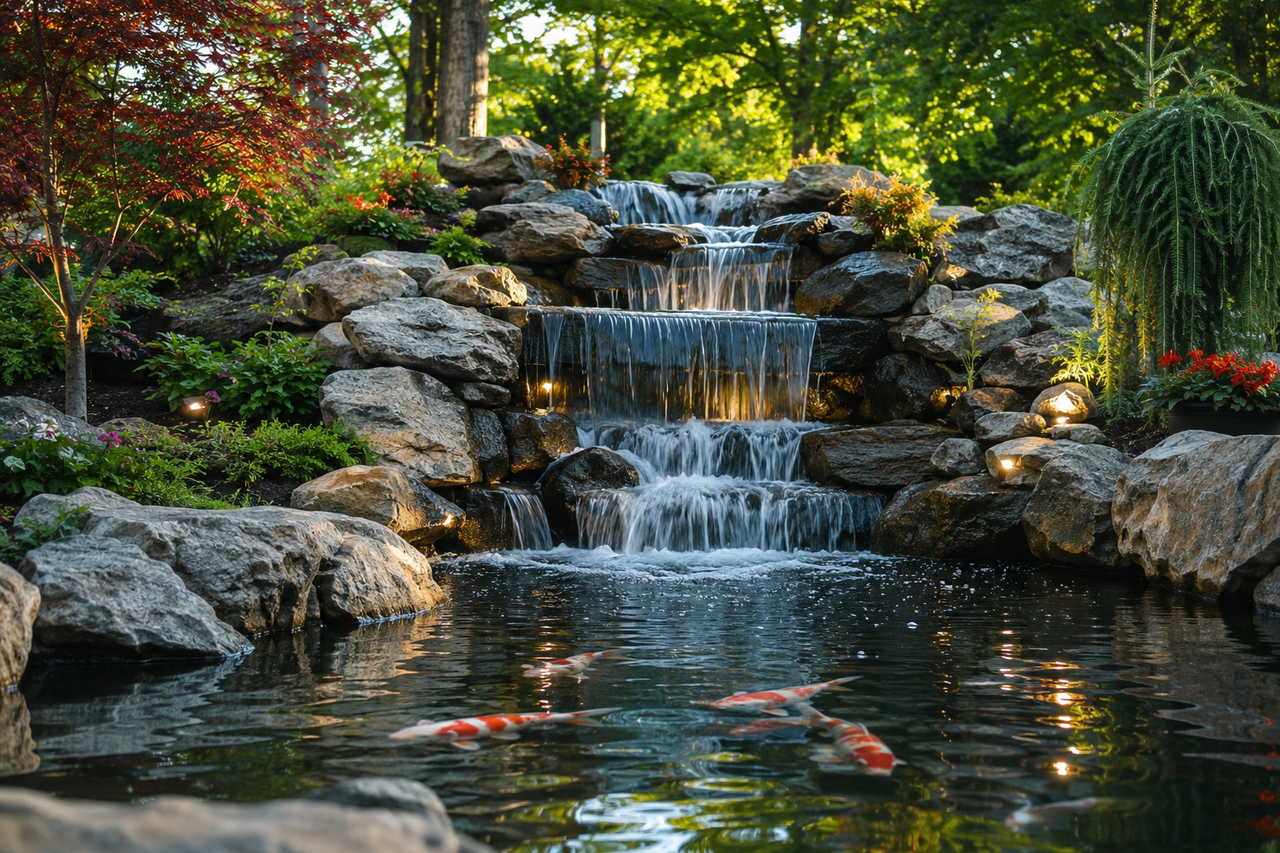
A great pond waterfall should feel like it belongs in the landscape. It should sound pleasant, look proportional to the pond, and move enough water to support the health of the entire ecosystem. The best pond waterfall design is never just about stacking stones and sending water over the top. It takes planning, pump sizing, scale, placement, and a clear understanding of how water behaves once it begins moving through the feature.
At Fitz’s Fish Ponds, we view pond waterfalls as both design elements and functional parts of the pond system. A waterfall can create a peaceful focal point, add movement to the yard, improve aeration, and help the pond feel more alive. The key is getting the sound, scale, and flow to work together.
A waterfall that is too loud can overpower a relaxing backyard space. A waterfall that is too small may look weak or unfinished. A waterfall with the wrong pump can lose its intended effect because the flow is too thin, uneven, or inconsistent. Good design starts with understanding what the waterfall needs to do visually, acoustically, and mechanically.
If you’re planning a new pond waterfall or rebuilding one that never looked or sounded quite right, we can help design the right balance of sound, scale, and flow for your space. From natural rockwork and pump sizing to circulation, filtration, and long-term pond health, our team can help create a waterfall that feels at home in the landscape and works as part of the full pond system.
Learn about our custom pond waterfall design and construction services or call us at (908) 420-9908.
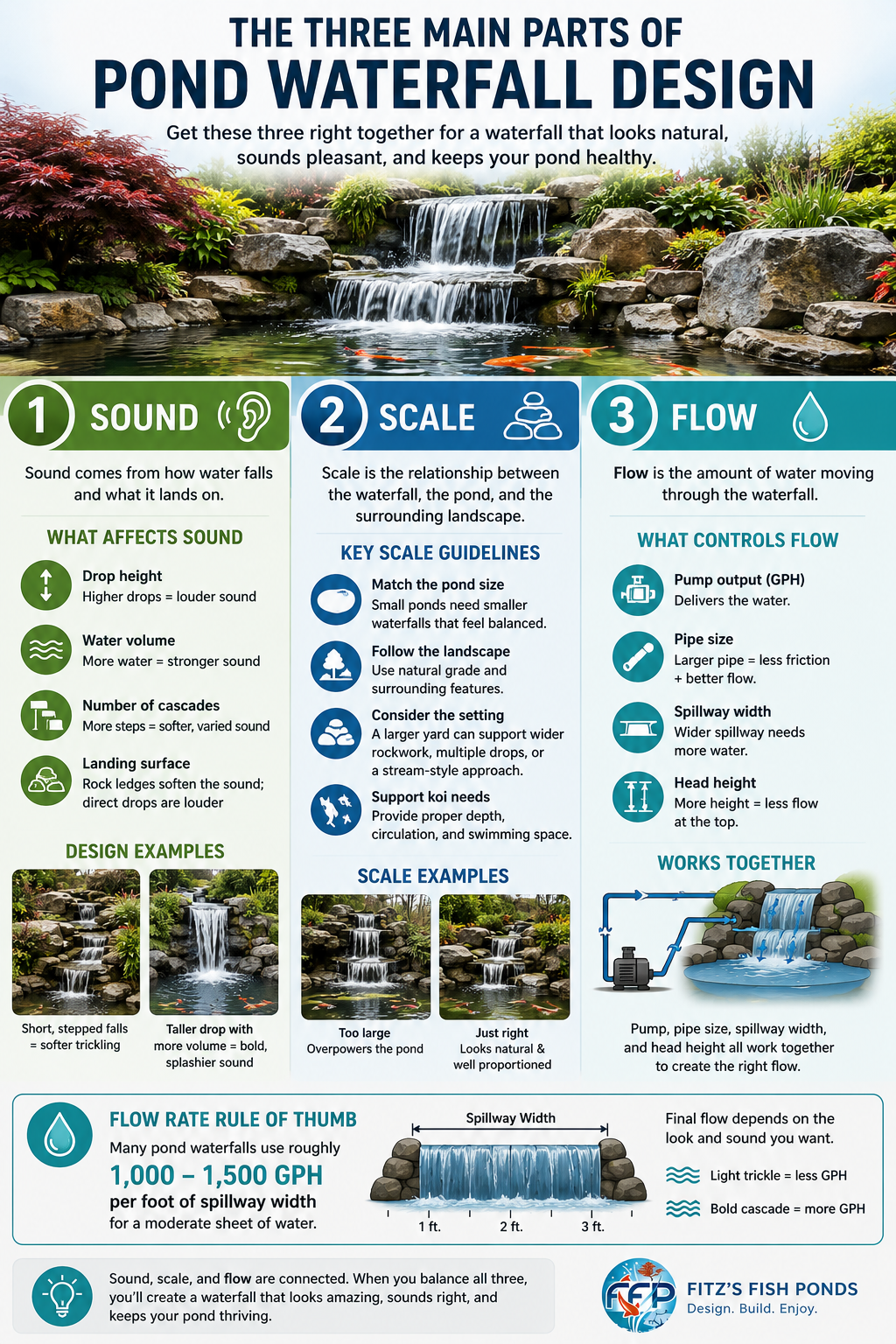
Pond waterfall design comes down to three main parts: sound, scale, and flow. Sound is controlled by the drop height, the amount of water moving through the waterfall, the number of cascades, and the surface where the water lands. A short, stepped waterfall usually creates a softer trickling sound. A taller drop with more volume creates a bolder, splashier sound.
Scale is the relationship between the waterfall, the pond, and the surrounding landscape. A small pond usually needs a waterfall that feels balanced and natural, not one that dominates the whole space. A larger pond or yard may support wider rockwork, multiple drops, or a stream-style approach. The same planning principles apply to koi pond design, especially when the waterfall needs to feel connected to the full layout of the pond.
Flow is the amount of water moving through the waterfall. This is where the pump, pipe size, spillway width, and head height all work together. Many pond waterfalls use roughly 1,000 to 1,500 gallons per hour per foot of spillway width for a moderate sheet of water, but the final number depends on the look and sound you want.
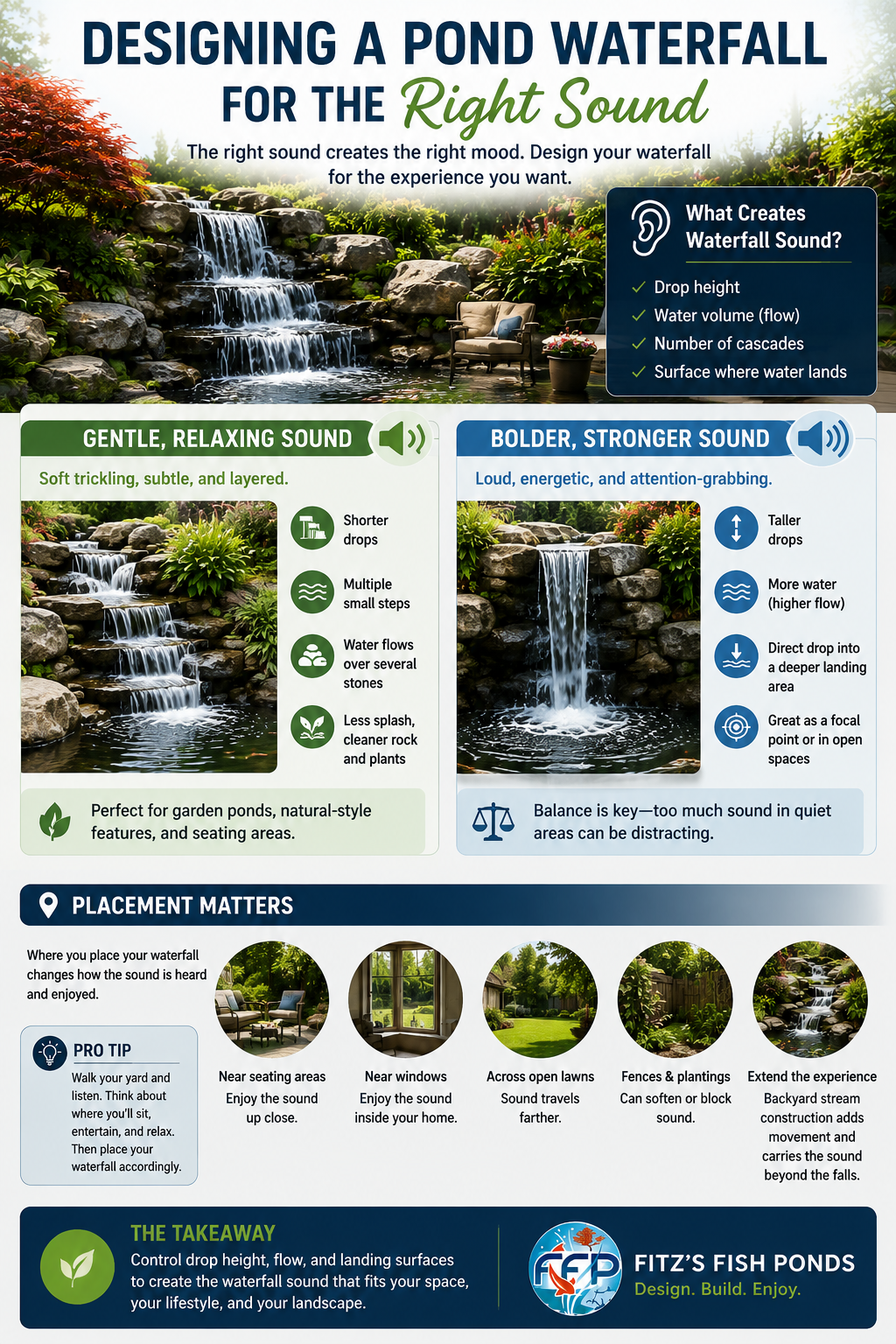
Waterfall sound is one of the most personal parts of pond design. Some homeowners want a quiet, steady trickle that feels relaxing in the background. Others want a stronger cascade that can be heard from a patio, deck, or nearby window. The sound you hear comes from how far the water falls, how much water is moving, and what the water hits when it lands.
A gentle sound usually comes from shorter drops and multiple small steps. When water moves over several stones before reaching the pond, the sound becomes layered and softer. This can work especially well in garden ponds, natural-style water features, and areas close to seating. A smaller drop also tends to create less splash, which can help keep surrounding rocks and plants cleaner.
A stronger waterfall sound comes from more height, more flow, or a direct drop into a deeper landing area. This type of design can work well when the waterfall is meant to be a focal point or when the yard needs more audible water movement. The challenge is balance. Too much sound near a dining area or a quiet sitting space can be distracting rather than calming.
Placement also affects how the waterfall is experienced. Water sound carries differently across open lawns, patios, fences, and planting beds. A waterfall near a window may be enjoyed from inside the home, while one tucked farther back in the landscape may create a destination point in the yard. In larger landscapes, backyard stream construction can extend the sound and movement beyond a single waterfall drop.
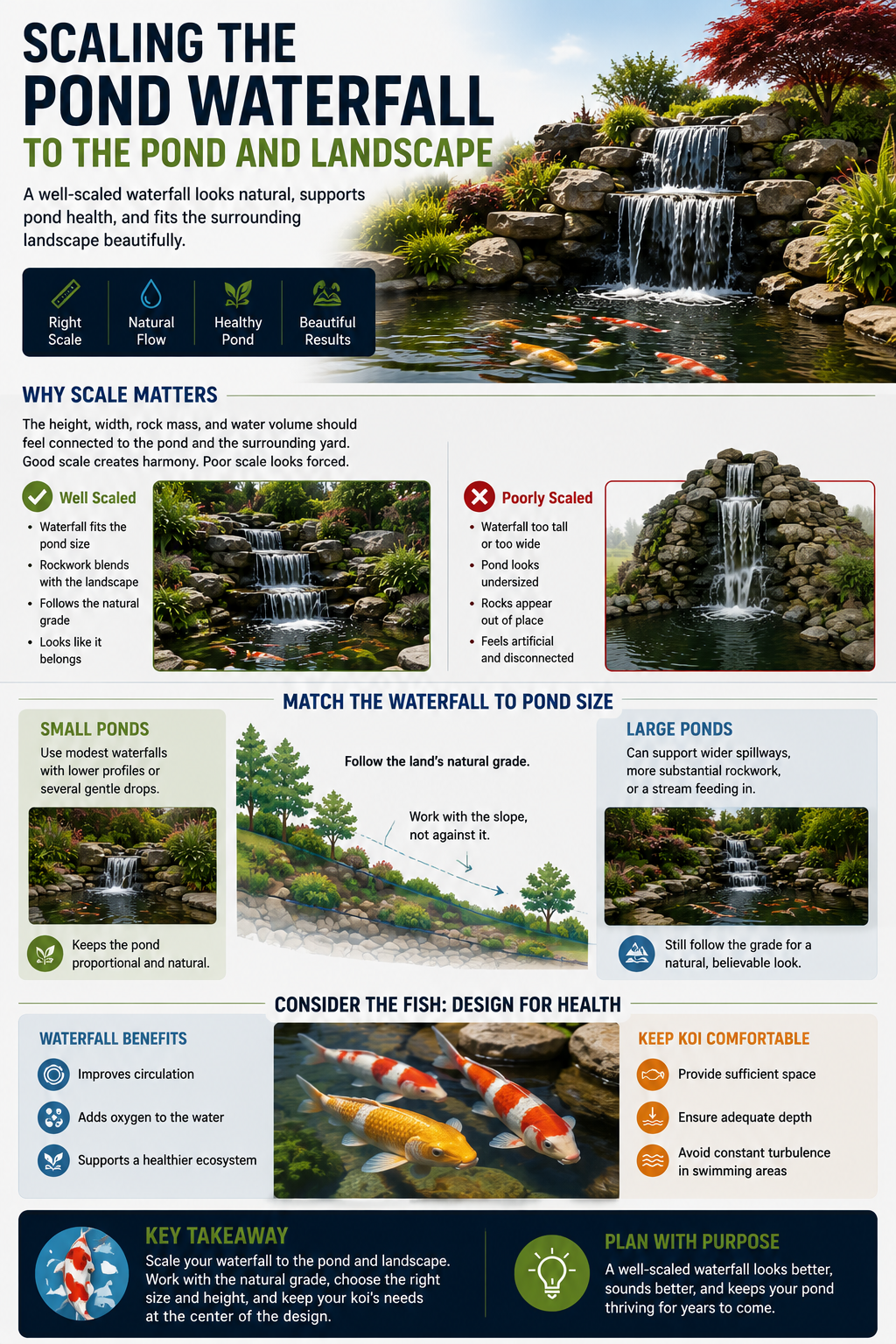
A pond waterfall should look like it belongs to the pond, not like it was added as an afterthought. Scale is one of the biggest reasons some waterfalls look natural while others look forced. The height, width, rock mass, and water volume all need to feel connected to the pond and the surrounding yard.
A small pond usually works best with a modest waterfall, a lower profile, or several gentle drops. If the waterfall is too tall or too wide, it can make the pond look undersized. The water feature may also feel artificial if the rockwork rises sharply from flat ground with no visual support from the surrounding landscape.
A larger pond can often accommodate a wider spillway, more substantial stonework, or a stream feeding into it. Even then, the waterfall should still follow the yard's grade whenever possible. Natural waterfalls form where the land changes elevation. Pond waterfalls look more believable when they appear to follow the same logic.
The needs of the fish should also guide the design. Koi ponds need sufficient space, adequate circulation, and stable water conditions. A waterfall can help support movement and aeration, but it should not create constant turbulence in areas where koi need calmer water. Proper koi fish space requirements should be considered when deciding how much movement, depth, and open swimming area the pond design should provide.
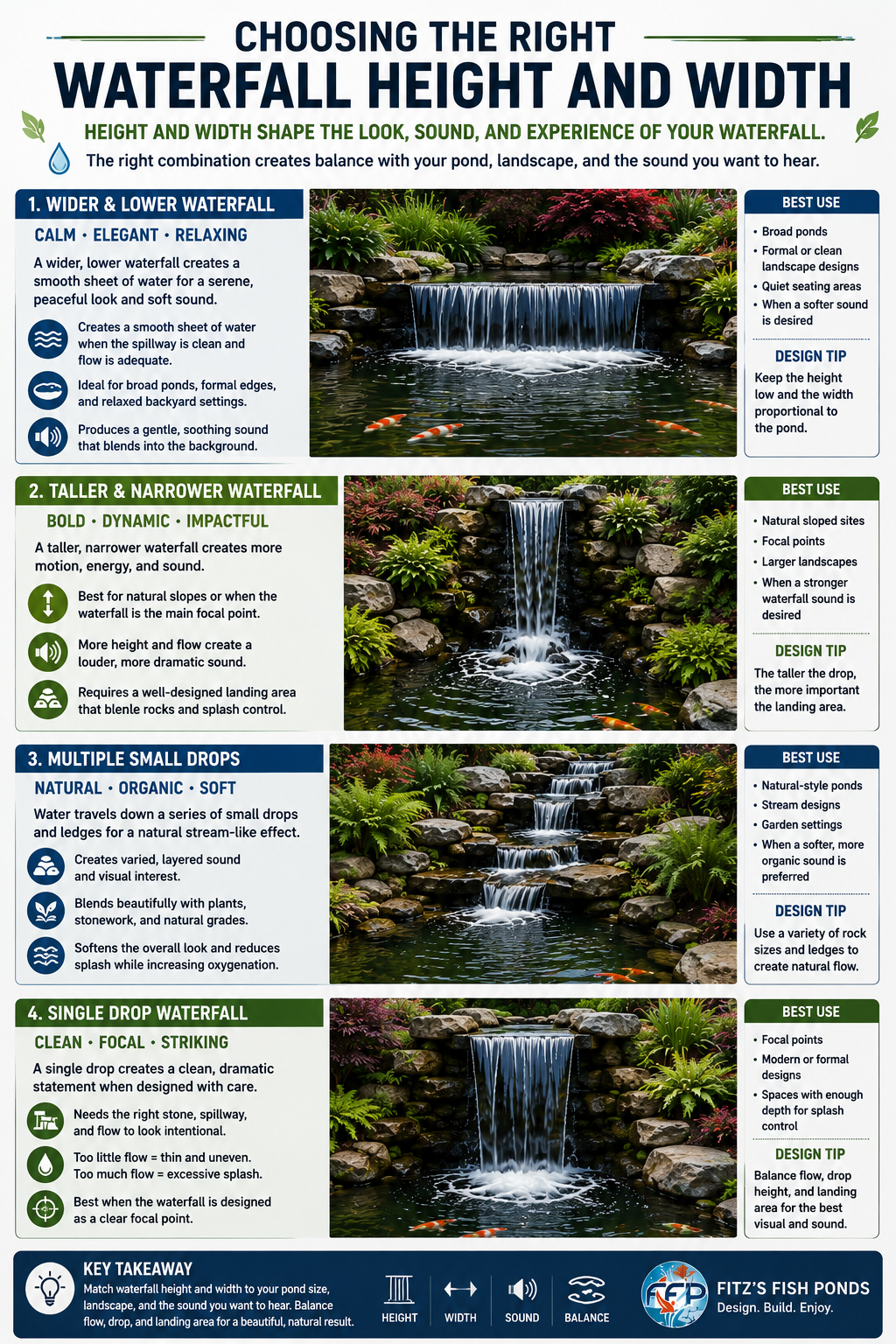
Waterfall height and width shape both the appearance and sound of the feature. A wider, lower waterfall tends to feel calm and elegant. It can create a smooth sheet of water, especially when the spillway is built cleanly and the pump provides enough flow. This style often works well for broad ponds, formal edges, and relaxed backyard settings.
A taller, narrower waterfall creates more motion and sound. It can work well when the site has a natural slope or when the waterfall is designed as a main visual feature. The taller the drop, the more attention the landing area needs. The water has to land where splash is controlled, rocks are stable, and the pond edge can handle the movement.
Multiple small drops can make a waterfall feel more organic. Instead of one dramatic fall, the water travels down through a series of ledges. This creates a more varied sound and a softer appearance. It can also help the waterfall blend into planting beds, stonework, and natural grade changes.
A single drop can be beautiful when the design calls for a clean focal point. It needs the right stone, the right spillway, and enough flow to look intentional. Without enough water, a single drop may look thin or uneven. With too much water, it can splash excessively or feel too aggressive for the setting.
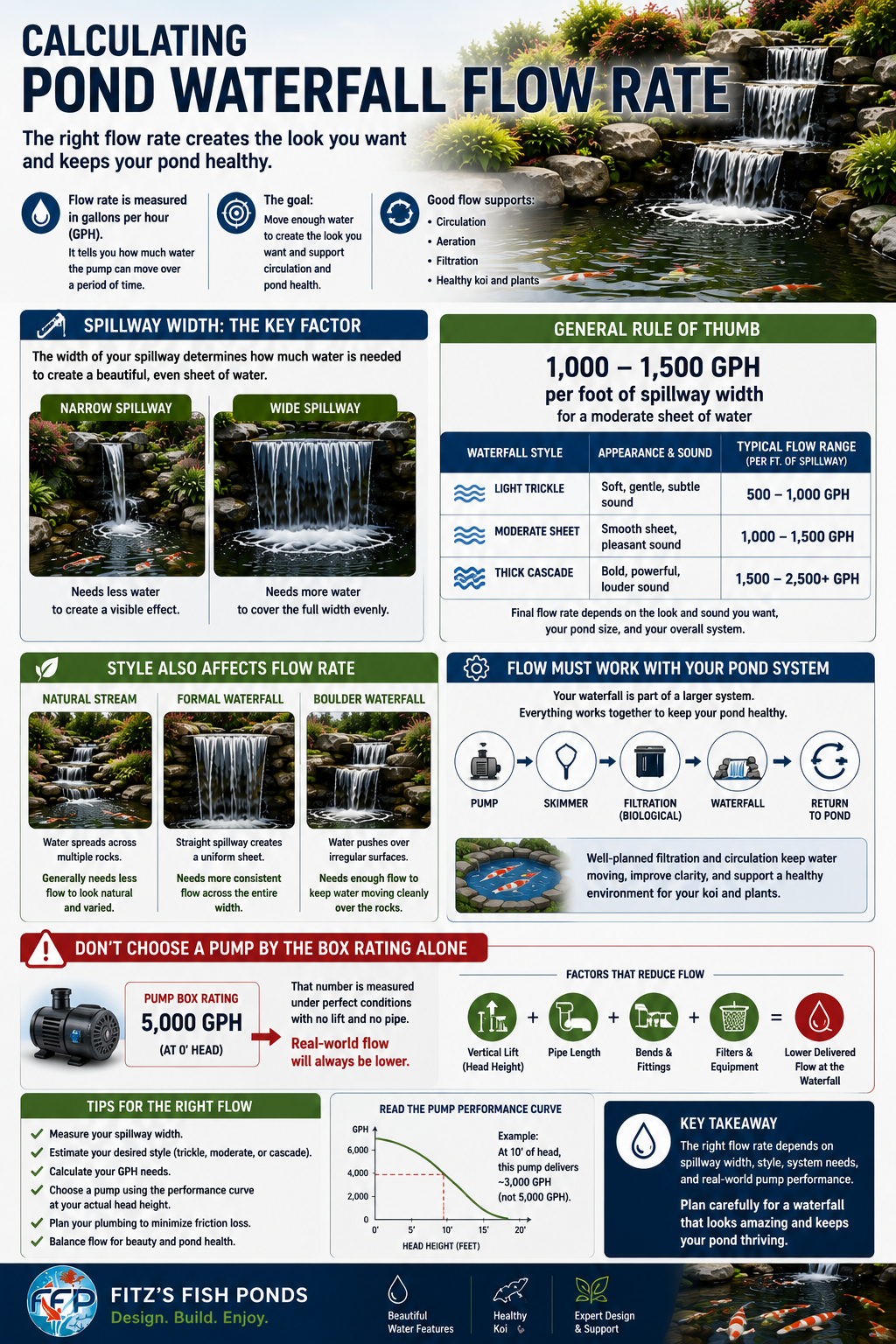
Flow rate is measured in gallons per hour, often shortened to GPH. It tells you how much water the pump can move over a period of time. For a pond waterfall, the goal is to move enough water to create the intended look while also supporting circulation through the pond system.
Spillway width is one of the most important factors. A narrow spillway needs less water to create a visible effect. A wider spillway needs more water to cover the full width evenly. As a general rule, waterfalls typically use 1,000 to 1,500 GPH per foot of spillway width for a moderate sheet of water. A lighter trickle may need less. A thick, powerful cascade may need more.
The desired style also affects the flow rate. A natural stream may split water across several rocks, so the flow can appear softer and more varied. A formal waterfall with a straight spillway may need a more consistent sheet of water from edge to edge. A boulder waterfall may need enough flow to push water cleanly over irregular stone surfaces.
Flow should also work with the pond’s filtration and circulation needs. The waterfall is part of a larger system that may include pumps, skimmers, biological filtration, and return points. Well-planned koi pond filter systems help keep water moving through the pond while supporting clarity and overall pond performance.
The pump should never be selected from the box rating alone. A pump may be labeled with a certain GPH, but that number often reflects ideal conditions. Once the pump has to push water uphill and through a pipe, the delivered flow can be lower.
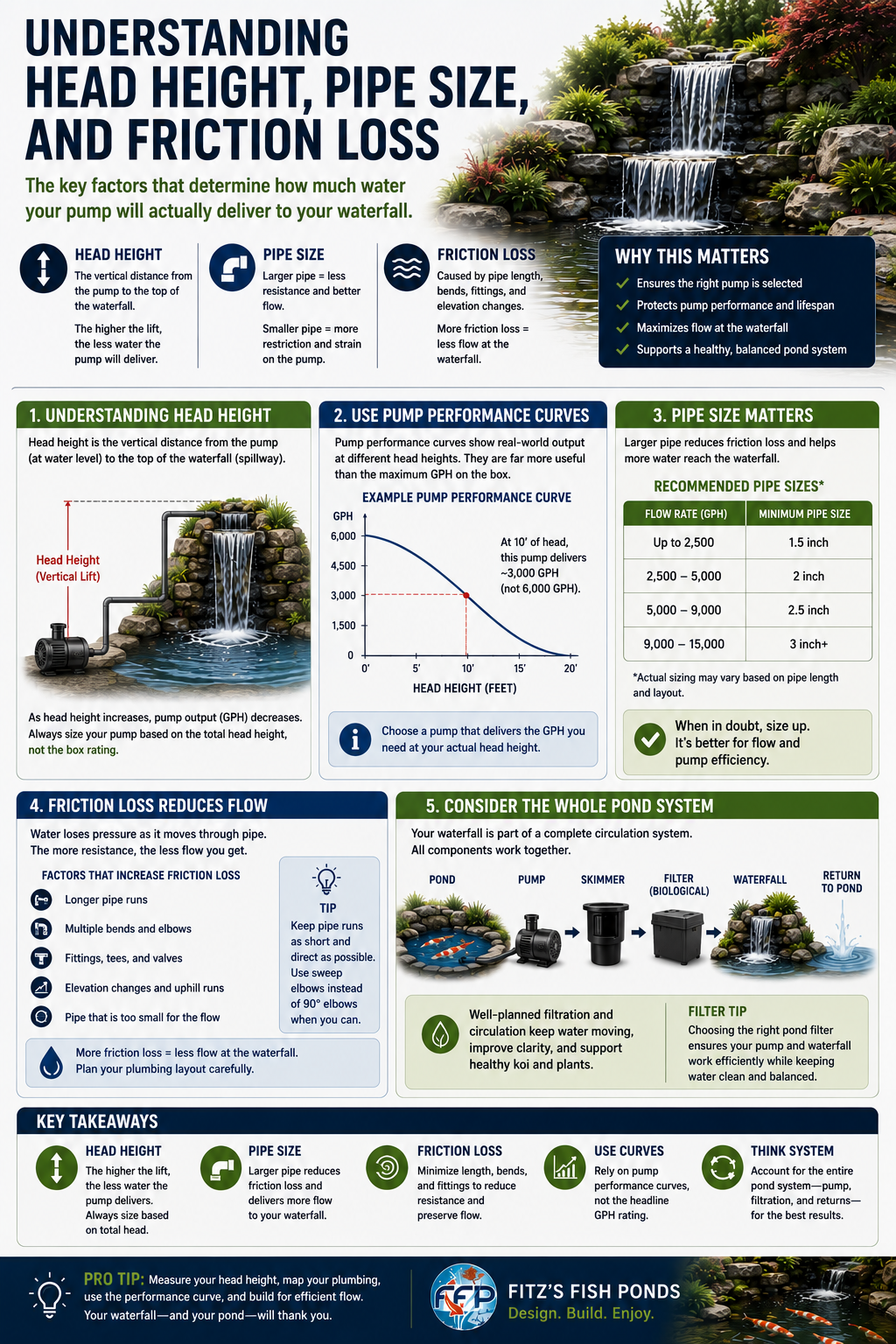
Head height is the vertical distance from the pump to the top of the waterfall. It is one of the most important parts of pump sizing because pumps deliver less water as they push water higher. A pump that seems strong at ground level may deliver much less flow once it has to lift water several feet to the spillway.
Pump manufacturers usually provide performance curves that show how much water a pump can move at different head heights. These curves are more useful than the headline GPH number because they show expected performance under real conditions. The right pump should be sized based on the waterfall height, the pipe run length, and the desired flow at the spillway.
Pipe size also affects the final result. A narrow pipe can restrict flow and make the pump work harder. Long pipe runs can create additional friction loss, especially if there are many bends, fittings, or elevation changes. A larger pipe diameter can often help preserve flow and reduce strain on the system.
Pump sizing should also be considered alongside filtration. The waterfall may share circulation responsibilities with other pond equipment, so the design should account for how water is being pulled, filtered, returned, and aerated. Choosing the right pond filter can make a major difference in how well the waterfall, pump, and full pond system work together.
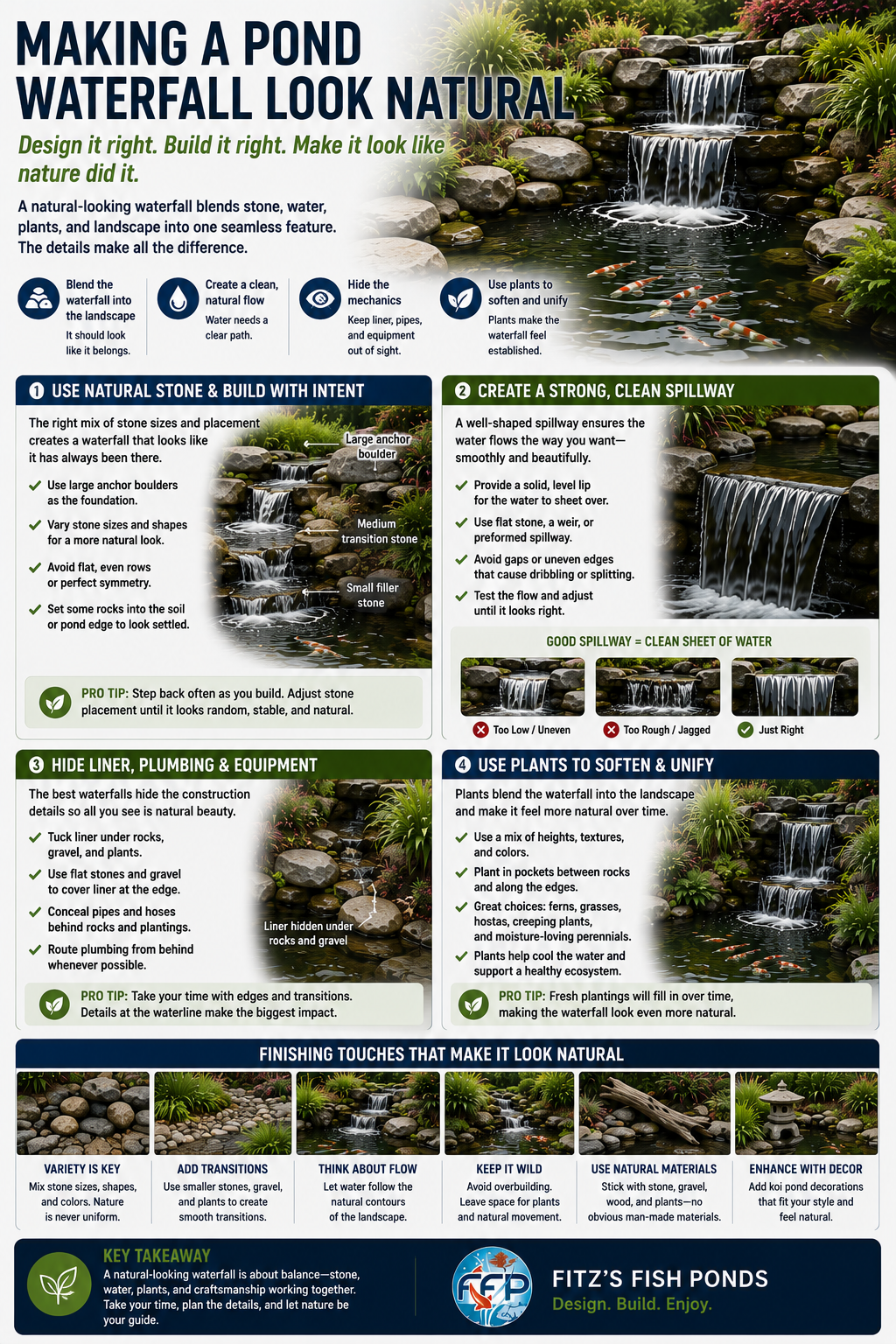
Natural-looking pond waterfalls rely on more than attractive stone. The rockwork needs to feel settled into the landscape. In nature, rocks are rarely stacked in even rows or placed with perfect symmetry. A better approach is to vary stone sizes, use large anchor boulders, add smaller transition stones, and set some rocks partly into the soil or pond edge.
The spillway should also look intentional. Water needs a clean path over the rock, ledge, or weir. If the spillway is poorly shaped, water may dribble, split awkwardly, or disappear behind the stones. A strong spillway lip helps the water sheet cleanly or fall in the intended direction.
Liner and plumbing should be hidden. Exposed liner is one of the fastest ways to make a waterfall look unfinished. Gravel, plants, flat stones, and careful edge work can help conceal the construction details. The same is true for hoses, pipes, and fittings. The mechanics are important, but they should not become part of the view.
Plants can soften the transition between water, stone, and surrounding landscape. They can also help the waterfall feel more established over time. The right mix of stones, gravel, aquatic plants, and edge plantings can make the waterfall feel like part of the yard instead of a separate feature. Thoughtful koi pond decorations can also enhance the overall look when they fit the pond's style, size, and natural feel.
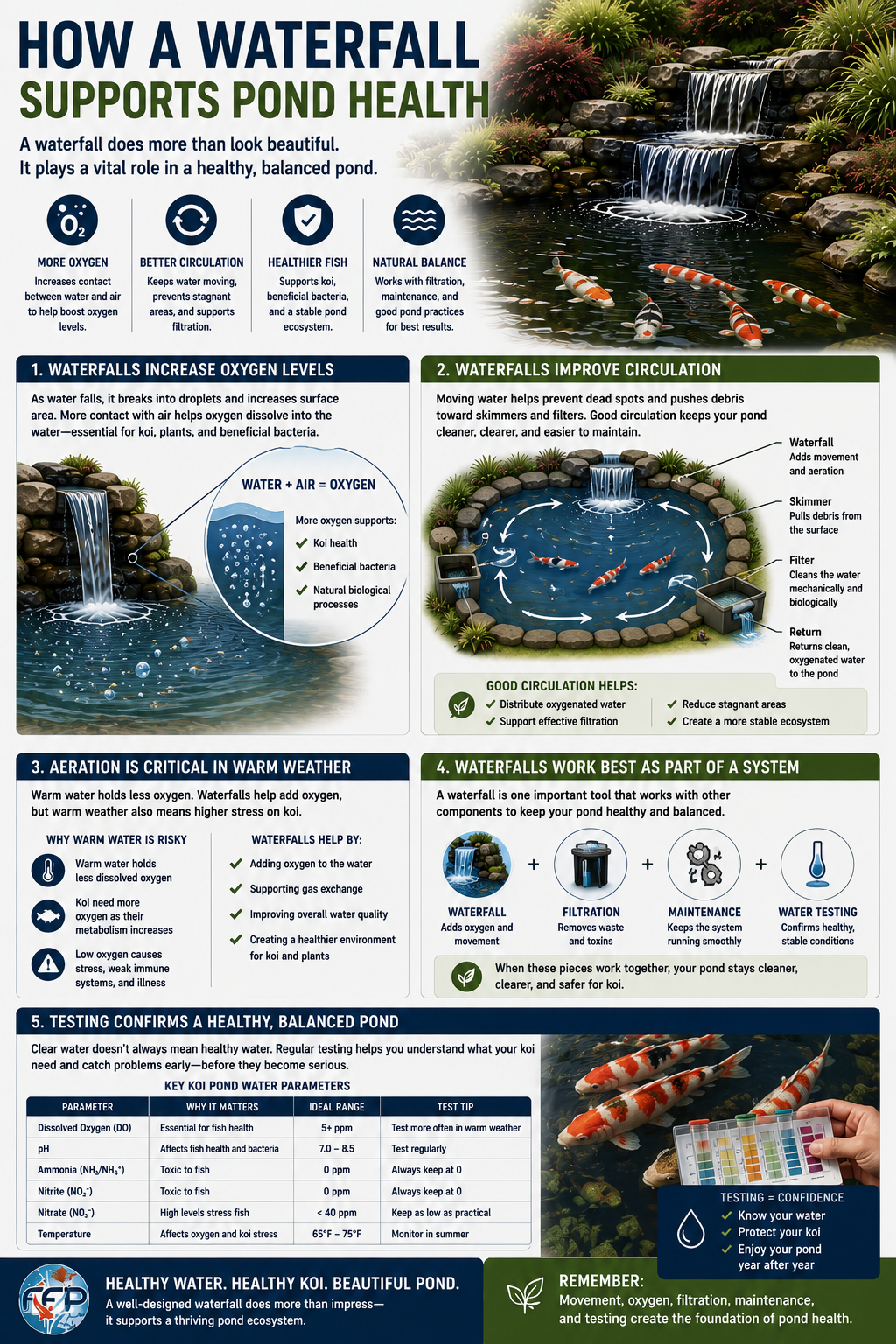
A pond waterfall is beautiful, but it also plays a functional role. Moving water helps increase contact between water and air, which can support oxygen levels in the pond. This is especially useful in koi ponds, where fish, beneficial bacteria, and the overall ecosystem depend on stable water conditions.
Waterfalls can also help improve circulation. When designed well, a waterfall helps move water through the pond rather than allowing it to sit stagnant in one area. Good circulation supports filtration, helps distribute oxygenated water, and can make the pond easier to maintain.
Warm weather makes aeration even more important. Warmer water holds less oxygen than cooler water, and koi can become stressed when oxygen levels drop. A waterfall is not the only tool for pond health, but it can be a valuable part of the system when paired with proper filtration, maintenance, and water testing.
Clear water does not always mean balanced water. Regular testing of koi pond water parameters helps pond owners understand oxygen support, water stability, and the conditions koi need to stay healthy.
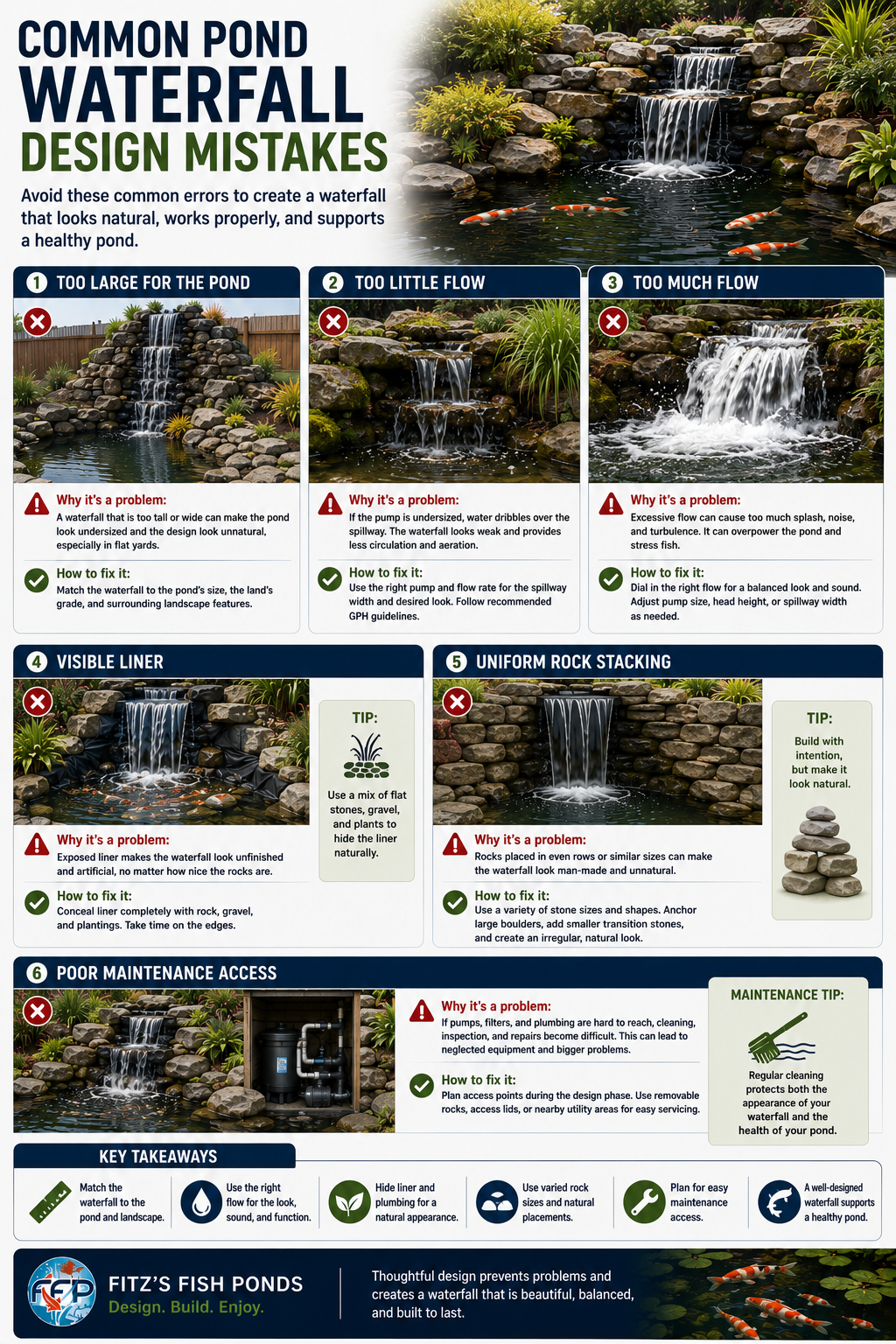
One common mistake is building the waterfall too large for the pond. A tall rock mound beside a small pond can look unnatural, especially when the surrounding yard is flat. The waterfall should match the pond’s footprint, the land's grade, and the scale of nearby landscape features.
Another mistake is using too little flow. If the pump is undersized, the water may dribble over the spillway rather than produce the intended effect. This can make the waterfall look weak and may limit its benefit to circulation and aeration. The opposite problem can happen when the flow is too strong. Excessive water volume can create too much splash, noise, or turbulence.
Visible liner is another issue. Even a well-built waterfall can lose its natural look when black liner is exposed around the edges. Liner should be concealed with rock, gravel, and plantings wherever possible.
Uniform rock stacking can also make a waterfall feel artificial. Stones should vary in size and placement. Some should appear anchored, while others should help guide the water naturally.
Maintenance access is easy to overlook. Pumps, filters, and plumbing need to be reachable for cleaning, inspection, and repairs. Regular koi pond cleaning helps protect both the waterfall's appearance and the pond's long-term health.
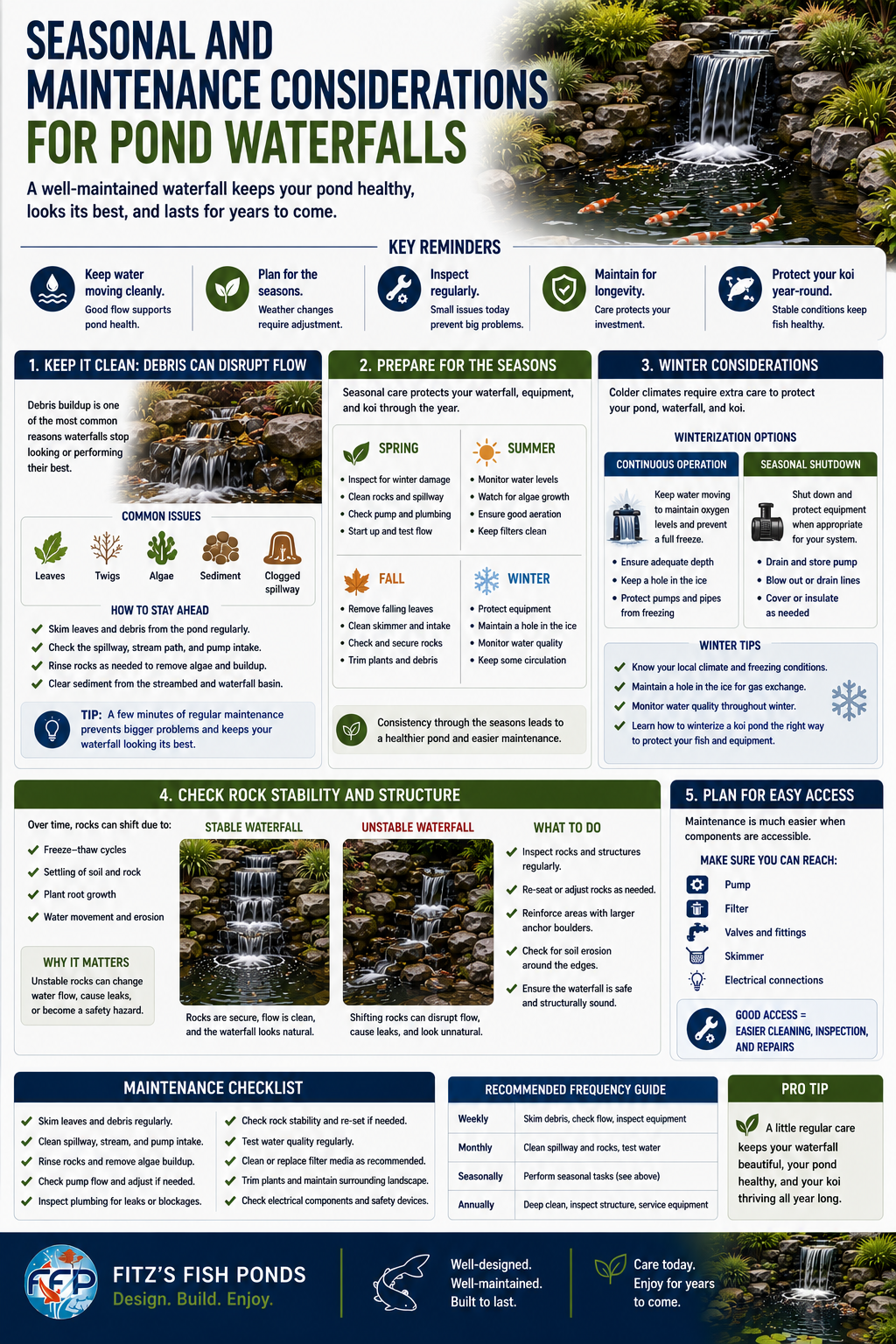
A pond waterfall should be designed with long-term care in mind. Leaves, algae, sediment, and debris can affect how water moves over the rocks. If the spillway or stream path becomes blocked, the waterfall may lose its clean flow or send water where it does not belong.
Seasonal changes also affect pond waterfalls. In colder climates, winter preparation is important for protecting equipment and supporting koi through freezing weather. Some systems continue to run through winter, while others require seasonal adjustments depending on the pond design, equipment, and local conditions. Knowing how to winterize a koi pond can help protect the pond, waterfall, and equipment during cold weather.
Rock stability should also be reviewed over time. Freeze-thaw cycles, settling, plant growth, and water movement can shift materials. A well-designed waterfall allows for inspection and upkeep without requiring the entire feature to be dismantled.
A successful pond waterfall brings together sound, scale, and flow. Sound depends on drop height, flow volume, landing surfaces, and the number of cascades. Scale depends on the size of the pond, the shape of the landscape, and the visual weight of the rockwork. Flow depends on pump sizing, spillway width, head height, pipe size, and friction loss.
The most natural waterfalls look like they belong to the land. They use varied stones, hidden liner, thoughtful planting, and water paths that feel believable. The most effective waterfalls also support the pond system through aeration and circulation.
Good waterfall design should never separate appearance from performance. The feature needs to look right, sound right, and function properly. When those parts work together, the pond becomes more enjoyable, more balanced, and easier to appreciate from every part of the yard.
If you’re planning a new pond waterfall or rebuilding one that never looked or sounded quite right, we can help design the right balance of sound, scale, and flow for your space. From natural rockwork and pump sizing to circulation, filtration, and long-term pond health, our team can help create a waterfall that feels at home in the landscape and works as part of the full pond system.
Learn about our custom pond waterfall design and construction services or call us at (908) 420-9908.
How Do You Design A Pond Waterfall?
A pond waterfall should be designed around sound, scale, and flow. Start with the experience you want, then match the waterfall height, spillway width, rockwork, and pump size to the pond and landscape. The goal is to create a waterfall that looks natural, sounds pleasant, and moves enough water to support circulation.
What Size Pump Do I Need For A Pond Waterfall?
The right pump size depends on the spillway width, head height, pipe length, pipe diameter, and desired water effect. The pump should be selected based on how much water it can deliver at the actual height of the waterfall, not only the maximum GPH listed on the pump.
How Many Gallons Per Hour Do I Need Per Foot Of Waterfall?
Many moderate pond waterfalls use roughly 1,000 to 1,500 gallons per hour per foot of spillway width. A light trickle may need less water, while a thicker sheet or stronger cascade may need more. The final flow rate should match the waterfall style and site conditions.
How Can I Make My Pond Waterfall Sound Better?
Waterfall sound can be adjusted through drop height, water volume, number of cascades, and landing surfaces. Shorter drops and multiple small steps usually create a softer sound. Taller drops and stronger flow usually create a louder, more dramatic sound.
How Tall Should A Pond Waterfall Be?
A pond waterfall should be tall enough to create the desired sound and movement, but not so tall that it looks out of proportion. The best height depends on the pond size, yard grade, surrounding landscape, and the style of waterfall being built.
How Do I Make A Pond Waterfall Look Natural?
A natural-looking pond waterfall uses varied stone sizes, partly buried boulders, hidden liner, plants, gravel, and a water path that follows the landscape. Avoid overly uniform rock stacking and waterfalls that rise suddenly from flat ground without visual support.
Does A Pond Waterfall Help Oxygenate The Water?
Yes, a pond waterfall can help oxygenate the water by increasing water movement and exposure to air. This can support koi, beneficial bacteria, and the overall pond ecosystem. A waterfall works best when paired with proper filtration, circulation, and regular maintenance.
Why Does My Pond Waterfall Look Fake?
A pond waterfall can look fake when the scale is off, the rocks are stacked too evenly, the liner is visible, the spillway is poorly shaped, or the feature does not follow the yard's natural grade. Weak flow or excessive flow can also make the waterfall look less natural.
Can A Waterfall Help Keep A Koi Pond Healthy?
A waterfall can help support koi pond health through aeration and circulation. It can move oxygenated water through the pond and reduce stagnant areas when designed correctly. It should still work when paired with proper filtration, regular water testing, cleaning, and seasonal pond care.
| Hours | |
|---|---|
| sunday | 10:00 AM - 4:00 PM |
| monday | Closed |
| tuesday | 10:00 AM - 5:00 PM |
| wednesday | 10:00 AM - 5:00 PM |
| thursday | 10:00 AM - 5:00 PM |
| friday | 10:00 AM - 5:00 PM |
| saturday | 10:00 AM - 5:00 PM |
| Hours | |
|---|---|
| sunday | 10:00 AM - 5:00 PM |
| monday | Closed |
| tuesday | 11:00 AM - 6:00 PM |
| wednesday | 11:00 AM - 6:00 PM |
| thursday | 11:00 AM - 6:00 PM |
| friday | 11:00 AM - 6:00 PM |
| saturday | 10:00 AM - 5:00 PM |
| Hours | |
|---|---|
| sunday | 10:00 AM - 4:00 PM |
| monday | Closed |
| tuesday | 10:00 AM - 5:00 PM |
| wednesday | 10:00 AM - 5:00 PM |
| thursday | 10:00 AM - 5:00 PM |
| friday | 10:00 AM - 5:00 PM |
| saturday | 10:00 AM - 5:00 PM |
| Hours | |
|---|---|
| sunday | 10:00 AM - 5:00 PM |
| monday | Closed |
| tuesday | 11:00 AM - 6:00 PM |
| wednesday | 11:00 AM - 6:00 PM |
| thursday | 11:00 AM - 6:00 PM |
| friday | 11:00 AM - 6:00 PM |
| saturday | 10:00 AM - 5:00 PM |
| Hours | |
|---|---|
| sunday | Closed |
| monday | 10:00 AM - 4:00 PM |
| tuesday | 10:00 AM - 4:00 PM |
| wednesday | 10:00 AM - 4:00 PM |
| thursday | 10:00 AM - 4:00 PM |
| friday | 10:00 AM - 4:00 PM |
| saturday | Closed |
| Hours | |
|---|---|
| sunday | 10:00 AM - 4:00 PM |
| monday | Closed |
| tuesday | 10:00 AM - 5:00 PM |
| wednesday | 10:00 AM - 5:00 PM |
| thursday | 10:00 AM - 5:00 PM |
| friday | 10:00 AM - 5:00 PM |
| saturday | 10:00 AM - 5:00 PM |
| Hours | |
|---|---|
| sunday | Closed |
| monday | Closed |
| tuesday | 10:00 AM - 5:00 PM |
| wednesday | 10:00 AM - 5:00 PM |
| thursday | 10:00 AM - 5:00 PM |
| friday | 10:00 AM - 5:00 PM |
| saturday | 10:00 AM - 5:00 PM |
| Hours | |
|---|---|
| Sunday | Closed |
| Monday | Closed |
| Tuesday | 10:00 AM - 5:00 PM |
| Wednesday | 10:00 AM - 5:00 PM |
| Thursday | 10:00 AM - 5:00 PM |
| Friday | 10:00 AM - 5:00 PM |
| Saturday | 10:00 AM - 5:00 PM |
| Hours | |
|---|---|
| Sunday | 10:00 AM - 4:00 PM |
| Monday | Closed |
| Tuesday | 10:00 AM - 5:00 PM |
| Wednesday | 10:00 AM - 5:00 PM |
| Thursday | 10:00 AM - 5:00 PM |
| Friday | 10:00 AM - 5:00 PM |
| Saturday | 10:00 AM - 5:00 PM |