Grass Carp for Ponds: Weed Control, Stocking and Permits
Apr 19th 2024

Apr 19th 2024
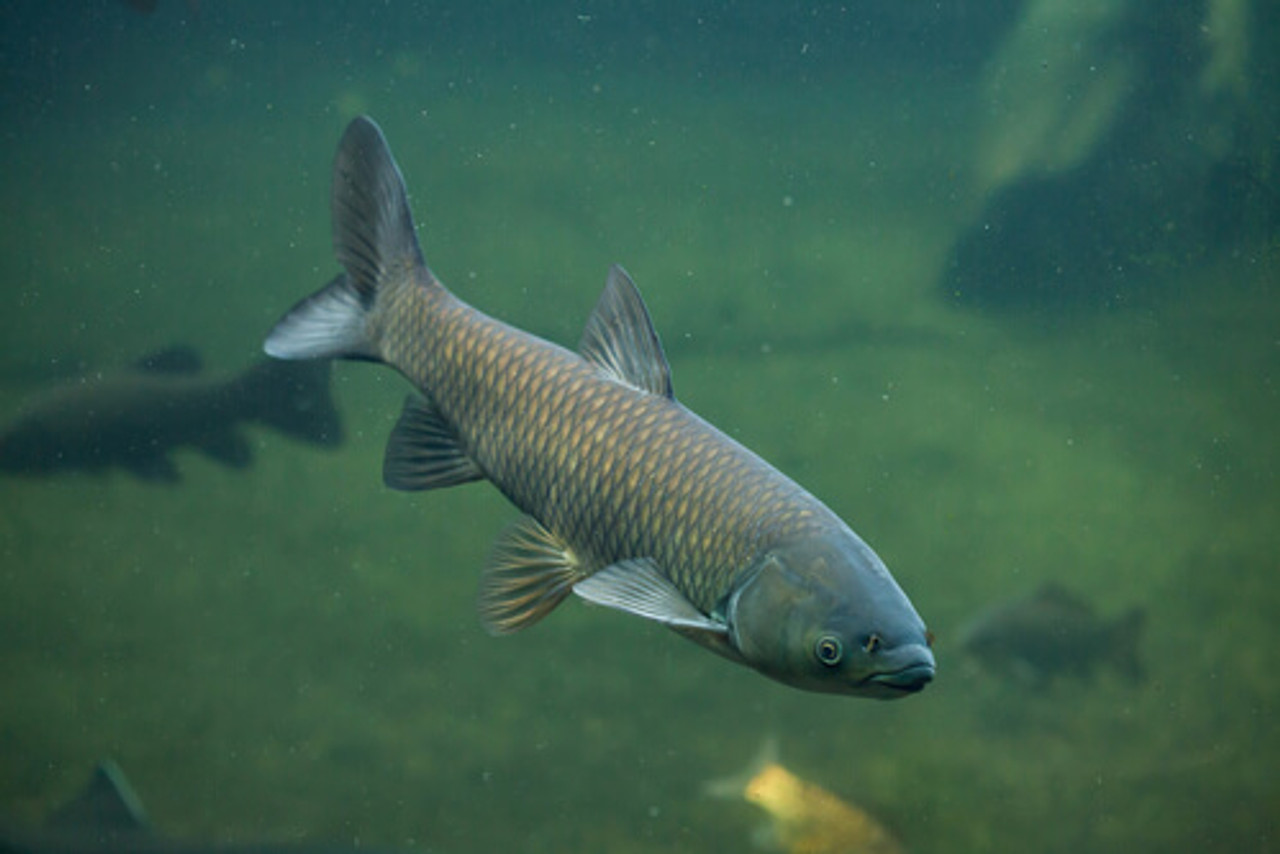
Grass carp are a vegetarian pond fish stocked to control submerged aquatic weeds such as hydrilla, elodea, pondweed and coontail. They graze plants down without stirring up mud, and they leave other fish and their eggs alone. In New Jersey, Pennsylvania and Tennessee you need a permit, and the fish must be certified sterile triploid grass carp. Most ponds are stocked at roughly 5 to 15 fish per surface acre, depending on how heavy the weed growth is.
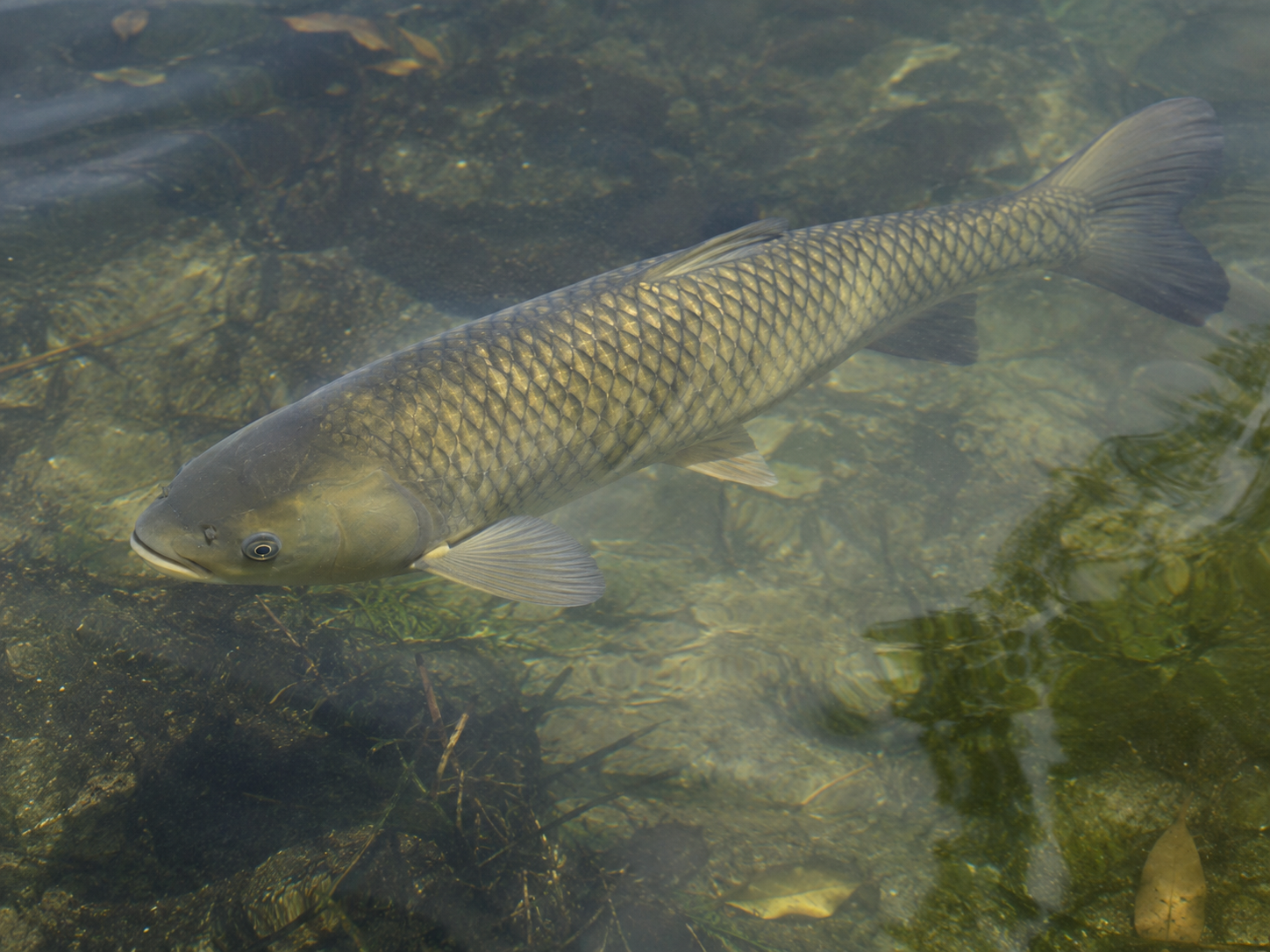
Grass carp are one of the few fish stocked in a pond for a job rather than for looks. They are not as striking as koi or goldfish, and they take more paperwork to acquire, which leaves many pond owners wondering whether they are worth the trouble. For a pond losing its open water to submerged weed growth, they usually are. Here is what grass carp actually do, what they cost you in trade-offs, and what the law requires before you stock them.
Any seasoned natural pond owner knows the two problems that close in on open water: algae and submerged aquatic weed. Grass carp deal with the second one.
Grass carp are true herbivores. Stocked into a weedy pond they will work through soft submerged plants such as hydrilla, elodea, coontail, pondweed and southern naiad, grazing them from the top down rather than uprooting them. Because they do not pull plants up by the root, they do not stir up mud, and the water stays clearer than it would under mechanical removal.
Chinese farmers used grass carp to keep weeds out of rice paddies for centuries, and Russian fisheries later stocked them for the same reason. The fish has been doing this job for a very long time.
What grass carp will not do is clear an algae bloom. Green water is planktonic algae and string algae is filamentous, and neither is a preferred food. If algae is your problem, aeration, nutrient control and a treatment program will move the needle where grass carp will not.
That last line matters more than it looks. Grass carp will strip the plants you wanted to keep once the plants you wanted gone have run out, so the target is control, not eradication.
The grass carp, in addition to being a vegetarian, has other traits which make it distinct from other fish. For instance, it does not muddy water while consuming plant materials, which makes it beneficial for ponds. Rather than consuming plants completely, it tends to "shave" them, which means that it consumes them from the top while leaving the bottom or root intact. Because it does not pull up plants by the root, it does not pull up mud, and the water stays clean and clear. Grass carp also do not eat other fish or their eggs. They prefer plants and weeds.
Grass carp are usually stocked at 8 to 12 inches, which is large enough to survive largemouth bass and heron. With a steady supply of plant material they grow quickly, commonly reaching 20 pounds and occasionally 40 pounds or more.
A stocked grass carp will normally live ten years or more in a pond, so stocking is close to a decade-long decision. Plan the rate on that basis rather than on this season's weed line.
Almost every grass carp sold legally in the United States today is a triploid grass carp: a fish given an extra set of chromosomes so that it cannot reproduce. That single detail is the reason the fish is available at all.
Diploid grass carp, the normal fertile form, can spawn in long river systems, and escaped fish are what put the species on invasive lists in the first place. A sterile triploid cannot establish a population, so states that prohibit diploid grass carp outright will still permit certified triploids. Certification comes from the U.S. Fish and Wildlife Service National Triploid Grass Carp Inspection and Certification Program, and a reputable supplier hands you the certificate with the fish.
If a seller cannot tell you whether the fish are triploid, or cannot produce the paperwork, do not buy them.
Grass carp reached the United States in the 1960s and spread far enough that many states now list them as invasive. The rules that followed are not uniform. Some states prohibit grass carp entirely, most allow certified triploids under a permit, and a few allow them with no permit at all. The fish is regulated at the state level and the penalty falls on the pond owner, so check before you buy.
New Jersey allows certified sterile triploid grass carp under a permit from the New Jersey Division of Fish and Wildlife. Fertile diploid grass carp are not permitted. Applications are reviewed per waterbody, and outflows generally have to be screened so fish cannot escape downstream.
Pennsylvania permits triploid grass carp in private ponds through the Pennsylvania Fish and Boat Commission. Fertile diploid grass carp are prohibited.
Tennessee allows triploid grass carp in private ponds, administered by the Tennessee Wildlife Resources Agency. Requirements differ for ponds that drain into public water, so confirm before ordering.
Regulations change. Confirm the current requirement with your state wildlife agency before you order, and keep the triploid certificate filed with your permit paperwork.
Stocking rate is the decision that makes or breaks a grass carp program. Too few fish and the weed stays ahead of them. Too many and the pond gets stripped to bare bottom, which costs you habitat, water clarity and the plant life your other fish depend on.
| Submerged weed coverage | Stocking rate | What to expect |
|---|---|---|
| Light, under 20 percent | 2 to 4 fish per surface acre | Slow, maintenance-level grazing |
| Moderate, 20 to 40 percent | 5 to 10 fish per surface acre | Noticeable reduction over one to two seasons |
| Heavy, over 40 percent | 10 to 15 fish per surface acre | Faster knockdown, higher risk of overgrazing |
Grass carp are very difficult to remove once they are in the water, so the standard advice is to start at the low end of the range, wait a full growing season, and add more only if the weed is still winning.
Grass carp are a good fit for a natural, farm or irrigation pond of roughly half an acre or more, with a submerged weed problem, an owner who can wait one to two growing seasons for results, and an outflow that can be screened. They work well in small lakes for the same reasons.
They are a poor fit for ornamental water gardens, for any pond where the plants are the point, and for anyone who needs the water clear this month.
Grass carp do not eat koi, and they do not eat koi eggs, so they are no threat to your fish. They will eat your plants. A koi pond stocked with lilies, marginals and submerged oxygenators will lose them, and a grass carp large enough to be useful needs far more room than a typical water garden provides.
For a koi pond, plant management, filtration and a regular maintenance program are the better path.
Not meaningfully. Grass carp eat submerged aquatic plants such as hydrilla, elodea and pondweed. They will pick at filamentous string algae once their preferred plants are gone, but they will not clear a green water bloom. Algae is handled with aeration, nutrient control and treatment.
A pond with moderate submerged weed growth is commonly stocked at 5 to 10 grass carp per surface acre. Heavy growth may call for 10 to 15. Start at the low end, because grass carp are very difficult to remove once stocked.
Yes, with a permit. New Jersey allows certified sterile triploid grass carp under a permit from the New Jersey Division of Fish and Wildlife. Fertile diploid grass carp are not permitted. Confirm current requirements with the agency before ordering.
No. Grass carp are herbivores and do not prey on other fish or their eggs. They will eat your pond plants, which is usually the reason not to put them in an ornamental koi pond.
Grass carp commonly live ten years or more in a pond and often reach 20 pounds, with some fish exceeding 40 pounds.
Fitz's Fish Ponds manages natural ponds and small lakes across New Jersey, Pennsylvania and Tennessee. If submerged weed growth is taking over your water, we can assess the pond, identify the plants you actually have, and tell you whether grass carp, aeration, treatment or a combination is the right answer.
Contact us to schedule a pond assessment.
| Hours | |
|---|---|
| sunday | 10:00 AM - 4:00 PM |
| monday | Closed |
| tuesday | 10:00 AM - 5:00 PM |
| wednesday | 10:00 AM - 5:00 PM |
| thursday | 10:00 AM - 5:00 PM |
| friday | 10:00 AM - 5:00 PM |
| saturday | 10:00 AM - 5:00 PM |
| Hours | |
|---|---|
| sunday | 10:00 AM - 5:00 PM |
| monday | Closed |
| tuesday | 11:00 AM - 6:00 PM |
| wednesday | 11:00 AM - 6:00 PM |
| thursday | 11:00 AM - 6:00 PM |
| friday | 11:00 AM - 6:00 PM |
| saturday | 10:00 AM - 5:00 PM |
| Hours | |
|---|---|
| sunday | 10:00 AM - 4:00 PM |
| monday | Closed |
| tuesday | 10:00 AM - 5:00 PM |
| wednesday | 10:00 AM - 5:00 PM |
| thursday | 10:00 AM - 5:00 PM |
| friday | 10:00 AM - 5:00 PM |
| saturday | 10:00 AM - 5:00 PM |
| Hours | |
|---|---|
| sunday | 10:00 AM - 5:00 PM |
| monday | Closed |
| tuesday | 11:00 AM - 6:00 PM |
| wednesday | 11:00 AM - 6:00 PM |
| thursday | 11:00 AM - 6:00 PM |
| friday | 11:00 AM - 6:00 PM |
| saturday | 10:00 AM - 5:00 PM |
| Hours | |
|---|---|
| sunday | Closed |
| monday | 10:00 AM - 4:00 PM |
| tuesday | 10:00 AM - 4:00 PM |
| wednesday | 10:00 AM - 4:00 PM |
| thursday | 10:00 AM - 4:00 PM |
| friday | 10:00 AM - 4:00 PM |
| saturday | Closed |
| Hours | |
|---|---|
| sunday | 10:00 AM - 4:00 PM |
| monday | Closed |
| tuesday | 10:00 AM - 5:00 PM |
| wednesday | 10:00 AM - 5:00 PM |
| thursday | 10:00 AM - 5:00 PM |
| friday | 10:00 AM - 5:00 PM |
| saturday | 10:00 AM - 5:00 PM |
| Hours | |
|---|---|
| sunday | Closed |
| monday | Closed |
| tuesday | 10:00 AM - 5:00 PM |
| wednesday | 10:00 AM - 5:00 PM |
| thursday | 10:00 AM - 5:00 PM |
| friday | 10:00 AM - 5:00 PM |
| saturday | 10:00 AM - 5:00 PM |
| Hours | |
|---|---|
| Sunday | Closed |
| Monday | Closed |
| Tuesday | 10:00 AM - 5:00 PM |
| Wednesday | 10:00 AM - 5:00 PM |
| Thursday | 10:00 AM - 5:00 PM |
| Friday | 10:00 AM - 5:00 PM |
| Saturday | 10:00 AM - 5:00 PM |
| Hours | |
|---|---|
| Sunday | 10:00 AM - 4:00 PM |
| Monday | Closed |
| Tuesday | 10:00 AM - 5:00 PM |
| Wednesday | 10:00 AM - 5:00 PM |
| Thursday | 10:00 AM - 5:00 PM |
| Friday | 10:00 AM - 5:00 PM |
| Saturday | 10:00 AM - 5:00 PM |