Low Maintenance, High Reward: Keeping Neocaridina Shrimp in Bowls
Oct 2nd 2026

Oct 2nd 2026
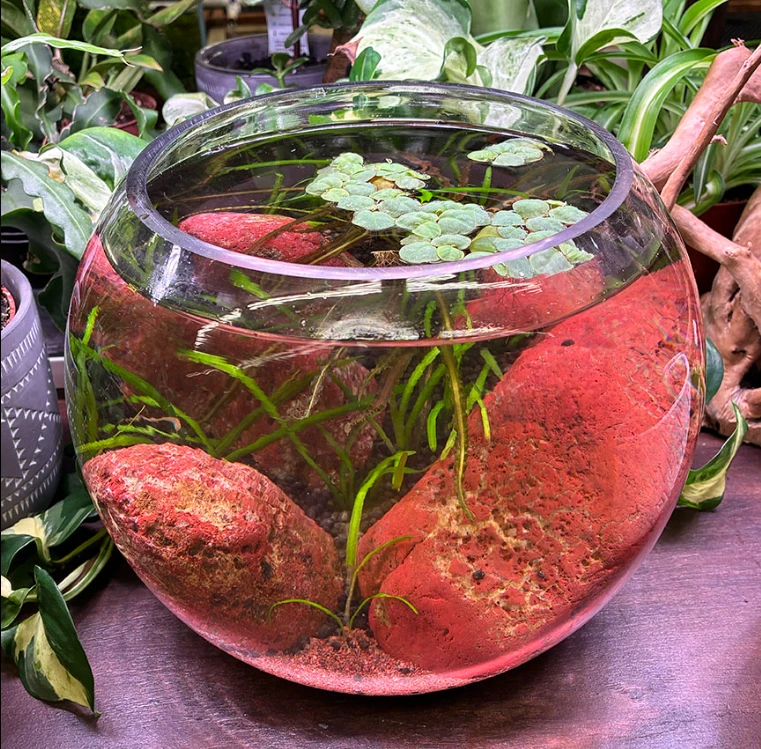
One of our signature offerings at Fitz’s Fish Ponds Aquariums & Aquascaping is our collection of take-home aquariums, including our popular shrimp habitats. These small planted aquariums are miniature works of aquascaping art that bring a piece of the underwater world to a desk, countertop, office, or home.
Our aquarium artists establish and nurture each habitat through the initial stages of plant growth and the nitrogen cycle. Once an aquarium has matured—typically around 4–6 weeks—it's ready for its new inhabitants. While these habitats are designed primarily for invertebrates, one animal is particularly well suited to this setup: Neocaridina shrimp.
Despite their small size, Neocaridina shrimp make colorful, fascinating, and relatively low-maintenance freshwater pets. They spend their days grazing, exploring plants and hardscape, and occasionally carrying tiny babies around the aquarium. With the right environment and a consistent care routine, a shrimp bowl can become a thriving miniature ecosystem.
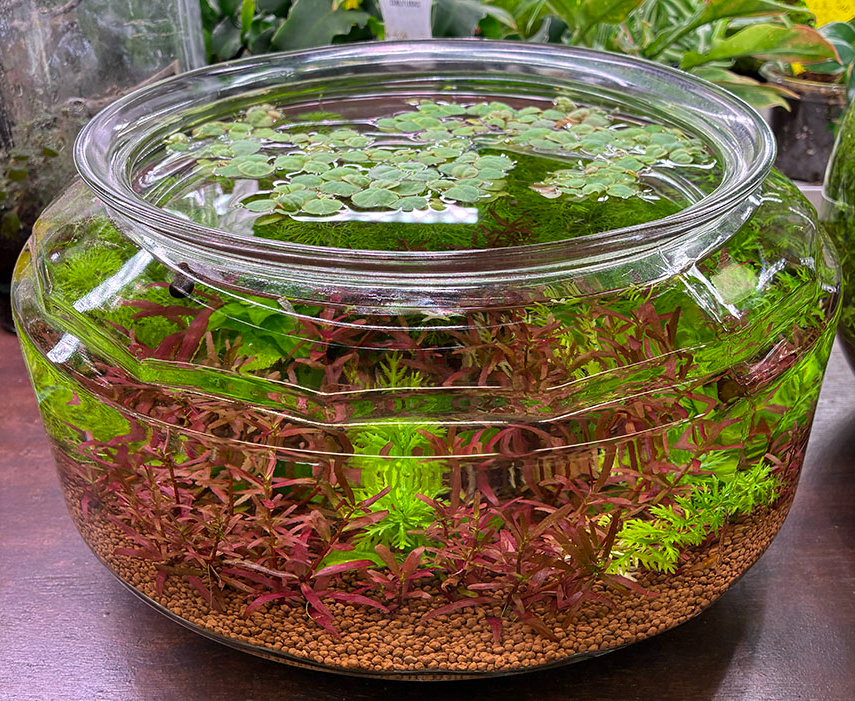
The most important part of successful Neocaridina shrimp care is providing a stable, mature environment. Shrimp are sensitive to sudden changes in water quality, so a properly established aquarium matters more than simply putting shrimp in a container of water.
Plants are an especially important part of a shrimp habitat. They provide grazing surfaces, shelter, daytime oxygen, and help absorb nutrients from the water. Shrimp constantly pick at the surfaces of plants, wood, rock, and substrate, searching for biofilm, algae, and microorganisms.
Think of your plants as part of the shrimp's habitat—not simply decoration. Take care of your aquatic plants, and they will help take care of your aquarium.
Keeping aquatic plants healthy doesn't have to be complicated, but consistency is important.
If you keep floating plants, periodically remove excess growth as needed. Too many floating plants can block light from reaching the plants below and make the aquarium feel overcrowded.
Once you have an established planted aquarium, the next step is maintaining stable water conditions. Neocaridina shrimp are adaptable, but stability is more important than chasing a perfect number.
Here are general parameters suitable for many Neocaridina shrimp:
If ammonia or nitrite is detectable, the aquarium may not be fully cycled or may have experienced a disruption to its biological filtration. Beneficial bacteria products can help establish or support an aquarium, but they should not replace allowing the nitrogen cycle to establish properly.
Tap water can work perfectly well for Neocaridina shrimp as long as you treat it with a water conditioner that removes chlorine and chloramine.
RO/DI water can also be used, but because the filtration process removes minerals, you need to add them back to create appropriate water chemistry for shrimp.
For shrimp, consistency is key. Avoid making sudden changes to temperature, pH, hardness, or other water parameters.
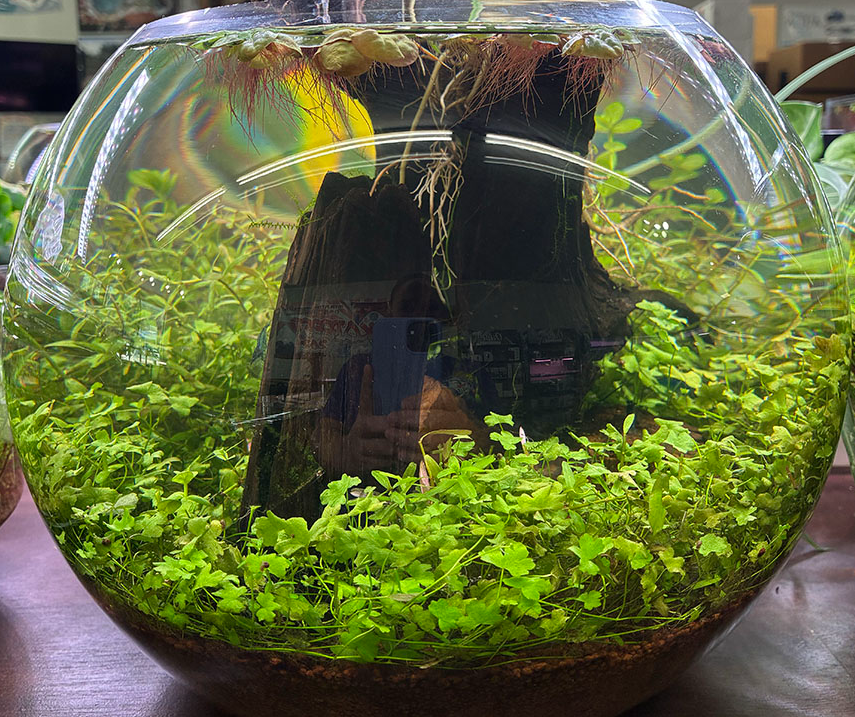
While Neocaridina shrimp can survive in relatively small aquariums, we generally recommend at least 1 gallon, with larger volumes being easier to keep stable.
More water provides more dilution and a larger margin for error. Larger shrimp habitats also provide more room for plants, biofilm, and growing shrimp colonies.
If you're new to keeping shrimp, bigger is usually easier.
One reason Neocaridina shrimp are such interesting pets is that they are constantly looking for food.
In an established planted aquarium, shrimp will naturally graze on biofilm, algae, microorganisms, and small amounts of organic matter growing on nearby surfaces. Plants, wood, rock, substrate, and even the aquarium walls can become feeding grounds.
Supplement their natural grazing with quality shrimp food like Shrimp Cuisine, Mini Algae Wafers, or blanched vegetables about once or twice a week.
Avoid overfeeding. Uneaten food can quickly affect water quality in a small aquarium. If food remains long after feeding, remove it and reduce the amount you offer during the next feeding.
One of the most entertaining parts of keeping Neocaridina shrimp is the incredible variety of colors available.
Popular color varieties include:
If maintaining a strong, consistent color is important to you, it's generally best to keep a single color variety in your colony. When you mix multiple Neocaridina color lines, their offspring can eventually produce a wider range of wild-type and less predictable coloration.
A single-color colony can be especially striking against a lush green planted aquarium.
A filter isn't always necessary in a properly established, lightly stocked shrimp bowl, particularly when there is abundant plant growth and biological filtration throughout the substrate and hardscape.
If you want to add filtration, a small sponge filter is an excellent choice. Sponge filters provide gentle water movement, biological filtration, and a safe surface for beneficial bacteria and biofilm to grow. Their gentle flow also makes them suitable for baby shrimp, which can be vulnerable to stronger filter intakes.
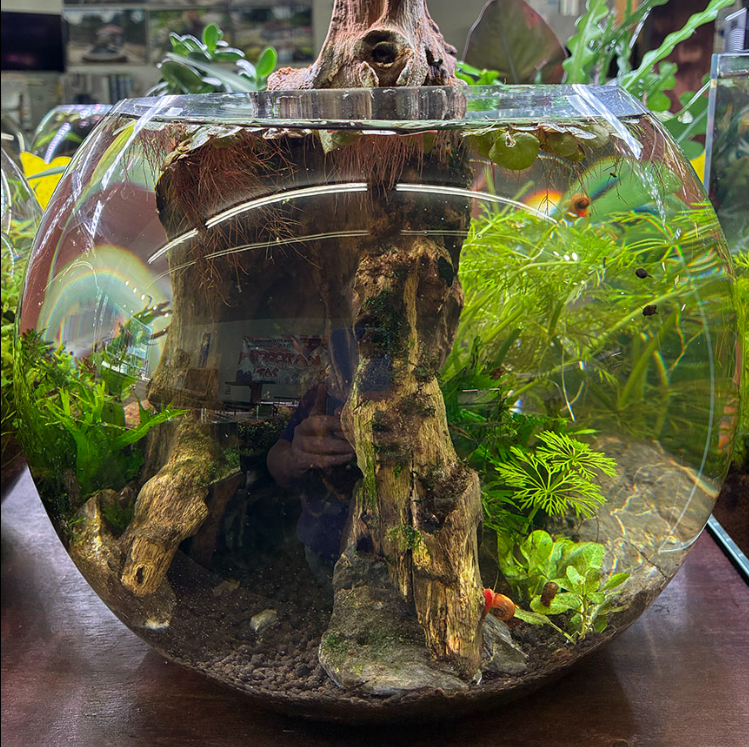
A shrimp bowl is more than just a container for shrimp. When properly established, it becomes a miniature planted ecosystem where plants grow, microorganisms multiply, shrimp graze, and a colony can reproduce and develop over time.
They're also a great way to experience aquascaping without committing to a large aquarium. A small shrimp habitat can fit on a desk, kitchen counter, office, or shelf and still provide the movement, color, and natural beauty of a planted aquarium.
And because Neocaridina shrimp are constantly exploring and grazing, there's always something happening if you take the time to look closely.
Interested in keeping Neocaridina shrimp or creating your own planted shrimp bowl? Stop by our Green Brook, NJ, or New Hope, PA locations to see our selection of ready-to-take-home shrimp habitats and aquarium supplies.
We also offer Shrimp Bowl Aquascaping Workshops, where you can learn the basics of creating a planted shrimp habitat and build your own miniature aquascape to take home.
Whether you're completely new to aquascaping or an experienced hobbyist looking for a fun nano aquarium project, a shrimp bowl is a simple way to bring a little more life to your space.
| Hours | |
|---|---|
| sunday | 10:00 AM - 4:00 PM |
| monday | Closed |
| tuesday | 10:00 AM - 5:00 PM |
| wednesday | 10:00 AM - 5:00 PM |
| thursday | 10:00 AM - 5:00 PM |
| friday | 10:00 AM - 5:00 PM |
| saturday | 10:00 AM - 5:00 PM |
| Hours | |
|---|---|
| sunday | 10:00 AM - 5:00 PM |
| monday | Closed |
| tuesday | 11:00 AM - 6:00 PM |
| wednesday | 11:00 AM - 6:00 PM |
| thursday | 11:00 AM - 6:00 PM |
| friday | 11:00 AM - 6:00 PM |
| saturday | 10:00 AM - 5:00 PM |
| Hours | |
|---|---|
| sunday | 10:00 AM - 4:00 PM |
| monday | Closed |
| tuesday | 10:00 AM - 5:00 PM |
| wednesday | 10:00 AM - 5:00 PM |
| thursday | 10:00 AM - 5:00 PM |
| friday | 10:00 AM - 5:00 PM |
| saturday | 10:00 AM - 5:00 PM |
| Hours | |
|---|---|
| sunday | 10:00 AM - 5:00 PM |
| monday | Closed |
| tuesday | 11:00 AM - 6:00 PM |
| wednesday | 11:00 AM - 6:00 PM |
| thursday | 11:00 AM - 6:00 PM |
| friday | 11:00 AM - 6:00 PM |
| saturday | 10:00 AM - 5:00 PM |
| Hours | |
|---|---|
| sunday | Closed |
| monday | 10:00 AM - 4:00 PM |
| tuesday | 10:00 AM - 4:00 PM |
| wednesday | 10:00 AM - 4:00 PM |
| thursday | 10:00 AM - 4:00 PM |
| friday | 10:00 AM - 4:00 PM |
| saturday | Closed |
| Hours | |
|---|---|
| sunday | 10:00 AM - 4:00 PM |
| monday | Closed |
| tuesday | 10:00 AM - 5:00 PM |
| wednesday | 10:00 AM - 5:00 PM |
| thursday | 10:00 AM - 5:00 PM |
| friday | 10:00 AM - 5:00 PM |
| saturday | 10:00 AM - 5:00 PM |
| Hours | |
|---|---|
| sunday | Closed |
| monday | Closed |
| tuesday | 10:00 AM - 5:00 PM |
| wednesday | 10:00 AM - 5:00 PM |
| thursday | 10:00 AM - 5:00 PM |
| friday | 10:00 AM - 5:00 PM |
| saturday | 10:00 AM - 5:00 PM |
| Hours | |
|---|---|
| Sunday | Closed |
| Monday | Closed |
| Tuesday | 10:00 AM - 5:00 PM |
| Wednesday | 10:00 AM - 5:00 PM |
| Thursday | 10:00 AM - 5:00 PM |
| Friday | 10:00 AM - 5:00 PM |
| Saturday | 10:00 AM - 5:00 PM |
| Hours | |
|---|---|
| Sunday | 10:00 AM - 4:00 PM |
| Monday | Closed |
| Tuesday | 10:00 AM - 5:00 PM |
| Wednesday | 10:00 AM - 5:00 PM |
| Thursday | 10:00 AM - 5:00 PM |
| Friday | 10:00 AM - 5:00 PM |
| Saturday | 10:00 AM - 5:00 PM |