Placing Turtles in Your Backyard Pond
Apr 19th 2024

Apr 19th 2024
Turtles can share a backyard pond with fish, but they need a pond built for them: varied water depth, a dry basking area, a puncture-resistant liner and more filtration than a fish-only pond. This guide covers which species suit ponds in New Jersey, New York and Pennsylvania, how much depth and basking space to build in, what turtles do to plants and fish, and how to get them through a cold winter. Fitz's Fish Ponds designs, builds and maintains ponds across the tri-state area, so if you are planning a pond that will hold turtles, the depth, liner and filtration can be sized correctly from the start.
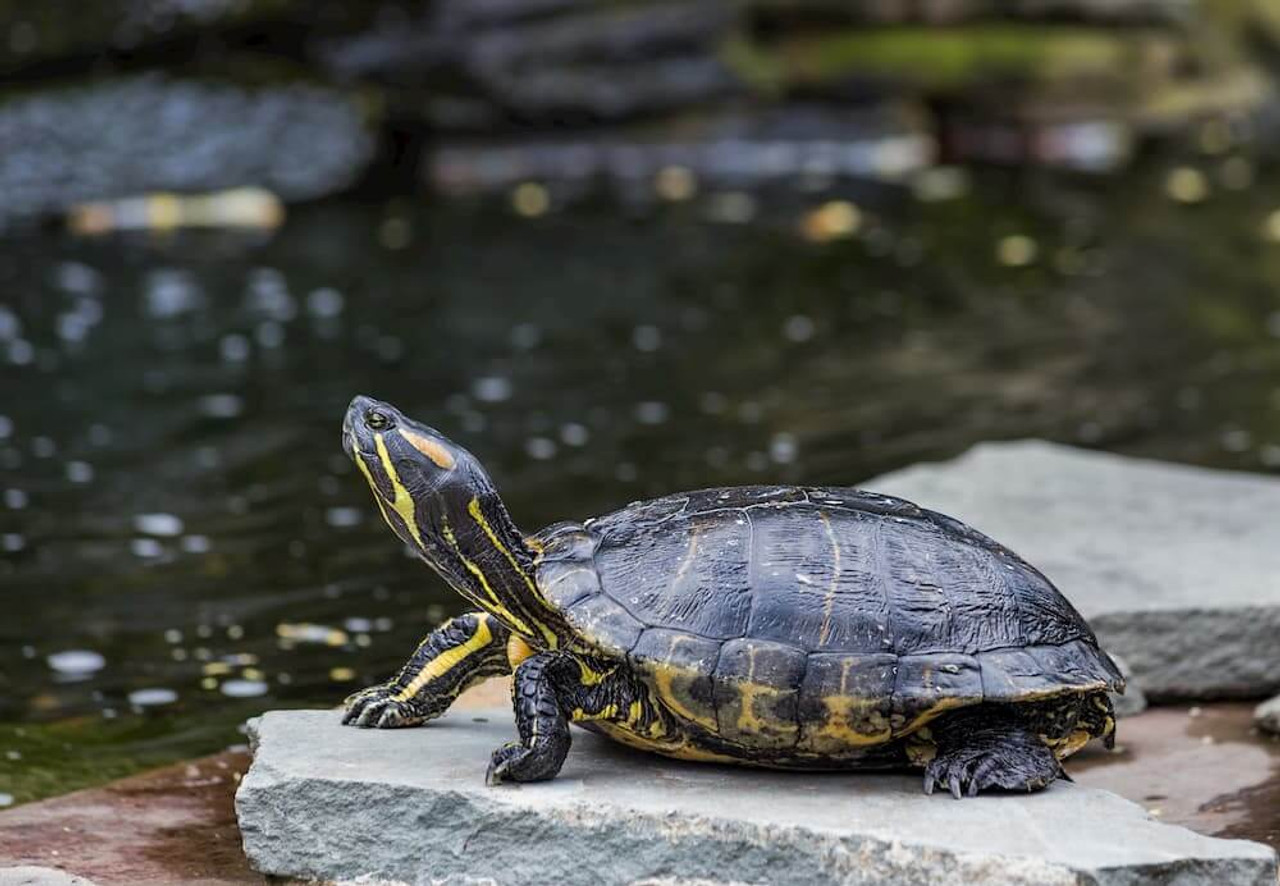
Turtles can make an excellent addition to your pond, although they do need considerable care and they are not an animal for children to handle: turtles carry salmonella, and federal rules prohibit the sale of turtles with a shell under four inches. The best type is aquatic, as they will rapidly acclimate themselves to the pond environment. Below are some additional things you'll need to know.
Yes, provided the pond is built for them and someone is prepared to look after them for decades. Turtles suit owners who want to watch a pond rather than handle its inhabitants, who have room for a dry basking area and a fenced edge, and who are willing to run heavier filtration. They are a poor fit for a small ornamental pond, for a pond stocked with show koi or small goldfish, and for households that want an animal children can pick up.
Species choice sets everything else: the depth you build, the size of fish you can keep, and whether the turtle can stay outside through winter.
| Species | Typical adult shell length | Pond depth needed | Notes on koi and climate |
|---|---|---|---|
| Red-eared slider | 8 to 12 inches | Deep zone of 2 to 3 feet | Strong swimmer and an active hunter. Not native to New Jersey, so it should never be released. |
| Painted turtle | 5 to 7 inches | Moderate, with a 2 foot deep zone | Native to the Northeast and the most cold-tolerant of the common pond species. |
| Common musk turtle | 3 to 5 inches | Shallow shelves it can walk along | A bottom walker rather than a swimmer. The least disruptive option in a planted pond. |
| Common snapping turtle | 8 to 18 inches | Deep, with soft bottom cover | Not recommended for a pond with koi or for a family garden. |
| Eastern box turtle | 4 to 7 inches | Land species, not a pond turtle | Included because it is often bought by mistake. It needs a planted enclosure, not a pond. |
Pond turtles need depth that matches the species. Red-eared sliders do best with a deep zone of two to three feet, while musk turtles need shallow shelves they can walk along, so confirm the preferences of the species you intend to buy before the pond is dug. All turtles should be given access to water with a big surface area, as this exposes them to greater oxygen levels.
Build a turtle pond at two water levels. A shallow shelf of 6 to 12 inches gives a turtle somewhere to rest with its head above the water and to feed, and a deeper zone of two to three feet gives it somewhere to submerge and escape summer heat. Connect the two with a gradual slope rather than a step, because a turtle that cannot climb out of the deep end will drown. A wide surface area matters as much as depth, since it is the surface that carries oxygen into the water. Turtles also foul water faster than fish of the same size, so size the filter above the pond volume and test the water more often than a fish-only pond needs.
Turtles need to leave the water and dry off completely, so a pond that holds them needs a basking surface that sits above the waterline and catches direct sun for part of the day. A flat stone ledge, a partly submerged log or a purpose-built platform all work. A gravel beach along one edge gives them somewhere to walk and, for females, somewhere to lay. Keep the basking area within sight of cover, because a turtle in the open is exposed to raccoons, herons and dogs, and a basking spot with a partial roof or nearby planting is used far more often than one in the middle of a lawn.
Turtle claws will find any weak point in a liner, so a turtle pond needs a heavier liner laid over a full underlayment, or a pre-formed shell if a fixed profile suits the site. Ask for the liner specification in writing before installation, because a liner chosen for a fish pond is usually not the one you want under a turtle.
Escape is the other half of the job. Turtles dig, climb and travel much further than most owners expect, and a turtle that leaves the pond rarely comes back. Run a smooth barrier of at least 18 inches around the pond edge, buried several inches into the ground so it cannot be undermined, with no corners a turtle can wedge itself into and climb
Winters across New Jersey, New York and Pennsylvania are cold enough that a turtle's options are limited. Native species can overwinter in a pond deep enough that it never freezes to the bottom and stays oxygenated, but it carries real risk, and non-native species such as red-eared sliders should come indoors. Decide before the first hard frost rather than after it. An indoor setup means a tank large enough for the animal, a heater, a basking lamp and filtration, which is a bigger commitment than most owners expect, so plan it in the spring when you buy rather than in November. Pond winterization for the pond itself is a separate job and is worth booking at the same time.
Turtles eat aquatic plants, and a planted pond can be stripped within a season. The practical answer is not to fight it but to plant species that grow faster than they are eaten: water hyacinth, tape grass, fairy moss and water lettuce all replace themselves quickly enough to survive a turtle. Keep prized specimen plants, water lilies included, in a separate section of the pond or in protected baskets. Feeding your turtles properly also takes pressure off the planting, because a hungry turtle grazes far more than a well fed one.
Koi and turtles can share a pond, but the combination needs planning. Despite their slow, lethargic appearance, turtles are in fact outstanding hunters. They will not be intimidated by the size of koi or catfish, and might even try to nibble on them.
Most turtles will be unable to take down a large fish, but the injuries they inflict could lead to infection, and smaller fish such as goldfish or guppies could be eaten entirely. Adding turtles and fish to the same pond also requires lots of space and greater attention to water cleanliness than usual.
Turtles and fish generally coexist when three things are true: the fish are large enough that a turtle cannot swallow them, the turtles are fed well enough that they are not hunting, and the pond has the space and filtration to carry both. Goldfish, guppies and young koi do not meet the first condition and are usually eaten. Before buying, check compatibility for the specific turtle species and the specific fish you keep, and if your koi are valuable, give the turtles a pond of their own.
Two rules affect most pond turtle purchases. Under a long-standing federal rule, turtles with a shell shorter than four inches cannot be sold in the United States, which is why pet-store hatchlings are not a legal option. New Jersey also restricts taking native turtles from the wild, and rules differ for New York and Pennsylvania, so confirm the current state rules for the species you want before you buy.
Never release a pet turtle into a local pond, stream or lake. Released red-eared sliders compete with native species and carry disease into wild populations. Turtles also carry salmonella, so wash hands after any contact with a turtle or its water, keep them away from food preparation areas, and treat them as animals to watch rather than animals to handle.
Yes, with caution. Turtles are capable hunters and can injure or eat smaller fish, so a shared pond needs large, healthy koi, plenty of space and stronger filtration than a fish-only pond. Goldfish and guppies are usually eaten. If your koi are valuable, keep the turtles in a separate pond.
It depends on the species. Most pond turtles do well in a pond with a shallow shelf of 6 to 12 inches where they can rest with their head above water, and a deeper zone of two to three feet where they can submerge and escape summer heat. Connect the two with a gradual slope.
Yes. Turtles eat soft aquatic plants and can strip a planted pond within a season. Water hyacinth, tape grass, fairy moss and water lettuce hold up best because they grow back faster than they are eaten. Keep water lilies and specimen plants in a protected section.
Native species can overwinter in a pond deep enough that it never freezes to the bottom, but it carries real risk. Non-native turtles such as red-eared sliders should be brought indoors before the first hard frost, into a heated tank with a basking lamp and filtration.
Yes. Turtles produce more waste than fish of the same size and they feed messily, so a turtle pond needs a filter rated above the pond volume and more frequent water testing. Plan the filtration around the turtles, not around the fish.
Rules vary by species. A federal rule prohibits the sale of turtles with a shell shorter than four inches anywhere in the United States, and New Jersey restricts taking native turtles from the wild. Confirm the current state rules for the species you want before buying, and never release a pet turtle into the wild.
A pond that will hold turtles is a different build from a pond that holds fish alone: deeper in one zone, shallower in another, heavier on liner and filtration, and fenced at the edge. Fitz's Fish Ponds designs, builds and maintains ponds and water features across New Jersey, New York and Pennsylvania, and can size all of that before the first stone goes in. Call (908) 420-9908 or send us your plans through the contact page and we will tell you what your site can support.
| Hours | |
|---|---|
| sunday | 10:00 AM - 4:00 PM |
| monday | Closed |
| tuesday | 10:00 AM - 5:00 PM |
| wednesday | 10:00 AM - 5:00 PM |
| thursday | 10:00 AM - 5:00 PM |
| friday | 10:00 AM - 5:00 PM |
| saturday | 10:00 AM - 5:00 PM |
| Hours | |
|---|---|
| sunday | 10:00 AM - 5:00 PM |
| monday | Closed |
| tuesday | 11:00 AM - 6:00 PM |
| wednesday | 11:00 AM - 6:00 PM |
| thursday | 11:00 AM - 6:00 PM |
| friday | 11:00 AM - 6:00 PM |
| saturday | 10:00 AM - 5:00 PM |
| Hours | |
|---|---|
| sunday | 10:00 AM - 4:00 PM |
| monday | Closed |
| tuesday | 10:00 AM - 5:00 PM |
| wednesday | 10:00 AM - 5:00 PM |
| thursday | 10:00 AM - 5:00 PM |
| friday | 10:00 AM - 5:00 PM |
| saturday | 10:00 AM - 5:00 PM |
| Hours | |
|---|---|
| sunday | 10:00 AM - 5:00 PM |
| monday | Closed |
| tuesday | 11:00 AM - 6:00 PM |
| wednesday | 11:00 AM - 6:00 PM |
| thursday | 11:00 AM - 6:00 PM |
| friday | 11:00 AM - 6:00 PM |
| saturday | 10:00 AM - 5:00 PM |
| Hours | |
|---|---|
| sunday | Closed |
| monday | 10:00 AM - 4:00 PM |
| tuesday | 10:00 AM - 4:00 PM |
| wednesday | 10:00 AM - 4:00 PM |
| thursday | 10:00 AM - 4:00 PM |
| friday | 10:00 AM - 4:00 PM |
| saturday | Closed |
| Hours | |
|---|---|
| sunday | 10:00 AM - 4:00 PM |
| monday | Closed |
| tuesday | 10:00 AM - 5:00 PM |
| wednesday | 10:00 AM - 5:00 PM |
| thursday | 10:00 AM - 5:00 PM |
| friday | 10:00 AM - 5:00 PM |
| saturday | 10:00 AM - 5:00 PM |
| Hours | |
|---|---|
| sunday | Closed |
| monday | Closed |
| tuesday | 10:00 AM - 5:00 PM |
| wednesday | 10:00 AM - 5:00 PM |
| thursday | 10:00 AM - 5:00 PM |
| friday | 10:00 AM - 5:00 PM |
| saturday | 10:00 AM - 5:00 PM |
| Hours | |
|---|---|
| Sunday | Closed |
| Monday | Closed |
| Tuesday | 10:00 AM - 5:00 PM |
| Wednesday | 10:00 AM - 5:00 PM |
| Thursday | 10:00 AM - 5:00 PM |
| Friday | 10:00 AM - 5:00 PM |
| Saturday | 10:00 AM - 5:00 PM |
| Hours | |
|---|---|
| Sunday | 10:00 AM - 4:00 PM |
| Monday | Closed |
| Tuesday | 10:00 AM - 5:00 PM |
| Wednesday | 10:00 AM - 5:00 PM |
| Thursday | 10:00 AM - 5:00 PM |
| Friday | 10:00 AM - 5:00 PM |
| Saturday | 10:00 AM - 5:00 PM |