Project Spotlight: A One-of-a-Kind Custom Koi Pond & Water Feature in Virginia
Sep 3rd 2026

Sep 3rd 2026
Two streams. An infinity edge. Massive waterfalls. Crystal-clear water. And a koi pond designed to flow through the architecture of a dream home.
Some projects challenge you to rethink what a backyard water feature can be. This custom koi pond and water feature in Virginia is one of them.
The Fitz’s Fish Ponds construction team became involved with this project during the early stages of construction of the homeowner’s new dream home. That gave our designers and construction crews a rare opportunity: instead of designing a pond around an existing house, we could think about how water could become part of the architecture itself.
What followed was an ambitious, multi-year project incorporating a custom koi pond, bubbling boulders, bridges, a long water channel between sections of the home, an infinity-style overflow, a massive naturalistic stream system, waterfalls, and a separate natural pond.
From the beginning, the goal was to make water feel like it had always belonged here.
One of the most unique aspects of this Virginia pond project was the ability to coordinate portions of the water feature with the construction of the home.
The pond begins near the front entrance, where it opens to approximately 12 feet wide and 3 feet deep, curving naturally through the landscape rather than following a rigid geometric footprint.
From there, the water becomes part of the experience of entering the home.
As the pond approaches the entrance bridge, it gradually shallows to approximately 2 feet deep before traveling beneath the bridge. On the opposite side, it returns to approximately 3 feet deep and opens back up near the front entrance.
The result is an arrival experience where guests don't simply walk past the water.
They walk over it.
And the relationship between the house and pond continues from there.
Near the front entrance, three large bubbling boulders emerge from the water.
Rather than creating an overpowering waterfall at the home's entrance, these stones were designed to produce a moderate splashing and bubbling sound—enough to make the water immediately noticeable without competing with the architecture.
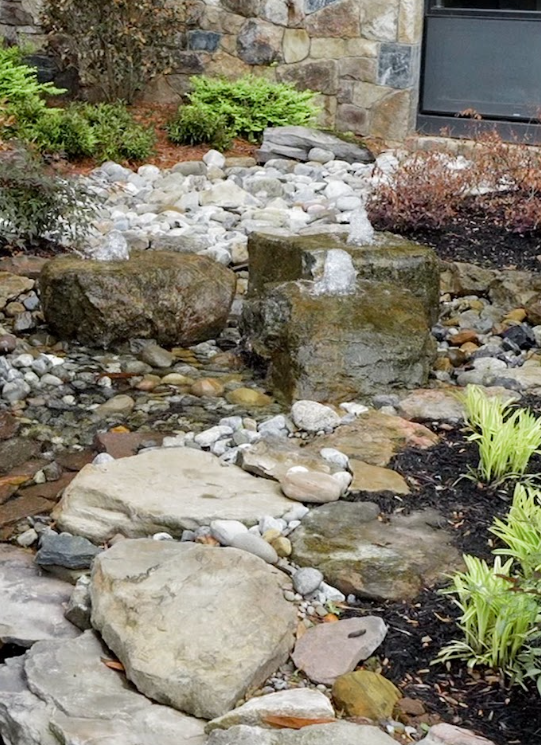
Large natural boulders were selected to make the feature feel substantial and established within the landscape.
The pond itself wraps naturally around this area before beginning one of the project's most unusual transitions.
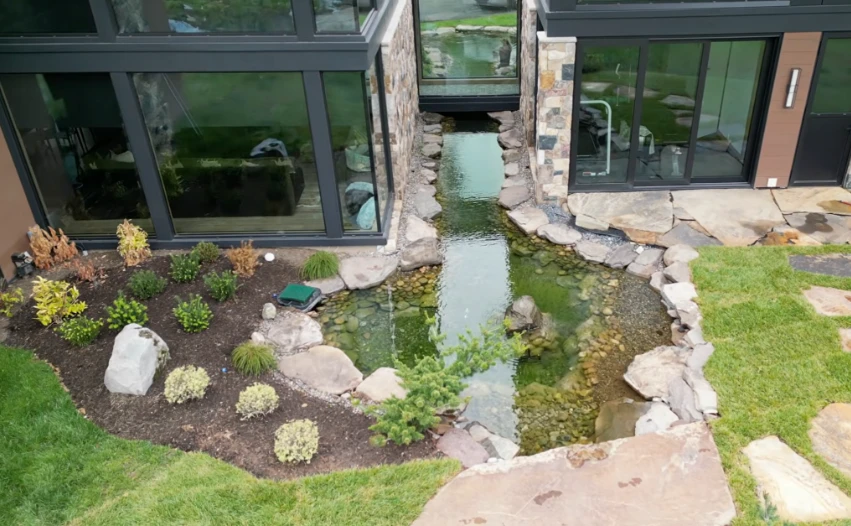
It heads between sections of the house.
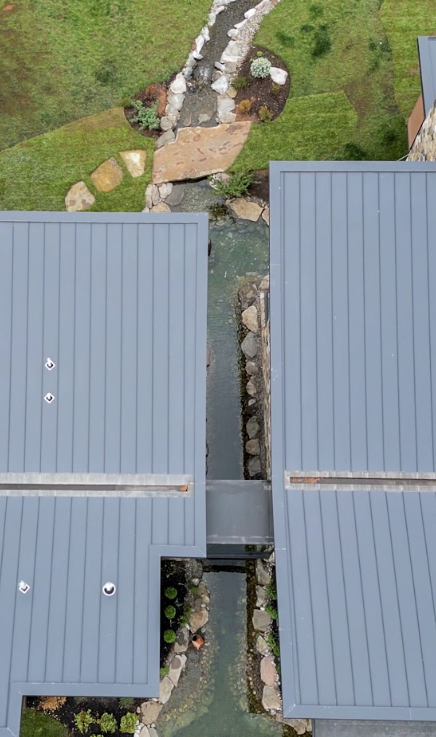
Instead of stopping at the home's exterior, the pond continues through an approximately 32-foot-long channel between adjoining sections of the house.
Boulders line both sides of the channel, maintaining the pond's natural character even as it passes through a much more architectural space.
Underwater jets help direct water through the channel and toward the rear of the pond system, improving circulation and creating subtle movement in the long, narrow section.
This portion of the project had to be carefully coordinated with construction of the house itself. A walkway toward the primary bedroom crosses the water, and portions of the pond had to be completed before surrounding sections of the home could be finished.
It's an unusual example of what's possible when pond and home design come together.
Instead of being something you only experience in the backyard, the koi pond becomes a recurring element throughout the property.
Once the water reaches the back of the house, the pond expands dramatically.
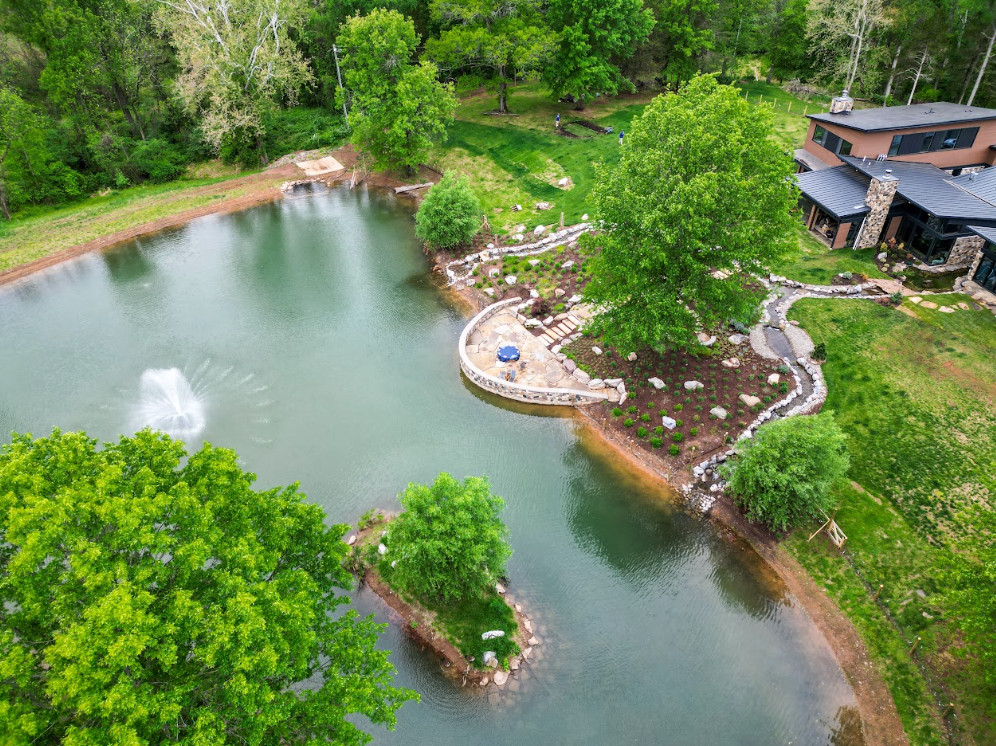
The rear pond was intentionally bumped outward on both sides, with each expanded area reaching approximately 15 feet wide and 3 feet deep.
Why?
Because the pond wasn't designed only from the perspective of someone standing beside it.
It was designed from inside the home, too.
The expanded areas position the water within key viewing windows, allowing the homeowners to experience the pond from multiple rooms. The rear waterfall was similarly positioned toward the back corner to maintain sightlines from different areas of the house.
Even the waterfall's proportions were carefully considered. Rather than building an excessively tall feature, the design called for something lower and wider, keeping the waterfall proportional to the expansive pond and architecture surrounding it.
Every major element was considered from multiple viewpoints.
For a project of this scale, making the pond look natural required more than simply placing large rocks around the perimeter.
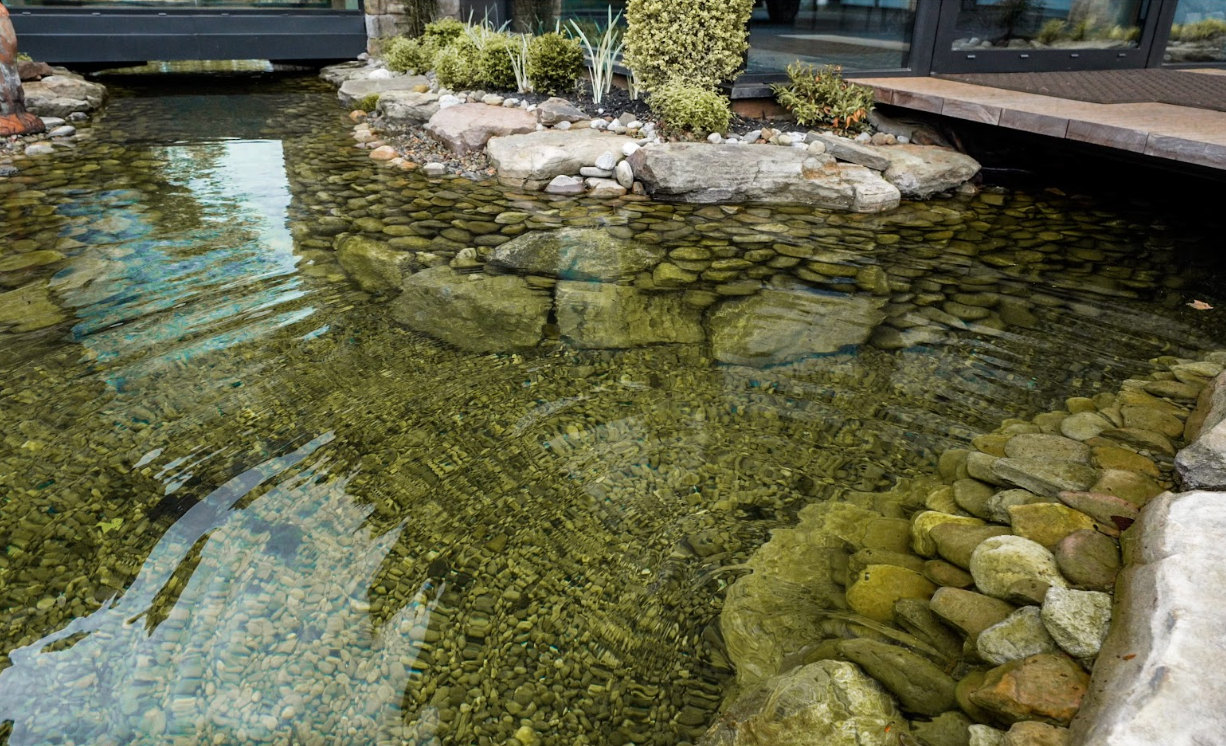
Coping boulders were deliberately positioned both above and below the waterline to eliminate the appearance of an artificial edge.
Larger statement boulders were reserved for the bubbling rock features and waterfalls, while approximately 3 to 5-inch river rock was secured along the pond walls.
Smaller 3/4-inch river rock was incorporated along the bottom.
That bottom gravel serves an important purpose beyond aesthetics: it allows water to flow through the pond's undergravel suction grid, making the pond floor part of the overall filtration strategy.
Beneath all of that stonework, geotextile fabric protects a heavy-duty 45-mil EPDM rubber liner, creating the watertight foundation for the feature.
The engineering is intentionally hidden.
What the homeowner sees is stone and water.
A koi pond of this size requires considerably more than beautiful rockwork.
The filtration system was designed to move and treat water throughout the extensive footprint while keeping as much mechanical equipment as possible out of sight.
The pond incorporates an undergravel suction grid filtration system along with two 36-inch K+ Micro bead filters.
Two dedicated pumps move water through the filtration system, while two inline UV clarifiers provide another layer of water-quality management.
Two skimmers remove floating surface debris and house internal pumps that supply water to the bubbling rocks and waterfall features.
Even the location of the filtration equipment was considered during the design. The equipment was positioned near the house and concealed from primary views, with plumbing routed underground.
That's an important distinction in large custom pond construction.
The mechanical system needs to be accessible and powerful enough to do its job—but it shouldn't become the focal point of the landscape.
The results speak for themselves.
More than a year after construction, the water remains remarkably clear throughout this expansive koi pond.
Water clarity is only part of creating a successful koi pond.
Circulation and oxygenation are equally important.
The system incorporates four deep-water aeration diffusers positioned throughout the pond. Weighted airlines connect the diffusers to the aeration equipment while keeping the installation discreet.
Return jets positioned throughout the pond help encourage water to travel in the intended direction—from the front pond, beneath the bridge, through the long channel and toward the rear portion of the system.
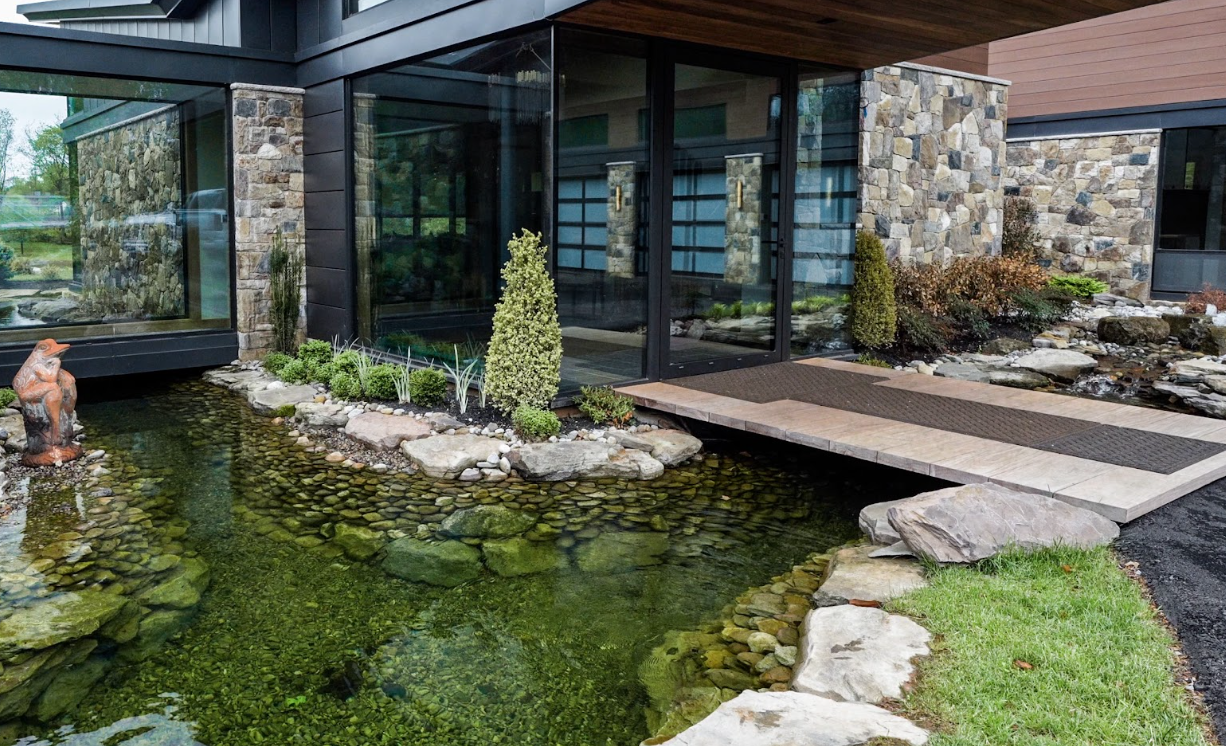
For the koi, this creates an enormous amount of usable swimming space.
Rather than swimming within a single centralized basin, the fish will eventually be able to travel throughout the property's interconnected ponds.
The plan is to introduce approximately 20 to 30 beautiful Japanese koi, bringing movement, personality, and color to an already extraordinary water feature.
One of the most technically interesting portions of this project appears where the custom koi pond visually meets the property's existing natural pond.
At first glance, the two bodies of water seem interconnected.
They're not.
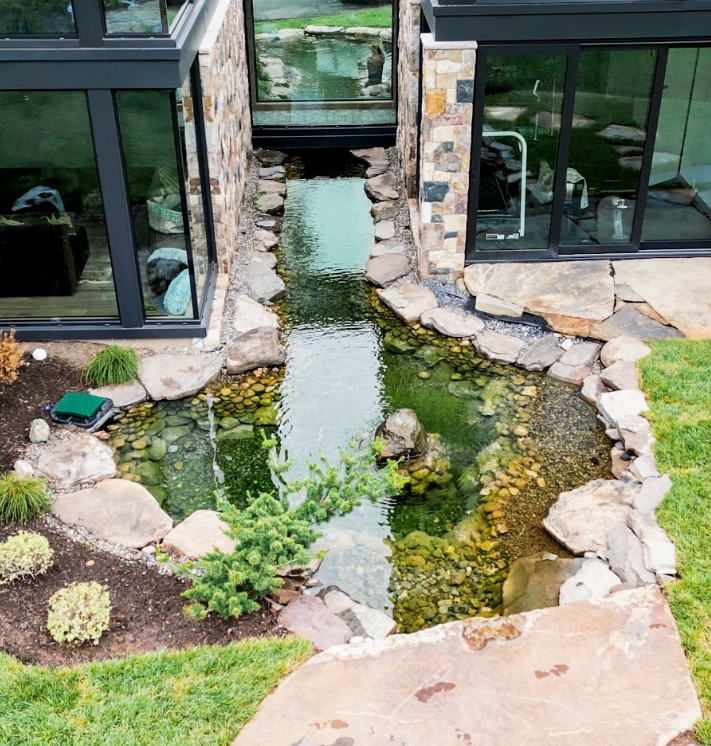
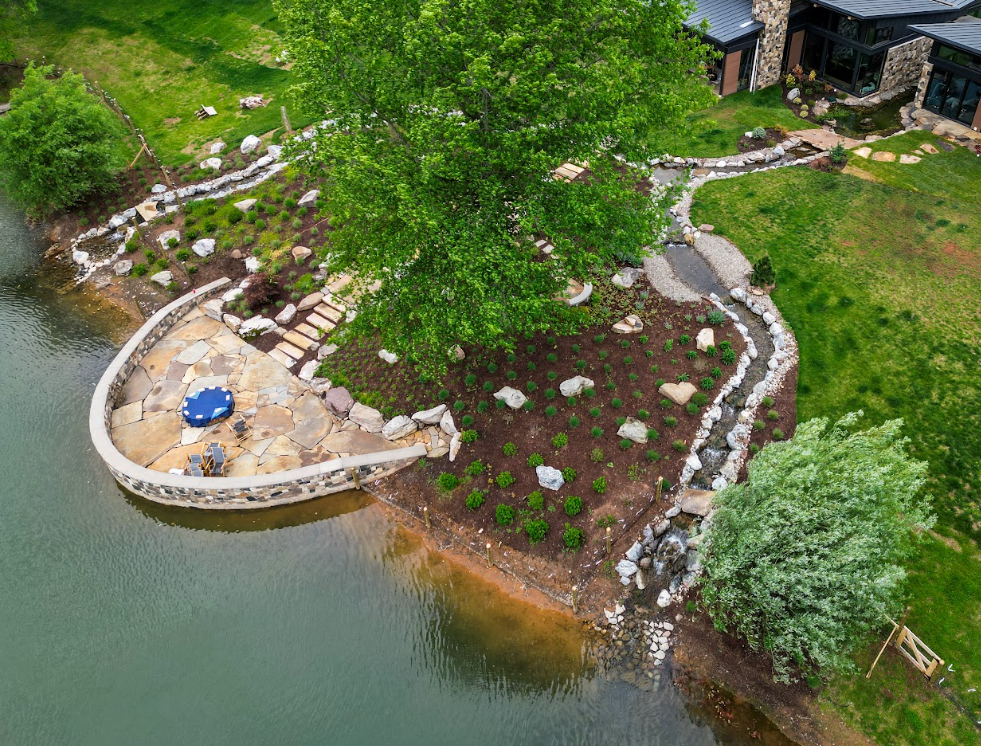
The koi pond ends at a carefully constructed overflow/infinity edge concealed within the natural stonework.
From the viewing area, that overflow appears to become the beginning of the stream below, creating the illusion that water simply continues from the koi pond through the landscape and into the natural pond.
But keeping those systems separated was intentional.
The controlled water environment of the koi pond remains isolated from untreated natural pond water, allowing the filtration system to maintain conditions specifically for the koi.
Meanwhile, water from the larger natural pond is independently circulated through the stream system.
Visually, it reads as one enormous body of water.
Mechanically, they remain separate systems.
It's one of the details that makes this project as interesting from an engineering perspective as it is visually.
Beyond the koi pond, the water feature transforms again.
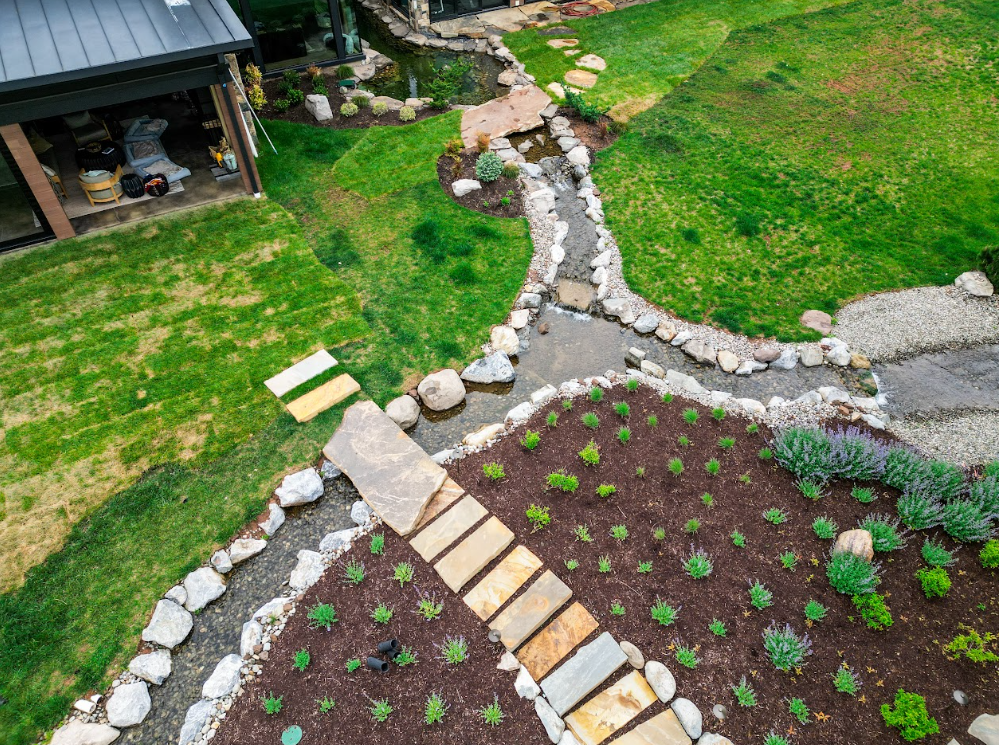
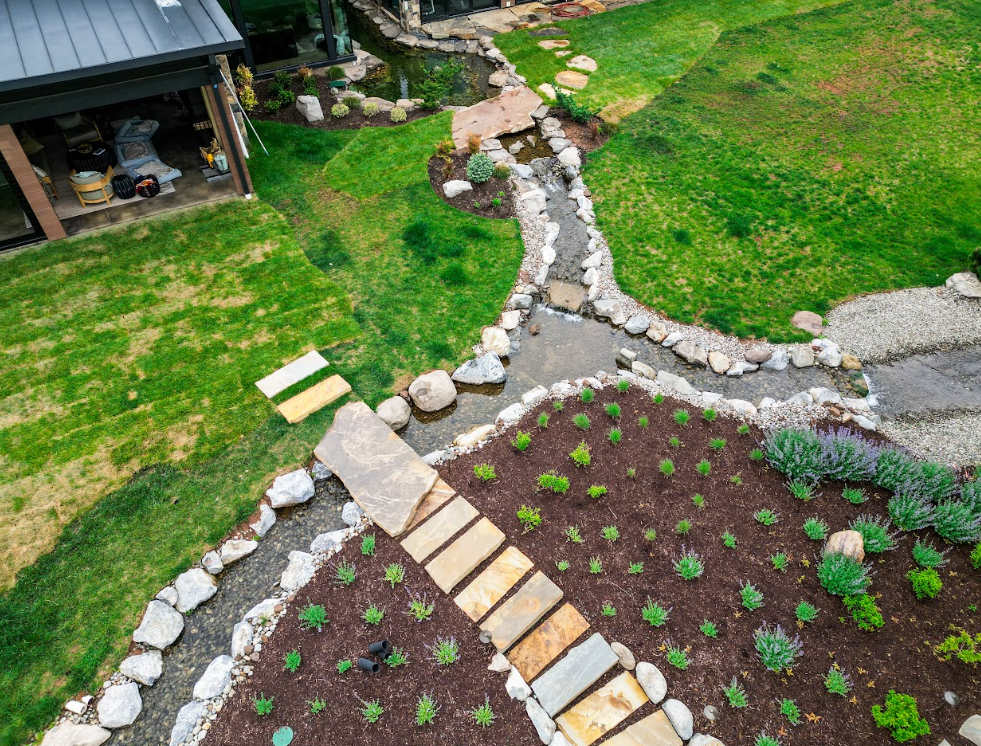
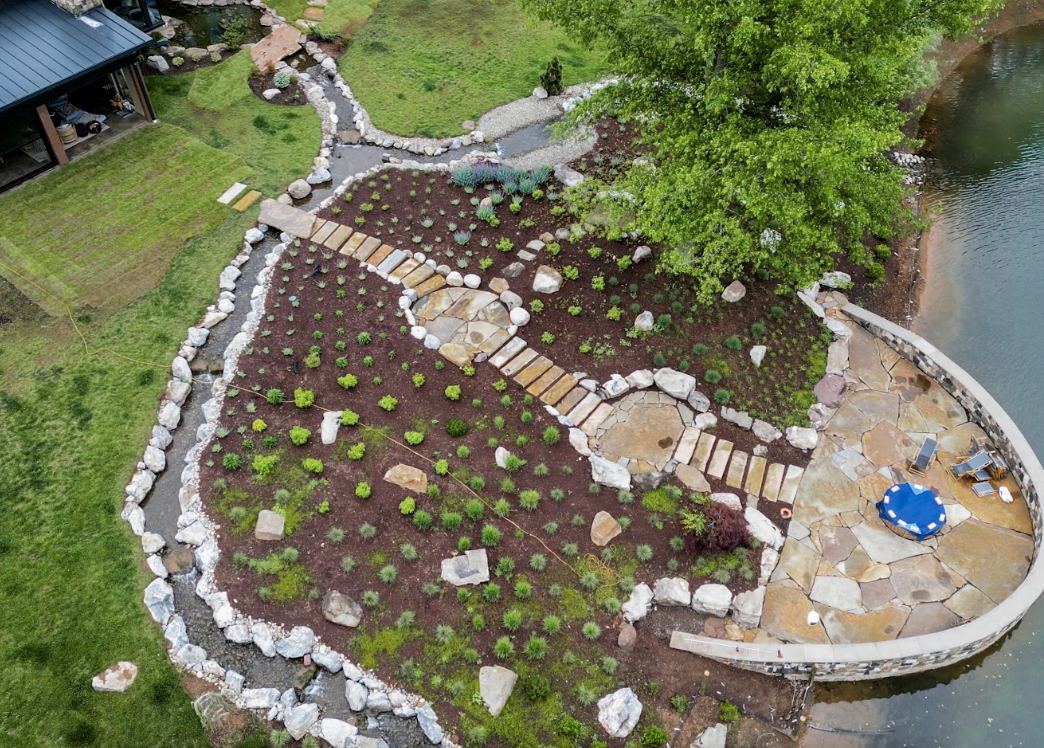
The stream begins with a pool near the koi pond's overflow, then widens and eventually splits into two streams.
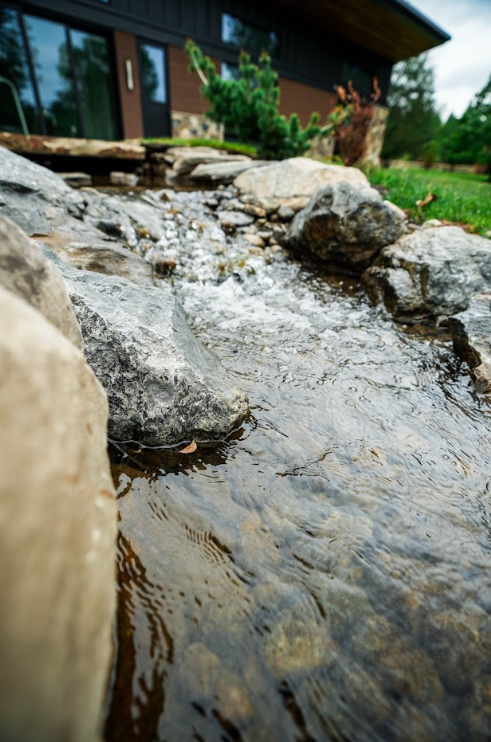
From there, the water follows a natural S-shaped path for approximately 75 feet, incorporating multiple spills, drops, and pools along the way.
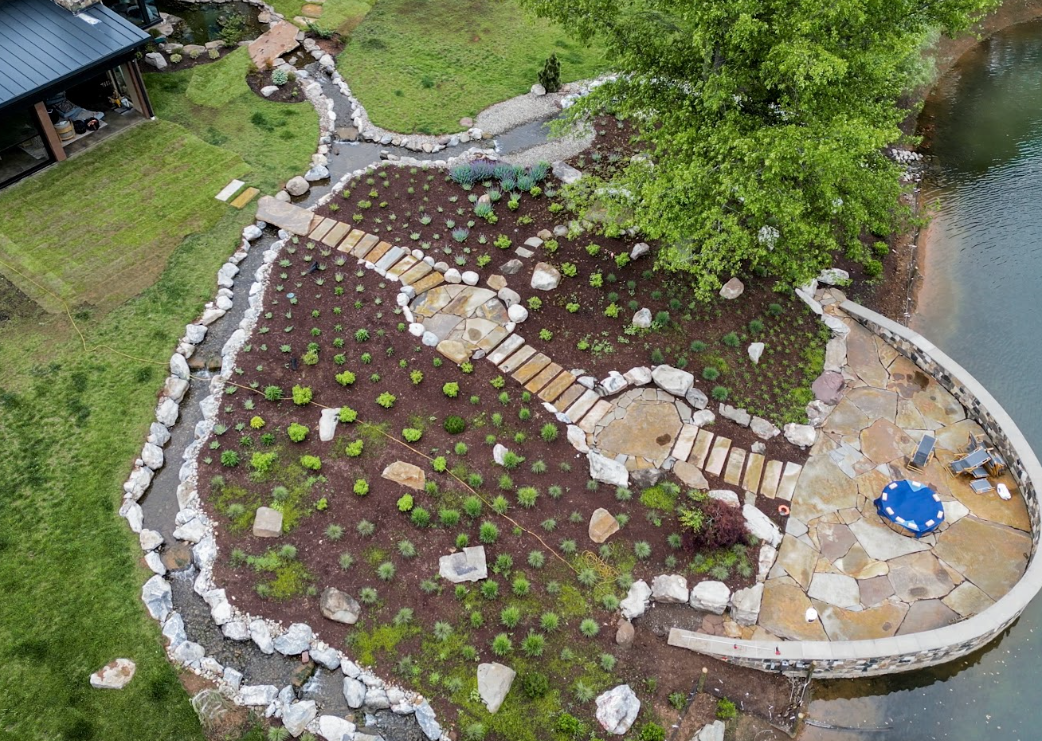
Large boulders frame the different elevations and constrict the flow in strategic locations, forcing water between stones and helping create the appearance of a naturally formed stream.
The entire stream bed was rocked out rather than leaving the liner exposed, further reinforcing the illusion that the waterway has always existed here.
But perhaps the most memorable feature is what sits between the two streams:
A fire pit.
Splitting the stream wasn't simply a stylistic decision.
It created an entirely new outdoor living experience.
The fire pit sits between the two branches of moving water, maintaining views of the stream from either side and surrounding the gathering area with the sound of rushing water.
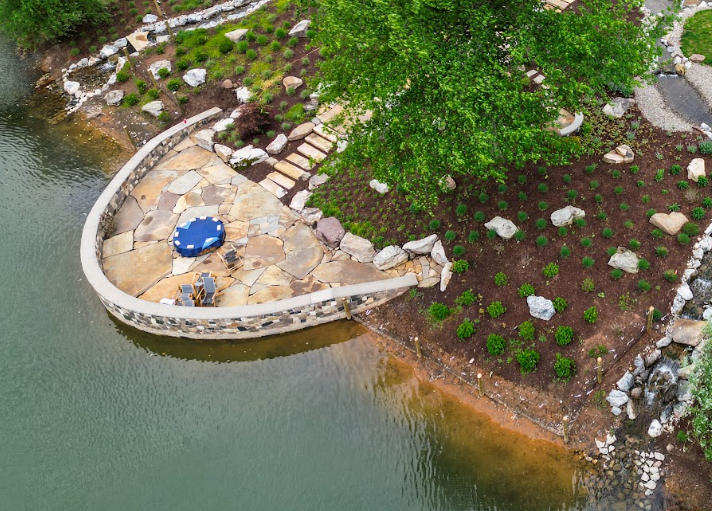
Imagine sitting beside the fire on a cool Virginia evening with a glass in hand while water cascades through massive boulders on both sides.
That sensory experience—sight, sound, and movement—is exactly what the design was intended to create.
Two high-flow pumps move water through the stream system, producing the substantial volume needed for a water feature of this length and scale.
But simply moving a lot of water wasn't enough.
It had to move naturally.
Natural-looking waterfalls aren't only about what you see.
They're about what you hear.
The goal for this project was to create the deeper, more varied sound you would expect to encounter while hiking alongside a mountain stream.
Instead of one uniform waterfall, water travels through multiple elevations, squeezes between boulders, collects in pools, and spills again.
Strategically positioned jets introduce additional flow farther along the stream. This creates the illusion that the stream is naturally gaining volume as it travels downhill.
The combination of high-volume circulation, elevation changes, and carefully positioned boulders produces completely different sounds throughout the 75-foot journey.
In one area, the water bubbles.
In another, it rushes.
Elsewhere, it drops heavily into a pool.
The result feels less like a constructed backyard waterfall and more like a natural creek moving through the Virginia landscape.
This project was designed to be enjoyed long after sunset.
A combination of 1-watt, 3-watt, and 6-watt landscape and underwater lights highlights key areas of the pond, bubbling rocks, and waterfall system.
Rather than illuminating every inch of the water equally, different fixtures help emphasize movement, stone, and focal points throughout the property.
The lighting system is connected to a transformer with a photocell, allowing the water feature lighting to activate automatically as daylight fades.
At night, the experience changes completely.
Boulders become silhouettes.
Moving water catches the light.
The bubbling rocks glow near the entrance.
The waterfall becomes visible from the house.
And the streams surrounding the fire pit become part of the evening landscape.
One of the most exciting aspects of a naturalistic water feature is that completion of construction isn't really the end of the project.
It's the beginning.
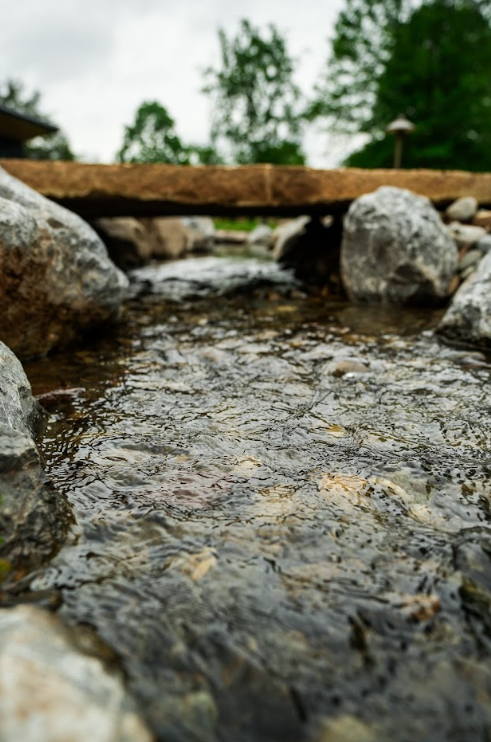
Aquatic plants will continue filling the spaces between the rockwork. Surrounding landscaping will mature. Stone will weather and develop character.
And eventually, Japanese koi will add an entirely new dimension to the pond.
That's when a custom pond begins to feel less like something that was built and more like a living part of the property.
This project took approximately two and a half years, from the beginning of Fitz’s Fish Ponds' involvement to completion.
That timeline reflects much more than the construction of a pond.
The water feature had to evolve alongside the construction of the homeowner's dream home. Pond elevations, bridges, walkways, viewing windows, plumbing routes, filtration locations, stone selection, waterfall placement, and outdoor living areas all had to work together.
The finished property now delivers a completely different interaction with water depending on where you are.
At the entrance, three bubbling boulders welcome you home.
Cross the bridge and the pond continues beneath your feet.
Between sections of the house, water travels through a long boulder-lined channel.
From inside, expansive sections of pond fill carefully considered viewing windows.
Behind the house, an infinity-style edge visually connects the koi pond to the natural landscape.
Beyond that, a 75-foot stream splits and winds around a fire pit before ultimately returning to the natural pond.
And beneath everything you see is an extensive network of pumps, filtration, aeration, plumbing, liner, and circulation systems engineered to make the entire experience possible.
It's not simply a koi pond with a waterfall.
It's a water feature designed as part of the property's architecture and landscape.
See the complete project and experience the scale, sound, engineering, and craftsmanship of this incredible Virginia water feature in our full pond tour.
Watch the video:
https://youtu.be/I5kLqmIt1HY
And stay tuned. The next chapter of this project will bring even more life to the water with the planned addition of approximately 20–30 beautiful Japanese koi.
Every property presents different opportunities.
Sometimes the perfect project is a traditional Japanese koi pond.
Sometimes it's a natural ecosystem pond surrounded by stone and landscaping.
Sometimes it's a waterfall or stream that completely changes an outdoor living space.
And sometimes, as this Virginia project demonstrates, the opportunity is to think much bigger.
At Fitz’s Fish Ponds, we design and build custom koi ponds, ecosystem ponds, streams, waterfalls, pondless water features, and large-scale residential water features tailored to each client's architecture, landscape, and lifestyle.
Our experience extends far beyond making a pond look beautiful. We consider how the water will circulate, how koi will use the space, how the feature will look from inside the home, where equipment can be concealed, how waterfalls will sound, and how the entire system will mature over time.
From initial concept and excavation to filtration, stone selection, construction, aquatic planting, and eventually selecting the perfect Japanese koi, our goal is to create a water feature that looks incredible today—and continues to perform beautifully for years to come.
Have a vision for your property? Contact Fitz’s Fish Ponds to start planning your custom koi pond or water feature.
| Hours | |
|---|---|
| sunday | 10:00 AM - 4:00 PM |
| monday | Closed |
| tuesday | 10:00 AM - 5:00 PM |
| wednesday | 10:00 AM - 5:00 PM |
| thursday | 10:00 AM - 5:00 PM |
| friday | 10:00 AM - 5:00 PM |
| saturday | 10:00 AM - 5:00 PM |
| Hours | |
|---|---|
| sunday | 10:00 AM - 5:00 PM |
| monday | Closed |
| tuesday | 11:00 AM - 6:00 PM |
| wednesday | 11:00 AM - 6:00 PM |
| thursday | 11:00 AM - 6:00 PM |
| friday | 11:00 AM - 6:00 PM |
| saturday | 10:00 AM - 5:00 PM |
| Hours | |
|---|---|
| sunday | 10:00 AM - 4:00 PM |
| monday | Closed |
| tuesday | 10:00 AM - 5:00 PM |
| wednesday | 10:00 AM - 5:00 PM |
| thursday | 10:00 AM - 5:00 PM |
| friday | 10:00 AM - 5:00 PM |
| saturday | 10:00 AM - 5:00 PM |
| Hours | |
|---|---|
| sunday | 10:00 AM - 5:00 PM |
| monday | Closed |
| tuesday | 11:00 AM - 6:00 PM |
| wednesday | 11:00 AM - 6:00 PM |
| thursday | 11:00 AM - 6:00 PM |
| friday | 11:00 AM - 6:00 PM |
| saturday | 10:00 AM - 5:00 PM |
| Hours | |
|---|---|
| sunday | Closed |
| monday | 10:00 AM - 4:00 PM |
| tuesday | 10:00 AM - 4:00 PM |
| wednesday | 10:00 AM - 4:00 PM |
| thursday | 10:00 AM - 4:00 PM |
| friday | 10:00 AM - 4:00 PM |
| saturday | Closed |
| Hours | |
|---|---|
| sunday | 10:00 AM - 4:00 PM |
| monday | Closed |
| tuesday | 10:00 AM - 5:00 PM |
| wednesday | 10:00 AM - 5:00 PM |
| thursday | 10:00 AM - 5:00 PM |
| friday | 10:00 AM - 5:00 PM |
| saturday | 10:00 AM - 5:00 PM |
| Hours | |
|---|---|
| sunday | Closed |
| monday | Closed |
| tuesday | 10:00 AM - 5:00 PM |
| wednesday | 10:00 AM - 5:00 PM |
| thursday | 10:00 AM - 5:00 PM |
| friday | 10:00 AM - 5:00 PM |
| saturday | 10:00 AM - 5:00 PM |
| Hours | |
|---|---|
| Sunday | Closed |
| Monday | Closed |
| Tuesday | 10:00 AM - 5:00 PM |
| Wednesday | 10:00 AM - 5:00 PM |
| Thursday | 10:00 AM - 5:00 PM |
| Friday | 10:00 AM - 5:00 PM |
| Saturday | 10:00 AM - 5:00 PM |
| Hours | |
|---|---|
| Sunday | 10:00 AM - 4:00 PM |
| Monday | Closed |
| Tuesday | 10:00 AM - 5:00 PM |
| Wednesday | 10:00 AM - 5:00 PM |
| Thursday | 10:00 AM - 5:00 PM |
| Friday | 10:00 AM - 5:00 PM |
| Saturday | 10:00 AM - 5:00 PM |