What Does Fin Rot Look Like? Signs, Causes & Treatment Tips
Oct 15th 2026

Oct 15th 2026
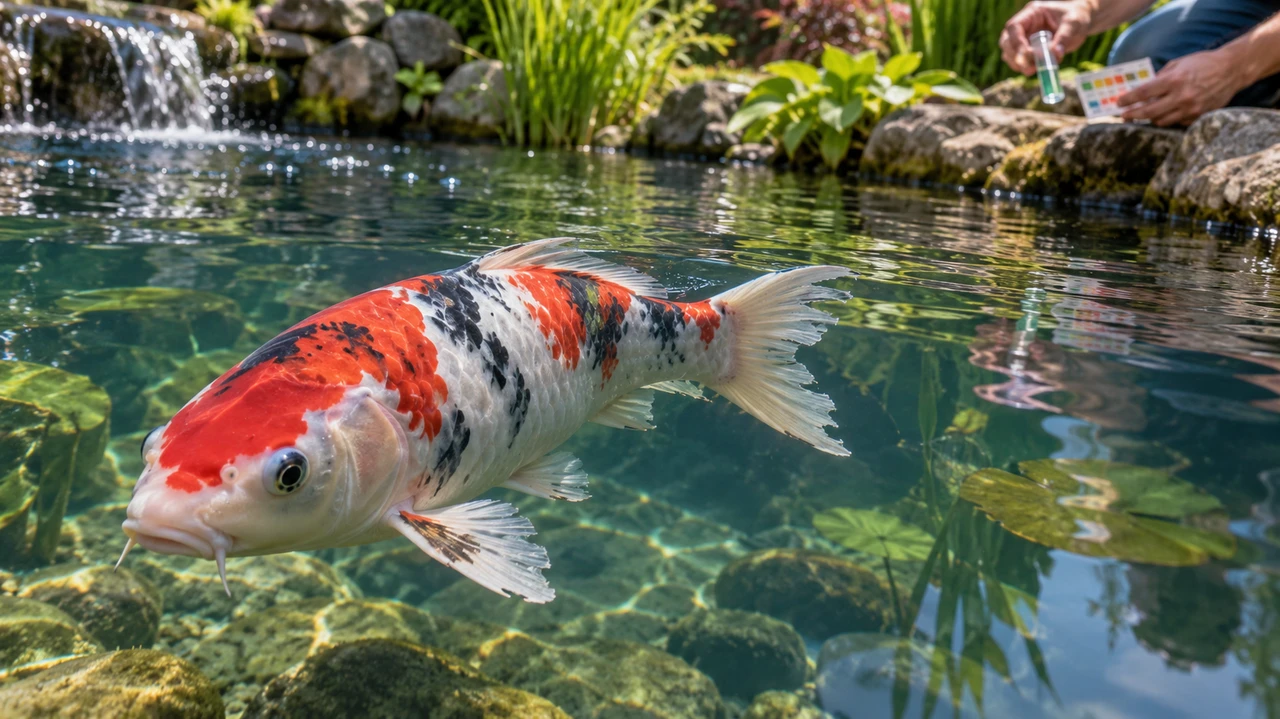
Fin rot often looks like frayed, ragged, cloudy, or discolored tissue along the edges of a fish’s fins or tail. As the condition progresses, the fins may appear to shrink, recede, or lose sections of tissue. Some fish also develop red streaks, inflamed fin bases, darkened edges, or fuzzy growth around damaged areas.
These changes can affect koi, goldfish, and other pond or aquarium fish, but not every torn fin is fin rot. Physical injuries can look similar. The most important clues are whether damage worsens and whether poor water conditions or stress are present. Early recognition gives owners time to correct the environment and seek appropriate care.
The appearance depends on how far fin rot has progressed. Early on, a fin may look uneven, thin, or slightly cloudy around the edge. These changes can be easy to miss in a deep or shaded pond.
As the problem advances, the fin can look shredded or eroded. White, red, or dark areas may develop, and the fin may shorten as its membrane deteriorates. Severe damage can extend close to the body and may be accompanied by reduced activity or appetite.
|
Symptom |
What It May Look Like |
General Concern Level |
|
Frayed fin edges |
Shredded, uneven, or ragged tissue around a fin or tail |
Early to moderate |
|
White or cloudy tips |
Pale, milky, or opaque areas along the fin edge |
Early |
|
Red streaks or inflammation |
Redness within the fin or near its base |
Moderate to serious |
|
Darkened fin edges |
Brown, gray, or black areas that appear damaged or decayed |
Moderate |
|
Shorter fins over time |
Tissue appears to recede, shrink, or disappear |
Advanced |
|
Fuzzy-looking growth |
Cotton-like material appears around damaged tissue |
Advanced and needs attention |
|
Lethargy or appetite loss |
The fish becomes less active or stops eating normally |
Possible advanced illness |
|
Multiple fish affected |
Several fish show fin damage, stress, or behavioral changes |
Possible pond-wide problem |
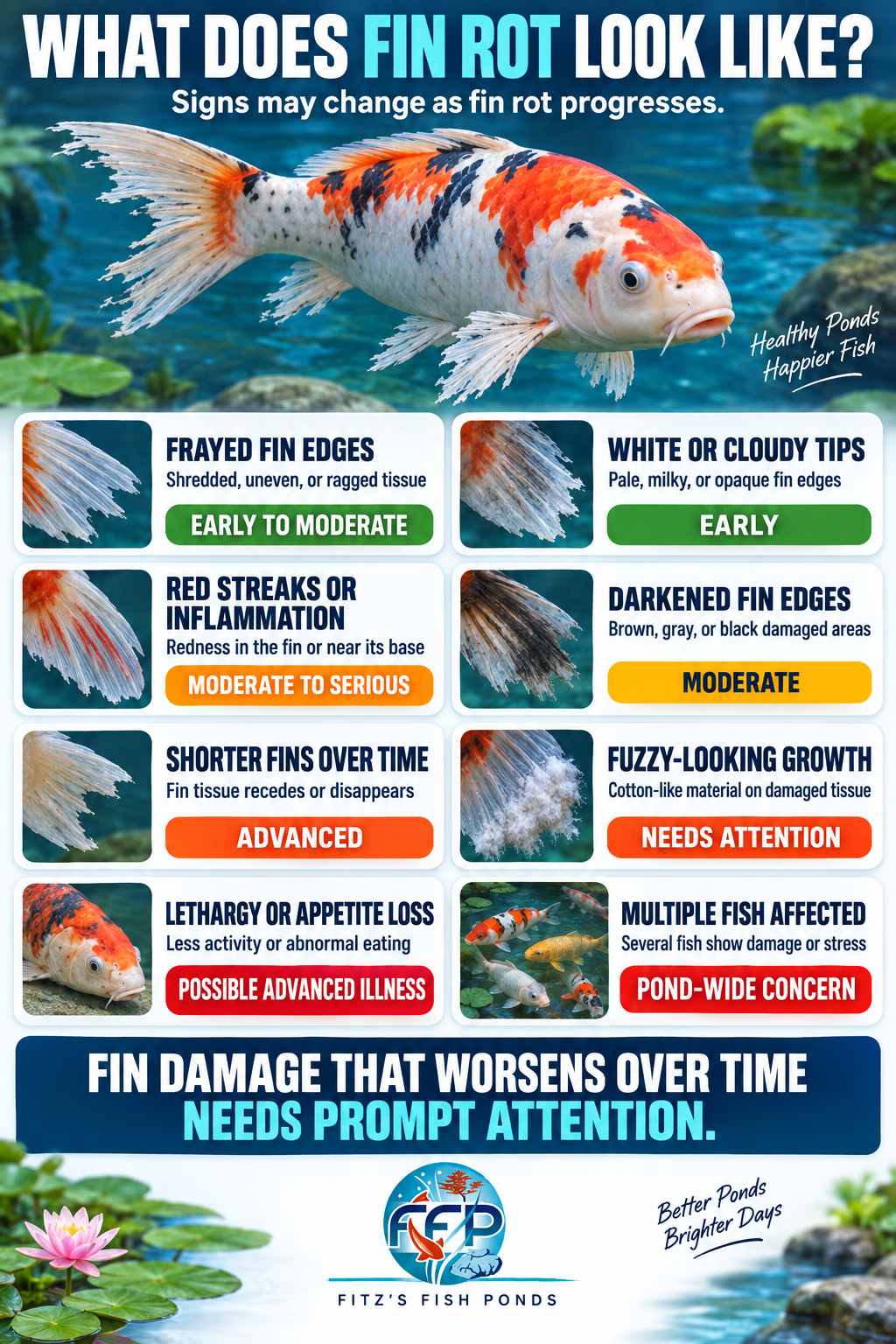
Early fin rot can be easy to confuse with minor wear or a small physical injury. Look closely for edges that appear slightly torn, white, cloudy, or unusually thin. Minor redness may also appear, especially if irritation develops near damaged tissue.
Take clear photographs if possible and compare the fin over time. A clean tear that remains stable may be an injury, while an edge that becomes progressively more ragged, cloudy, inflamed, or shortened deserves prompt attention.
Advanced fin rot involves continued tissue loss. The fin may recede toward the body, its base can become inflamed, and secondary fuzzy-looking growth may appear. Lethargy, isolation, clamped fins, appetite loss, or multiple affected fish can indicate a broader health or pond problem.
Don't manage severe or rapidly worsening symptoms through guesswork. Contact an aquatic veterinarian or experienced fish health professional to help identify the problem and choose an appropriate course of care.
Koi and other pond fish can tear their fins on sharp rocks, exposed equipment, rough netting, or damaged pond components. Predators, handling, spawning behavior, and conflicts between fish can also cause physical injuries. A torn fin may have a relatively clean split or missing section while the surrounding tissue retains a normal color.
Fin rot is more likely to deteriorate over time when the underlying problem remains uncorrected. The edge may become cloudy, white, red, dark, or increasingly irregular. Instead of stabilizing and beginning to heal, the damaged area continues to recede.
An injury can create an entry point for infection, so owners should examine both the fish and its environment. Clean water and low stress remain essential even when physical damage was the original cause.
Fin rot often develops when bacteria infect fin tissue that’s been weakened by injury, stress, or poor water conditions. Some of these bacteria are already present in the pond without causing obvious problems. When a fish’s protective barriers or immune defenses are compromised, those organisms have a better chance of causing infection.
Several factors can make koi and other pond fish more vulnerable:
These problems often overlap. A fish with a torn fin may struggle to heal in poor water, while parasite damage can worsen when the pond is already overcrowded or low in oxygen. That’s why the visible fin damage should prompt a closer look at both the fish and its surroundings.
Appropriate treatment may be needed to address an infection, but lasting improvement also depends on correcting the conditions that contributed to it. Water quality, filtration, oxygen, injuries, and possible parasites all deserve attention so the fish has a better chance to recover without the problem returning.
Ammonia, nitrite, organic waste, unstable pH, or low oxygen can create chronic stress and reduce a fish’s ability to resist infection. A pond can look clear while still containing water-quality problems, so appearance should never replace testing.
Use a reliable pond water testing kit and record the results. Review ammonia, nitrite, nitrate, pH, KH, and other appropriate parameters, then consider recent changes such as heavy rain, hot weather, new fish, filter maintenance, or increased feeding.
Removing debris, checking filtration, checking/increasing aeration, and improving the fish’s surroundings are fundamental steps because treatment alone cannot compensate for a pond that continues to stress the fish.
Respond methodically so efforts to help one fish don't create a new problem for the rest of the pond.
Don't add medication just because a fin looks torn. A correct response depends on the fish, the symptoms, water conditions, pond volume, temperature, and any treatments already in use.
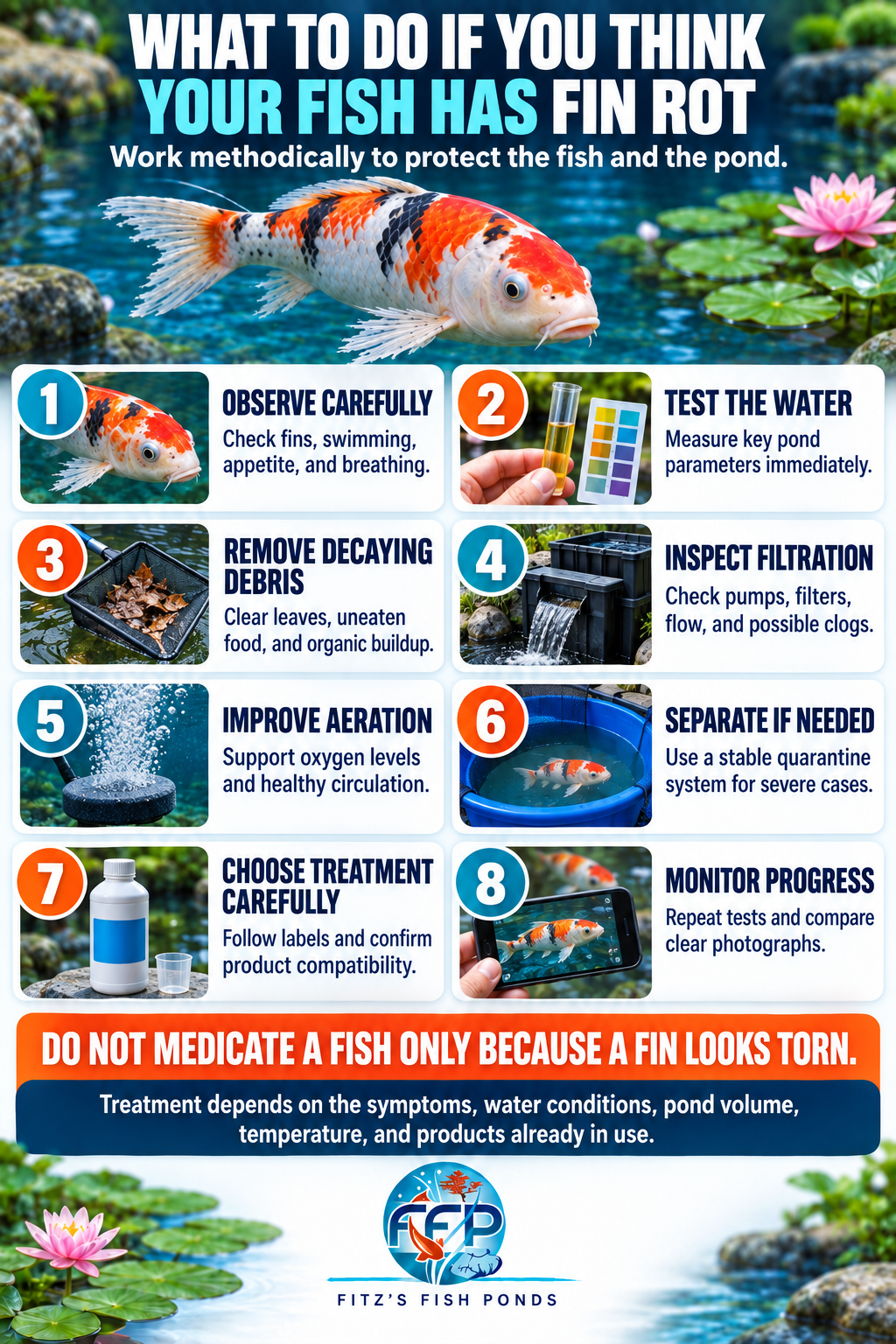
Outdoor ponds create variables that small aquariums do not. Leaves, pollen, and sludge can accumulate, summer heat may reduce oxygen, and cold water can slow biological activity. Growing koi can also exceed filtration capacity that was adequate when the fish were smaller.
Check waterfalls, aerators, skimmers, drains, pumps, and filters for reduced performance. Consider storm runoff or power interruptions, and look for sharp surfaces that may have caused the original injury.
Cold-water beneficial bacteria can support seasonal maintenance during cooler periods, but they do not replace testing, debris removal, adequate filtration, or diagnosis.
The right products depend on the problem. Water conditioners can address chlorine or chloramine during water changes, test kits help identify water-quality problems, beneficial bacteria support the biological breakdown of organic waste, and proper filtration and aeration help maintain a healthier pond environment.
If testing shows elevated ammonia or nitrite, products labeled to temporarily detoxify or bind these compounds can provide short-term protection when an immediate water change isn't possible. View them as a temporary measure, not the solution.
In smaller ponds and systems where it is practical, a properly performed partial water change is generally one of the most effective immediate steps for reducing elevated ammonia, provided the replacement water is appropriate and properly conditioned. The underlying cause, such as overfeeding, accumulated waste, insufficient biological filtration, or a disrupted nitrogen cycle, still needs to be identified and corrected.
Read every label, calculate pond volume accurately, and confirm that any treatment fits your species and system. Some treatments can affect biological filtration or oxygen levels, so more products aren't necessarily better.
Fitz’s Fish Ponds carries pond water testing supplies, pond filtration products, pond water treatments, aeration equipment, and other koi pond supplies to support a cleaner, more stable environment.
Seek professional support when damage progresses quickly, approaches the body, returns after treatment, or appears with ulcers, swelling, abnormal breathing, lethargy, or loss of appetite. A pond professional can assess filtration and maintenance, while an aquatic veterinarian or qualified fish health specialist may be needed for diagnosis and medical care.
Fitz’s Fish Ponds offers fish health support and professional pond service and maintenance for owners facing recurring water-quality or system problems.
Test water routinely and keep a log so gradual changes do not go unnoticed. Maintain filtration without overly aggressive cleaning, remove organic debris before it decomposes, avoid overfeeding, review stocking density as fish grow, and provide dependable aeration.
Inspect the pond for sharp surfaces and use fish-safe handling practices. Knowing how the fish normally swim, gather, and eat also makes early changes easier to recognize.
Fin rot is easier to manage when you recognize it early and correct environmental problems promptly. Watch for ragged edges, cloudy tips, discoloration, inflammation, and progressive tissue loss, but remember that the fin is only part of the diagnosis. Water quality, filtration, oxygen, debris, stress, and physical hazards all deserve attention.
Need help protecting your koi or pond fish? Explore fish health products, testing supplies, water treatments, filtration equipment, and other pond-care solutions from Fitz’s Fish Ponds. For severe, recurring, or pond-wide concerns, talk to a pond expert about professional support or call us at (908) 420-9908.
Fin rot commonly appears as frayed, ragged, cloudy, discolored, or receding fin tissue. As the condition worsens, white tips, red streaks, darkened edges, and progressive loss of the fin membrane may develop.
On koi, affected fins may look torn, milky, red, uneven, or shorter than before. Advanced cases can include inflamed fin bases, lethargy, or reduced appetite.
A simple tear may remain stable and begin healing in good water. Fin rot often worsens, with increasing discoloration, inflammation, raggedness, or tissue loss. Continue monitoring because injuries can become infected.
Contributing factors include poor water quality, bacterial infection, stress, injury, overcrowding, debris, inadequate filtration, low oxygen, and overfeeding.
Ammonia, nitrite, organic waste, unstable chemistry, or low oxygen can stress fish and reduce their ability to resist infection or repair tissue.
The organisms associated with infection can affect vulnerable fish more readily in poor conditions. Multiple cases often point to shared water-quality or stress problems requiring pond-wide attention.
Minor damage may improve once you correct water quality and stress factors. Worsening tissue loss may require fish-safe treatment and professional guidance.
Remove decaying debris, check filters, and test the water, but avoid aggressive cleaning that destabilizes water chemistry or biological filtration.
Seek professional help when symptoms are severe, several fish are affected, water quality remains unstable, filtration is failing, or the same problem keeps returning. Rapid tissue loss, significant redness or inflammation, ulcers, unusual swimming behavior, loss of appetite, lethargy, or a rapid decline in the fish’s condition are also good reasons to involve a qualified fish health professional.
Don't assume every white spot or patch on a koi is fin rot. Koi pox, also called carp pox, is a viral condition that can cause smooth, raised, white or sometimes pinkish patches on the skin and fins. These lesions often have a smooth, waxy appearance rather than the ragged, deteriorating edges more commonly associated with fin damage or fin rot.
Koi pox is especially noticeable during colder weather. Symptoms commonly become more prominent as pond temperatures fall in the fall and winter, when the koi’s immune response is reduced. As the water warms, the visible growths may shrink or disappear, but the virus itself can remain in the fish.
For the average pond owner, temperature, fish behavior, and changes in the affected area over time can provide useful clues. A koi that behaves normally and develops smooth, waxy patches mainly in colder water may be showing signs consistent with koi pox. Progressive fin deterioration, redness, inflammation, open sores, or worsening behavior may point toward another problem and should be evaluated more closely.
Koi pox lesions themselves are often more of a cosmetic concern in mature koi, but damaged skin or significant lesions can create an opportunity for secondary bacterial infection. Maintaining excellent water quality and minimizing stress are therefore especially important.
Because koi pox, fin injuries, bacterial infections, parasites, and other conditions can sometimes look similar at first, avoid treating a fish based on appearance alone. If you are unsure what you are seeing, the symptoms continue to progress, or the fish begins behaving abnormally, contact an experienced pond professional or aquatic veterinarian for proper evaluation.
| Hours | |
|---|---|
| sunday | 10:00 AM - 4:00 PM |
| monday | Closed |
| tuesday | 10:00 AM - 5:00 PM |
| wednesday | 10:00 AM - 5:00 PM |
| thursday | 10:00 AM - 5:00 PM |
| friday | 10:00 AM - 5:00 PM |
| saturday | 10:00 AM - 5:00 PM |
| Hours | |
|---|---|
| sunday | 10:00 AM - 5:00 PM |
| monday | Closed |
| tuesday | 11:00 AM - 6:00 PM |
| wednesday | 11:00 AM - 6:00 PM |
| thursday | 11:00 AM - 6:00 PM |
| friday | 11:00 AM - 6:00 PM |
| saturday | 10:00 AM - 5:00 PM |
| Hours | |
|---|---|
| sunday | Closed |
| monday | 10:00 AM - 4:00 PM |
| tuesday | 10:00 AM - 4:00 PM |
| wednesday | 10:00 AM - 4:00 PM |
| thursday | 10:00 AM - 4:00 PM |
| friday | 10:00 AM - 4:00 PM |
| saturday | Closed |
| Hours | |
|---|---|
| sunday | 10:00 AM - 4:00 PM |
| monday | Closed |
| tuesday | 10:00 AM - 5:00 PM |
| wednesday | 10:00 AM - 5:00 PM |
| thursday | 10:00 AM - 5:00 PM |
| friday | 10:00 AM - 5:00 PM |
| saturday | 10:00 AM - 5:00 PM |
| Hours | |
|---|---|
| sunday | Closed |
| monday | Closed |
| tuesday | 10:00 AM - 5:00 PM |
| wednesday | 10:00 AM - 5:00 PM |
| thursday | 10:00 AM - 5:00 PM |
| friday | 10:00 AM - 5:00 PM |
| saturday | 10:00 AM - 5:00 PM |
| Hours | |
|---|---|
| Sunday | Closed |
| Monday | Closed |
| Tuesday | 10:00 AM - 5:00 PM |
| Wednesday | 10:00 AM - 5:00 PM |
| Thursday | 10:00 AM - 5:00 PM |
| Friday | 10:00 AM - 5:00 PM |
| Saturday | 10:00 AM - 5:00 PM |
| Hours | |
|---|---|
| Sunday | 10:00 AM - 4:00 PM |
| Monday | Closed |
| Tuesday | 10:00 AM - 5:00 PM |
| Wednesday | 10:00 AM - 5:00 PM |
| Thursday | 10:00 AM - 5:00 PM |
| Friday | 10:00 AM - 5:00 PM |
| Saturday | 10:00 AM - 5:00 PM |