Adding Fathead Minnows To Your Pond
Apr 19th 2024

Apr 19th 2024
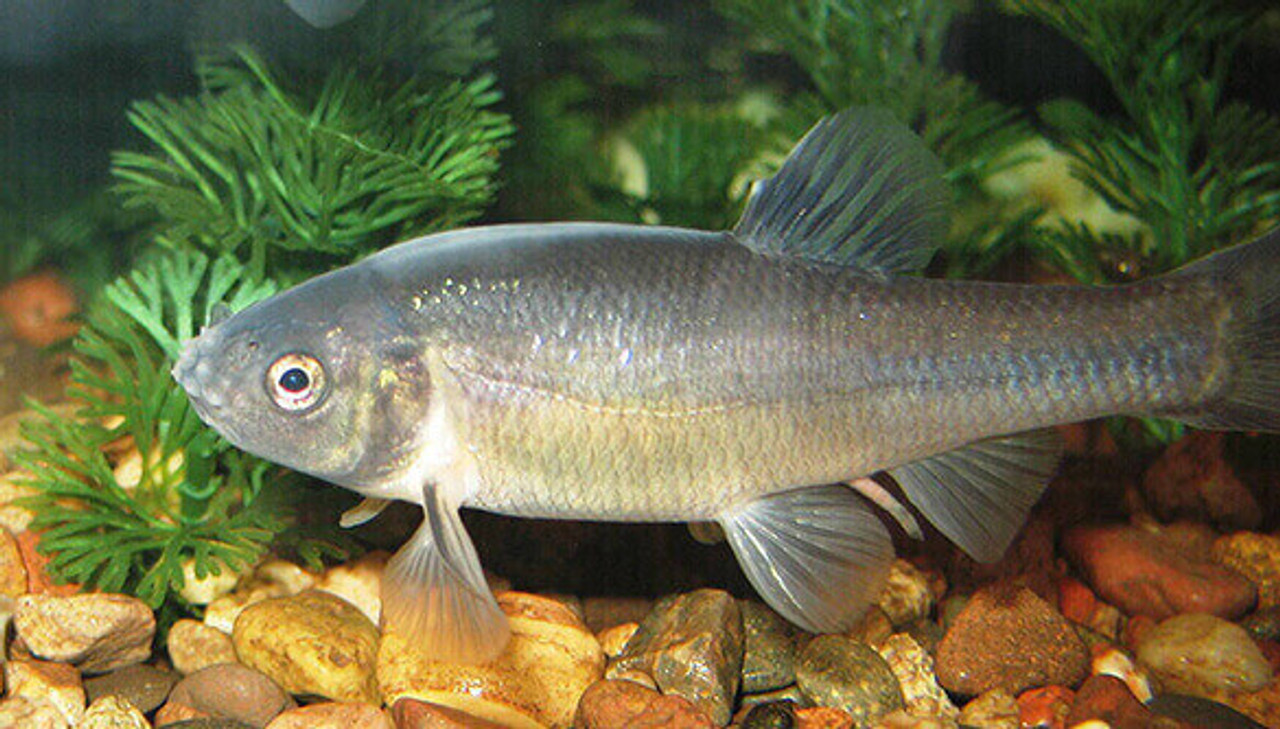
Fathead minnows (Pimephales promelas) are a small, fast-reproducing forage fish used to feed bass and bluegill in stocked ponds. Most owners stock 1,000 to 2,000 per surface acre, in fall or early spring. Adults stay under 3 inches and live 12 to 15 months, so the value is in how quickly they spawn rather than how long they last. They are a forage fish for stocked farm ponds and lakes, not for decorative koi ponds.
| Stocking rate | 1,000 to 2,000 per surface acre |
|---|---|
| Best stocking season | Fall or early spring |
| Ideal spawning temperature | 60 to 65°F |
| Spawning stops above | 85°F |
| Adult size | Under 3 inches |
| Lifespan | 12 to 15 months |
Fathead minnows are a small olive-colored fish that has been used as bait for more than 100 years. They are found naturally throughout North America, in the United States, Canada and Mexico. Alongside their use as live bait, pond owners and landscapers now add them to stocked ponds as a forage fish.
A mature fathead minnow rarely exceeds 3 inches and lives 12 to 15 months, which is why pond owners treat them as a renewable forage crop rather than a permanent population. Compare that to sturgeon, which live at least 50 years, or koi, which can reach 35 years.
Fathead minnows provide forage for ponds recently stocked with bass and bluegill. Minnows spawn in spring, a few months before bluegill spawns begin, so they are an early food source for bass fingerlings and they support a healthy annual growth rate for bass. They are inexpensive, which makes them a straightforward investment as feed for larger species, and they are the fastest way to jumpstart the growth of a new bass population.
Compared with golden shiners, the other common forage fish, fatheads cost less per fish, stay small enough for young bass to eat at every stage, and reproduce far more often through the season. Golden shiners grow larger and suit ponds holding big adult bass, but they reproduce more slowly and a single stocking is harder to sustain.
Stock 1,000 to 2,000 fathead minnows per surface acre. Use smaller minnows in fall and winter so they reach maturity before spring spawning, and larger adults in spring for an early first spawn.
Use the higher end of the range for a new pond with no existing forage base, and the lower end where minnows are already present and you are topping up.
Fall and winter stocking uses smaller fish. They have the cold months to grow, reach maturity before water temperatures climb, and spawn on schedule in spring. Spring stocking uses large adults instead, because they can spawn within weeks of going in and produce a first generation the same season.
Not sure how many minnows your pond needs? Tell us your surface acreage and what you have stocked. Call (908) 420-9908.
Do not add fathead minnows to a pond that already holds established bass. Adult bass will eat the stocking before the minnows spawn, so the spend buys a single feeding rather than a self-sustaining forage base.
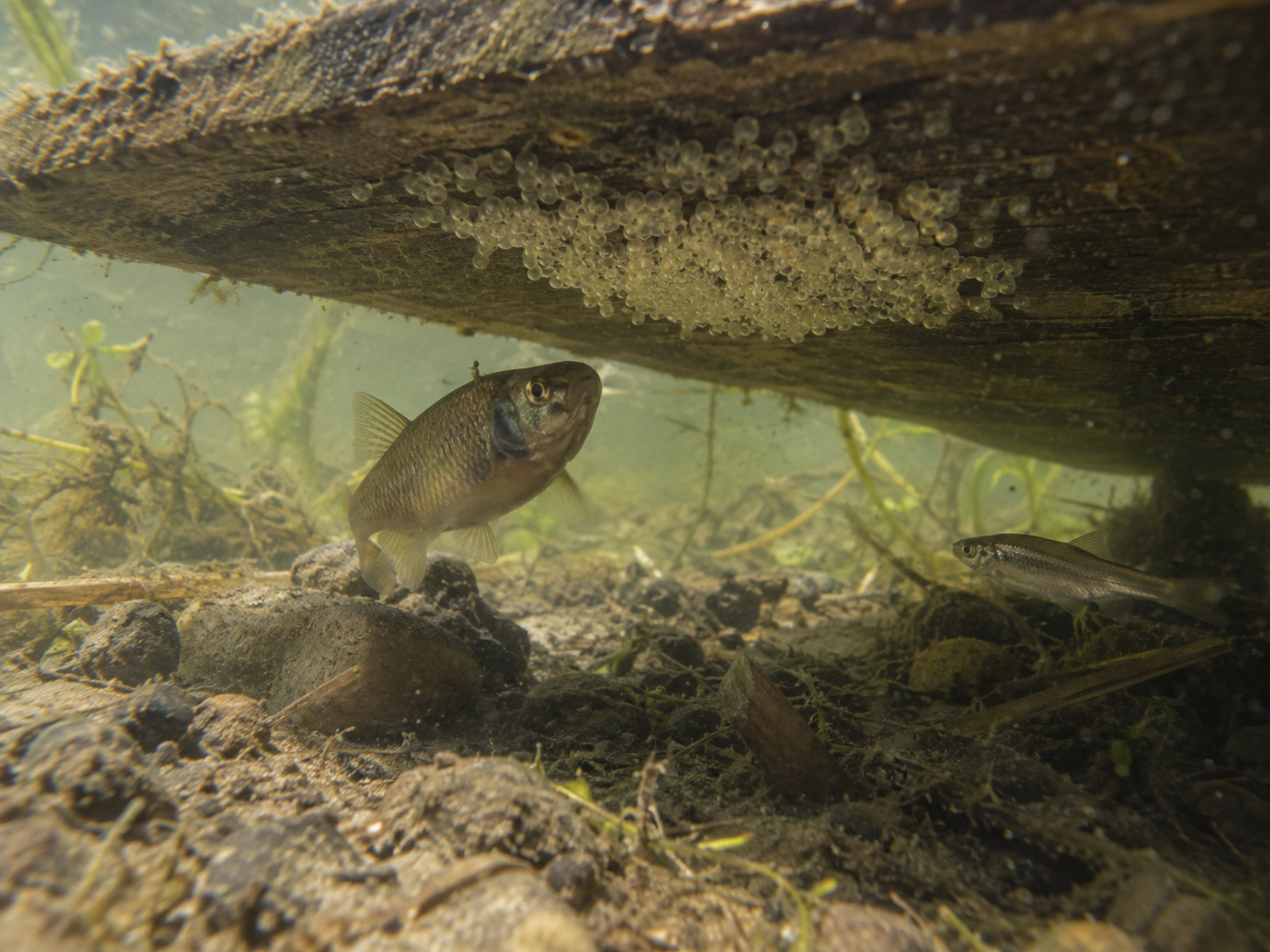
Older male minnows are typically bigger and darker than the females. Some males carry a hardened pad on the head used for spawning and nesting, and the males guard the nests. Females spawn weekly at 60 to 65°F, laying up to 500 eggs per spawn.
Maintaining optimal water temperature is what keeps that cycle going. Spawning continues through prepare your pond for spring and into summer pond maintenance as long as water stays below 85°F.
Fathead minnows swim slowly, which makes them easy for larger fish to catch, and they spawn frequently. Added to a pond they build nests on the bottom about the size of a teacup, usually placing eggs beneath plants, logs or rocks.
Other objects work as spawning substrate too, including tires, boards and pallets. Use materials that will biodegrade over time rather than anything that has to be pulled back out later.
Fathead minnows suit owners of stocked farm ponds and lakes who want a low-cost forage base for bass and bluegill. They are a poor fit for a decorative koi or water-garden pond, where there is no predator population to feed and the minnows simply compete for the same water.
If your pond is ornamental rather than stocked for fishing, a regular pond maintenance program will do far more for water quality and fish health than a forage stocking will.
Fitz's Fish Ponds carries pond fish and stocking supplies at our New Jersey, Pennsylvania and Tennessee locations. Call (908) 420-9908 to confirm availability before you make the trip, since stock moves seasonally and minnow numbers change week to week.
If you are not sure what your pond needs, contact us with your surface acreage and what you currently have stocked, and we will tell you the rate and the timing that fit.
Stock 1,000 to 2,000 per surface acre. Use the higher end for a new pond with no existing forage base.
Fall or early spring. Fall stocking uses smaller minnows that mature over winter and spawn on schedule, while spring stocking uses large adults for an early first spawn.
In a newly stocked pond, yes, and that is the point of adding them. In a pond with established adult bass they will be eaten before they can spawn, so the stocking feeds the bass once rather than building a forage base.
Yes. Females spawn weekly at 60 to 65°F, laying up to 500 eggs per spawn, and spawning continues through spring and summer while water stays below 85°F.
12 to 15 months. Their value comes from how quickly they reproduce rather than how long an individual fish lasts.
| Hours | |
|---|---|
| sunday | 10:00 AM - 4:00 PM |
| monday | Closed |
| tuesday | 10:00 AM - 5:00 PM |
| wednesday | 10:00 AM - 5:00 PM |
| thursday | 10:00 AM - 5:00 PM |
| friday | 10:00 AM - 5:00 PM |
| saturday | 10:00 AM - 5:00 PM |
| Hours | |
|---|---|
| sunday | 10:00 AM - 5:00 PM |
| monday | Closed |
| tuesday | 11:00 AM - 6:00 PM |
| wednesday | 11:00 AM - 6:00 PM |
| thursday | 11:00 AM - 6:00 PM |
| friday | 11:00 AM - 6:00 PM |
| saturday | 10:00 AM - 5:00 PM |
| Hours | |
|---|---|
| sunday | 10:00 AM - 4:00 PM |
| monday | Closed |
| tuesday | 10:00 AM - 5:00 PM |
| wednesday | 10:00 AM - 5:00 PM |
| thursday | 10:00 AM - 5:00 PM |
| friday | 10:00 AM - 5:00 PM |
| saturday | 10:00 AM - 5:00 PM |
| Hours | |
|---|---|
| sunday | 10:00 AM - 5:00 PM |
| monday | Closed |
| tuesday | 11:00 AM - 6:00 PM |
| wednesday | 11:00 AM - 6:00 PM |
| thursday | 11:00 AM - 6:00 PM |
| friday | 11:00 AM - 6:00 PM |
| saturday | 10:00 AM - 5:00 PM |
| Hours | |
|---|---|
| sunday | Closed |
| monday | 10:00 AM - 4:00 PM |
| tuesday | 10:00 AM - 4:00 PM |
| wednesday | 10:00 AM - 4:00 PM |
| thursday | 10:00 AM - 4:00 PM |
| friday | 10:00 AM - 4:00 PM |
| saturday | Closed |
| Hours | |
|---|---|
| sunday | 10:00 AM - 4:00 PM |
| monday | Closed |
| tuesday | 10:00 AM - 5:00 PM |
| wednesday | 10:00 AM - 5:00 PM |
| thursday | 10:00 AM - 5:00 PM |
| friday | 10:00 AM - 5:00 PM |
| saturday | 10:00 AM - 5:00 PM |
| Hours | |
|---|---|
| sunday | Closed |
| monday | Closed |
| tuesday | 10:00 AM - 5:00 PM |
| wednesday | 10:00 AM - 5:00 PM |
| thursday | 10:00 AM - 5:00 PM |
| friday | 10:00 AM - 5:00 PM |
| saturday | 10:00 AM - 5:00 PM |
| Hours | |
|---|---|
| Sunday | Closed |
| Monday | Closed |
| Tuesday | 10:00 AM - 5:00 PM |
| Wednesday | 10:00 AM - 5:00 PM |
| Thursday | 10:00 AM - 5:00 PM |
| Friday | 10:00 AM - 5:00 PM |
| Saturday | 10:00 AM - 5:00 PM |
| Hours | |
|---|---|
| Sunday | 10:00 AM - 4:00 PM |
| Monday | Closed |
| Tuesday | 10:00 AM - 5:00 PM |
| Wednesday | 10:00 AM - 5:00 PM |
| Thursday | 10:00 AM - 5:00 PM |
| Friday | 10:00 AM - 5:00 PM |
| Saturday | 10:00 AM - 5:00 PM |